By Roots Political Desk/ 27-Febraury-2026
Following an unprecedented Supreme Court ban on a Class 8 textbook over contentious remarks about the judiciary, the Congress party has launched a blistering attack, accusing the Prime Minister of orchestrating a decade-long “ideological virus” in India’s education system.
The battleground over India’s educational curriculum has ignited once again, but this time, the stakes have reached the highest echelons of the country’s judiciary. In a fierce political escalation on Friday, the Indian National Congress launched a scathing attack on Prime Minister Narendra Modi, accusing him of personally guiding and shaping a “Nagpur Communal Ecosystem for Rewriting of Textbooks.”
This aggressive pushback from the grand old party follows a dramatic and unprecedented intervention by the Supreme Court of India. Earlier this week, the apex court imposed a “complete blanket ban” on the publication, reprinting, and digital distribution of a Class 8 social science textbook published by the National Council of Educational Research and Training (NCERT).
The textbook in question crossed a major red line for the top court. Within its pages, it explicitly stated that “corruption, a massive backlog of cases, and the lack of an adequate number of judges” are among the core challenges plaguing the Indian judicial system. Interpreting these assertions as a severe affront, the Supreme Court remarked that a “gunshot has been fired, and the institution is bleeding.”
The court’s bench, led by Chief Justice Surya Kant, did not mince words. Issuing show-cause notices to the NCERT director and the secretary of the Department of School Education, the court demanded to know why strict action shouldn’t be initiated against the authors responsible for the “offending” chapter. The court categorically warned that any attempt to circumvent the ban via alternative titles or electronic dissemination would be treated as willful defiance and direct interference with the judiciary.
Caught in the crosshairs of the Supreme Court’s ire, the Union Government scrambled to contain the fallout. Union Education Minister Dharmendra Pradhan expressed profound “anguish” over the controversial segment, swiftly promising to fix accountability and penalize those involved in the drafting process. Furthermore, NCERT pulled the book from its official website, issued an apology for the “inappropriate content,” and committed to rewriting the text in consultation with appropriate authorities.
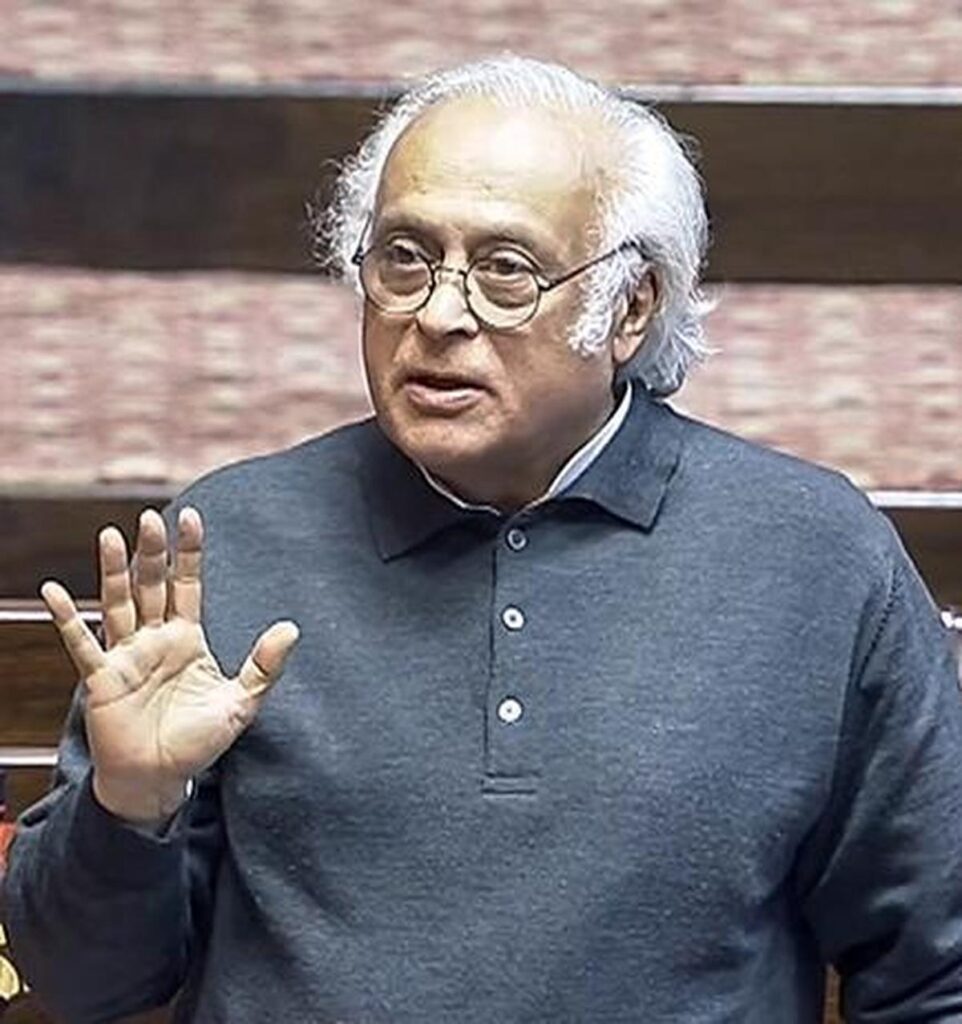
However, for the opposition, the government’s rapid backpedaling was nothing more than performative distress. Congress General Secretary in-charge of Communications, Jairam Ramesh, took to the social media platform X (formerly Twitter) to relentlessly mock the administration’s defensive posture.
“After demonstrating real moral cowardice in Israel, the Prime Minister is expressing fake outrage on the NCERT books issue,” Ramesh stated, tying international diplomacy critiques to domestic controversies. “In an obviously damage-control exercise, he is letting it be known that he is extremely unhappy with the critical references to the judiciary in NCERT textbooks.”
Ramesh’s critique cut deeper than a single textbook misstep. He framed the NCERT row as the symptom of a much larger, systemic disease that has allegedly infected Indian academia over the past ten years.
“Over the past decade, he [PM Modi] has presided over a network of academic-quacks who have done grave damage by infecting textbooks with their brand of ideological virus,” Ramesh declared. He further alleged that these curricular changes are “not accidental oversights but part of a systematic indoctrination campaign.”
The term “Nagpur Communal Ecosystem”—a pointed reference to the headquarters of the Rashtriya Swayamsevak Sangh (RSS), the ideological parent of the ruling Bharatiya Janata Party (BJP)—was weaponized by Ramesh to suggest that the “real NCERT” is being run from outside the formal educational establishment. He labeled the Prime Minister’s attempt to distance himself from the agitated Supreme Court as “sheer hypocrisy.”
The Congress party is now raising the stakes, demanding that the Supreme Court’s intervention shouldn’t stop at banning a single textbook. According to Ramesh, the “next logical step” for the top court is to institute a full-fledged, independent investigation into the broader mechanics of how textbooks are being rewritten across the board. The opposition asserts that the educational apparatus has been hijacked, transformed into instruments of political score-settling and societal polarization.
This controversy strikes at the heart of a long-running debate in India regarding the saffronization of education. Critics have repeatedly argued that the current administration is attempting to erase inconvenient historical facts and suppress institutional critique to fit a specific ideological narrative.
As the NCERT attempts to salvage its reputation and the Education Ministry hunts for scapegoats, the broader question remains: where is the line between educational reform and ideological indoctrination? With the Supreme Court now actively monitoring the sanctity of what is fed to young minds, the government’s educational maneuverings will undoubtedly face far stricter, and far more consequential, scrutiny in the days to come.