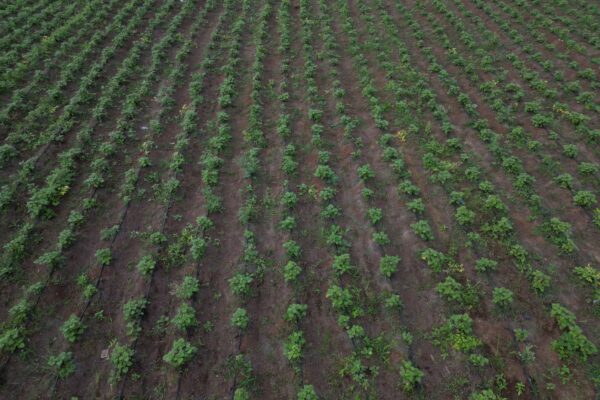
Local Gram Sabhas invoke constitutional protections under the PESA Act to block an underground coal mine, warning the district administration of escalating conflict if corporate employees keep crossing their borders.
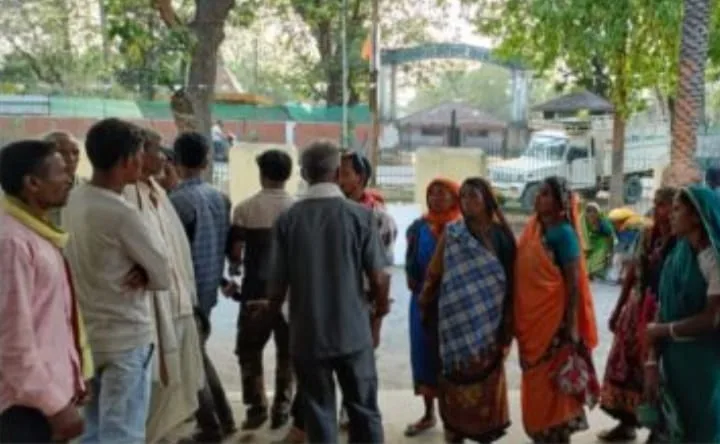
RAIGARH, March 31 — The warning sitting on the desk at the Chhaal police station leaves no room for interpretation. If violence erupts in the Purunga area of Dharamjaigarh, the villagers have already named the responsible parties: the local district administration and the Adani Group.
This isn’t a vague threat. It’s a calculated legal and physical standoff.
Tensions in Chhattisgarh’s Raigarh district have spiked again over a proposed underground coal mine pushed by M/s Ambuja Cements, an Adani Group company. Months after an initial wave of friction temporarily cooled, local anger has ignited over what residents describe as a blatant disregard for their constitutional rights. Adani employees are back. They are moving through the villages. And the people living there say they are trespassing against the express orders of the local government.
The conflict hinges on two of the most powerful legal shields available to India’s indigenous populations: the Fifth Schedule of the Constitution and the Panchayats (Extension to Scheduled Areas) Act of 1996, universally known as PESA.
These aren’t mere suggestions for corporate operators. Under Indian law, these provisions grant the Gram Sabha—the traditional village council—supreme decision-making authority over land use, resource extraction, and local governance in designated scheduled areas.
The traditional councils in the Purunga coal block region already held their vote. They unanimously rejected the mining project. They documented the refusal, drafted the formal resolution, and handed it directly to the district administration.
Yet, company men keep showing up.
So, the traditional village heads, alongside elected sarpanchs and panchs, marched to the local police station and filed a formal memorandum. They framed the continued presence of Adani personnel not just as an annoyance, but as an insult to the Gram Sabha and a direct violation of the constitutional dignity of an area technically under the direct protection of the President and the Governor.
Why does a local mining dispute command this level of legal escalation?
Because coal in central India rarely extracts itself without a fight. Chhattisgarh sits on some of the country’s richest mineral reserves, overlaid by dense forests and generations of tribal communities. When corporate energy demands meet indigenous land rights, the friction points are absolute. The villagers in Purunga aren’t just fighting a cement company. They are testing whether the laws written in New Delhi actually function on the ground in Raigarh.
The memorandum submitted at the Chhaal station is blunt. It demands an immediate and total ban on all Adani Group activities within their borders, citing the powers vested in them by the Fifth Schedule.
But it goes further. The villagers are demanding the complete cancellation of the coal block allocation itself. They argue that a Gram Sabha’s right to say ‘no’ is absolute under PESA. If the state allocates land that the village has already legally refused to surrender, the allocation itself stands on fractured legal ground.
The mechanics of Indian coal auctions create this exact bottleneck. The central government auctions the blocks to private players. The corporations pay heavy premiums to secure the rights. But the actual acquisition of land and the securing of local consent falls heavily on the state machinery. When a Gram Sabha issues a unanimous rejection, the state administration is caught between a billion-dollar corporate investment and the bedrock of constitutional tribal law.
Ambuja Cements requires massive amounts of power and raw materials to maintain its output. The Adani Group’s acquisition of the cement giant signaled an aggressive expansion in the materials sector, and captive coal blocks are the economic engine for that expansion. An underground mine in Purunga would feed that engine.
But underground mining is never truly invisible. While it doesn’t displace surface communities as violently as an open-cast mine, it triggers severe local anxieties. Underground extraction often leads to land subsidence, severe depletion of local water tables, and the construction of massive surface infrastructure to support the subterranean shafts. For farmers and forest-dependent communities, the damage is existential.
The local administration now faces a severe test of governance. They have a corporate entity holding a proposed mining allocation on one side, and an organized, legally aware indigenous population on the other.
The villagers have drawn a hard line. They warned officials that the continued movement of company personnel is creating severe resentment. If the administration fails to enforce the Gram Sabha’s mandate, and that resentment boils over into a breakdown of law and order, the villagers have pre-emptively placed the blame on the state’s failure to act.
The document handed to the local Station House Officer represents the collective voice of the area. It wasn’t signed by a fringe activist group. It carries the weight of the traditional village leadership acting on behalf of the entire community.
The strategy is clear. Anchor the resistance in constitutional law. Document the refusal. Alert law enforcement to the trespassing. Put the burden of maintaining peace squarely on the shoulders of the bureaucrats who regulate the mines. In scheduled areas, the District Collector is mandated to act as the custodian of tribal rights. The villagers are essentially forcing the administration to choose between enforcing the law of the land or facilitating corporate access.
Adani Group representatives have not yet issued a public response to the latest memorandum filed at the Chhaal police station. The district administration has acknowledged the simmering situation but has yet to announce how they intend to enforce—or circumvent—the Gram Sabha’s unanimous rejection.
The standoff in Dharamjaigarh is no longer just about digging for coal. It’s a real-time stress test of the PESA Act.
Now, the villagers wait to see if the police and the district magistrate will honor a constitutional boundary, or if the mining company will simply keep walking across it.