Ravan Tila-
Unknown History Sleeping Beneath the Soil
By Roots News Desk
Living in Rajim for the past two years, I have had a few occasions to visit Durg. There is no need to go via Raipur because there is a fantastic route from Abhanpur via Patan straight to Bhilai and Durg. Since Patan is the constituency of former Chief Minister Bhupesh Baghel, this road was developed beautifully. Its condition is still excellent.
Because this is primarily an agricultural area, driving through here is a peaceful experience—there is not much traffic, just lush green landscapes. You can simply admire the view as you drive along!
A Meeting Point of History and Myth
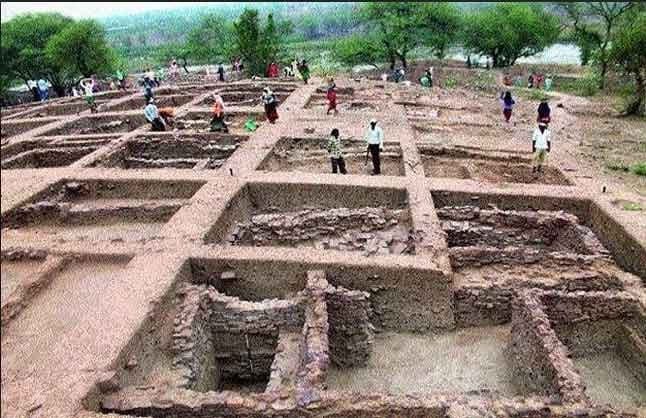
On this route lies a small village of archaeological significance—Tarighat, situated on the banks of the Kharun River. Here, across roughly 7.5 hectares, history, myth, mythology, and legends all blend together. You find a dilapidated fort and the scattered remains of a lost civilization.
In India, many urban ruins that are found feature brick structures—whether they are from the Early or Later Vedic periods or the Buddhist era. Having seen similar ruins in Nepal and Sri Lanka besides our own country, it seems clear that ruins using stone are relatively newer. I have observed many such remains from Rajasthan to Uttar Pradesh.
The Excavation of “Ravan Tila”
At Tarighat (about 30 km from Raipur), a soil-covered mound was excavated under the direction of J.R. Bhagat, the then-Deputy Director of the Department of Culture and Archaeology. When the structure finally saw the light of day after being buried for centuries, it was named ‘Jagatpal’s Fort’, or as the locals have called it for ages, ‘Ravan’s Mound’ (Ravan Tila).
This name exists because the Ravan Dahan (effigy burning) takes place near this mound. Villagers have even built a large platform there with a picture of the Lord of Lanka, in which Brother Ravan looks quite smart!
Traces of a Lost Civilization
According to archaeologists, a developed civilization existed here about 2,500 years ago—much like Mohenjo-daro. This civilization survived for a long period. This estimate is based on artifacts found from various eras.
• Coins and beads from the times of the Kushanas, Satavahanas, and Kalchuri rulers have been found here.
• Even Indo-Greek currency has been recovered.
It is said that Tarighat was a bead-making site and a trading hub. It is very possible that trade was conducted via the nearby flowing Kharun River, and perhaps a flood in that very river eventually submerged it.
The Need for Preservation
More research should be done on this site. However, the primary need is proper preservation, as a lack of adequate care is clearly visible. It should be maintained with the same attention given to places like Sirpur, the amphitheater of Sarguja, and Sitabengra.
A Final Thought
Let me clarify that I am not an expert on this subject. I am writing this based on some previously established beliefs and my own rough estimates (just as I keep writing on many subjects without full knowledge or information! 🤣).
Be that as it may, due to my interest in history and wandering, I had been thinking of visiting here for years. I finally got this opportunity last Sunday (November 23rd) when I had the chance to go to Durg for a wedding.
It is a great place…! The Mahamaya Temple is also located here.
By Deepak pachpore