
By Rootsalert Bussiness Desk|25-Febraury-2026
Washington’s 126% Tariff Hammer Hits Indian Solar Giants; Is the Export Dream Over?
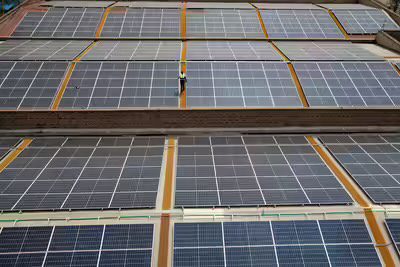
The high-flying Indian solar sector hit a massive wall of turbulence today. In a move that has sent shockwaves through Dalal Street, shares of industry leaders Waaree Energies, Premier Energies, and Vikram Solar witnessed a brutal sell-off, with some counters plunging as much as 15% in a single trading session.
The catalyst for this “solar bloodbath” wasn’t a domestic policy shift or a poor earnings report. Instead, the blow came from across the Atlantic. The U.S. Department of Commerce has officially slapped a preliminary countervailing duty (CVD) of 125.87% on solar cells and modules imported from India.
For months, the market had been whispering about trade protectionism under the “America First” agenda, but the sheer magnitude of this duty—exceeding 125%—caught even the most seasoned analysts off guard. The U.S. government alleges that Indian manufacturers benefit from “unfair” government subsidies, allowing them to undercut American-made products.
Waaree Energies, the crown jewel of India’s solar manufacturing, bore the brunt of the impact. The stock tumbled to an intraday low of ₹2,571.45, a nearly 15% drop from its previous close. The reason is simple: Waaree is deeply integrated into the global supply chain, with nearly 33% of its revenue in the latest quarter coming from overseas markets, primarily the United States.
While the entire sector turned red, the impact varies significantly across the “Big Three” of Indian solar:
1. Waaree Energies: As the largest exporter, the 126% duty acts as a virtual blockade for its India-made modules entering the U.S. market. However, savvy investors are looking at Waaree’s “Texas Hedge.” The company’s 3.2 GW manufacturing facility in Brookshire, Texas, is now its greatest asset, as modules produced there are exempt from these import duties.
2. Vikram Solar: The stock hit a 52-week low of ₹172 today. With roughly 20% of its order book tied to international exports, the company faces immediate pressure on its margins. Analysts worry that if these duties become permanent in July 2026, Vikram Solar may have to pivot its entire strategy back to the crowded domestic market.
3. Premier Energies: Interestingly, Premier Energies showed more resilience, closing with smaller losses compared to Waaree. This is because Premier is largely a “domestic play,” with less than 1% of its revenue currently coming from exports. The fall here was driven more by “sectoral contagion” and panic selling rather than a direct hit to its balance sheet.
This move comes just weeks after a proposed India-US trade deal seemed to promise lower tariffs. The sudden imposition of these duties suggests that the U.S. administration is prioritizing domestic manufacturing (under the Inflation Reduction Act) over diplomatic trade perks.
It’s not just India—Indonesia and Laos also faced duties ranging from 81% to 143%. This indicates a broader U.S. strategy to decouple its green energy transition from Asian supply chains, which they claim are often proxies for Chinese components.
For long-term investors, the current crash presents a complex puzzle. On one hand, the U.S. export market—the most lucrative for high-margin sales—just became significantly more expensive. On the other hand, the domestic demand in India is explosive.
Under the PM Surya Ghar: Muft Bijli Yojana, India is targeting 10 million rooftop solar installations. This domestic “safety net” ensures that even if exports slow down, the factories won’t sit idle.
“The knee-jerk reaction is understandable, but we must separate the exporters from the domestic players,” says a Mumbai-based equity strategist. “Waaree has a U.S. factory to shield it, and Premier hardly exports. The real concern is for companies with high debt and high export exposure who don’t have a footprint on American soil.”
The U.S. Commerce Department is scheduled to issue a final determination by July 6, 2026. Until then, these preliminary duties will require Indian exporters to deposit “cash bonds” at the 126% rate for every shipment landing at U.S. ports.
For now, the sun has dimmed slightly on India’s solar stocks. Investors will be watching the upcoming management commentaries closely to see how these giants plan to navigate a world where “Made in India” solar panels now carry a triple-digit tax in the world’s wealthiest market.
Source- thetimesofindia