By Rootsalert Newsdesk – Febraury-07-2026
In the heat of national or state election campaigns, promises fly thick and fast. But once the votes are cast and the winners declared, many citizens feel disconnected until the next cycle. Contrast that with a quiet evening under a banyan tree in a rural Indian village, where every adult — farmer, labourer, homemaker, Dalit, Adivasi, woman — sits together, raises hands, debates, and decides how government money will be spent in their own neighbourhood. That is Gram Sabha, and it is arguably the most powerful democratic institution India has ever created.
What Exactly is Gram Sabha?
Gram Sabha (literally “village assembly”) is defined under Article 243(b) of the Constitution as “a body consisting of persons registered in the electoral rolls relating to a village comprised within the area of Panchayat at the village level.”
In plain language: every single registered voter in the village (or cluster of villages under one Gram Panchayat) is automatically a member. No election, no representative — you are the member simply by being an adult citizen of that village.
It is the only permanent body in the entire Panchayati Raj system. Gram Panchayats come and go every five years; Gram Sabha is always there.
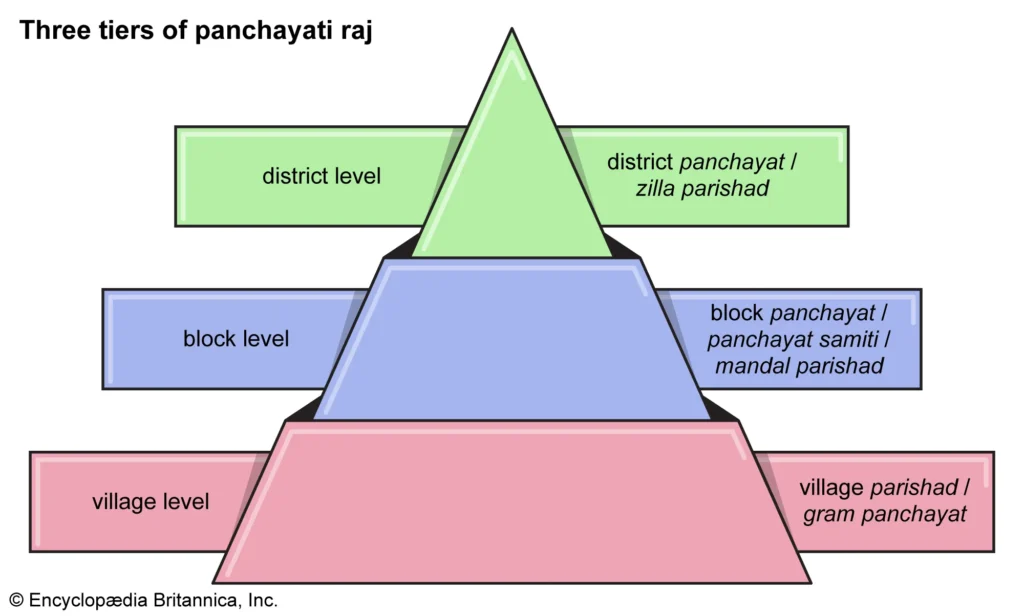
The 73rd Constitutional Amendment Act, 1992 gave it constitutional status and made it the foundation of the three-tier Panchayati Raj system (village → block → district).
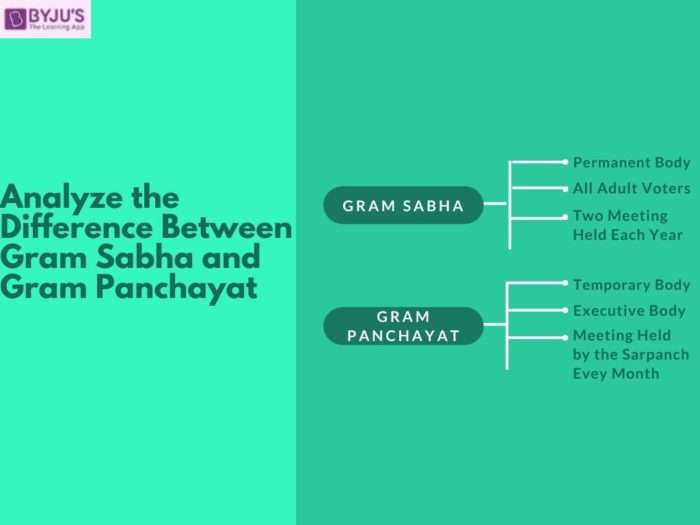
How Gram Sabha is Different from Gram Panchayat
| Aspect | Gram Sabha | Gram Panchayat |
|---|---|---|
| Composition | All registered voters (direct democracy) | Elected Sarpanch + ward members (representative) |
| Tenure | Permanent | 5 years |
| Role | Legislative, approval & oversight | Executive implementation |
| Meetings | At least 2–4 times a year, open to all | Monthly, only elected members + officials |
| Power | Decisions are final; cannot be overturned by anyone except itself | Must get Gram Sabha approval for plans & budgets |
Gram Sabha is the “village parliament”; Gram Panchayat is the “village cabinet” that works under its supervision.
Key Powers & Functions (as per state laws & 73rd Amendment spirit)
- Approves the entire annual development plan and budget of the Gram Panchayat
- Identifies genuine beneficiaries for every welfare scheme (PMAY houses, pensions, ration cards, MGNREGA jobs, scholarships)
- Conducts social audit of all works (MGNREGA, Swachh Bharat, etc.)
- Reviews income, expenditure and audit reports
- Can question the Sarpanch and members on any issue
- Approves minor local taxes/fees in many states
- In Scheduled Areas (PESA Act), has veto power over land acquisition, mining, etc.
- Promotes social harmony and resolves local disputes through consensus
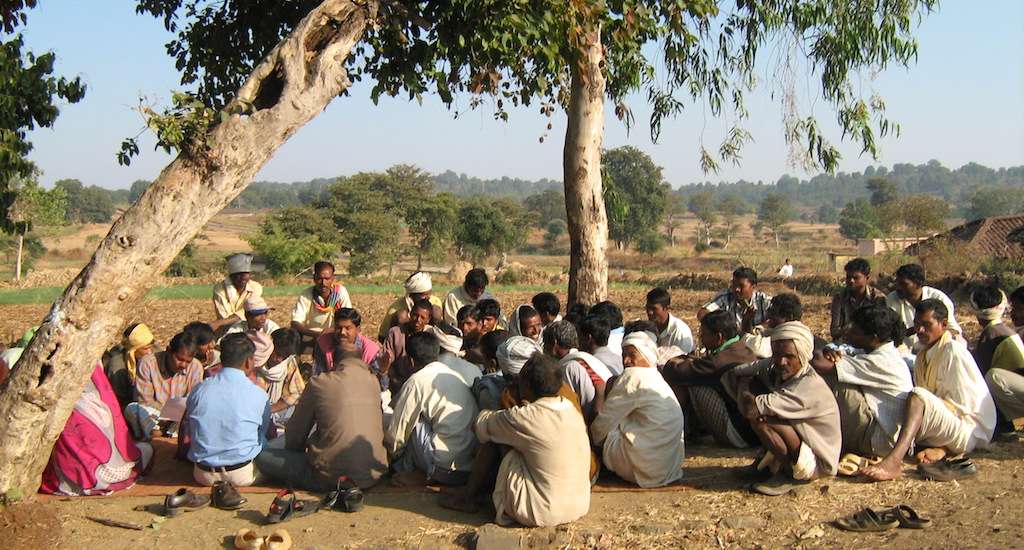
Why Gram Sabha Matters More Than Elections
- Direct vs Representative Democracy
Elections give you a voice once every five years. Gram Sabha gives you a voice every few months — directly, in your own language, about your own street, school, water, roads. - Continuous Accountability
An MLA or MP can disappear after winning. A Sarpanch has to face the entire village every quarter and answer why the drain is still blocked or why the school building is leaking. - Last-Mile Targeting of Schemes
Studies show that when Gram Sabha meetings are held regularly, illiterate and poor citizens are far more likely to get BPL cards, pensions and housing. Elite capture reduces dramatically. - Inclusivity Built In
Reservations for women (one-third, often 50% now), SC/ST seats in Panchayats become meaningful only because Gram Sabha forces every section to be heard. - Real Gram Swaraj
Mahatma Gandhi dreamed of “village republics”. The 73rd Amendment tried to deliver exactly that. Kerala’s People’s Planning Campaign (1996 onwards) showed what is possible: Gram Sabhas prepared village plans that fed into the state budget, with massive public participation and transparency.
The Ground Reality – Challenges & Hope
Attendance is often low. Elite domination, caste/gender barriers, lack of awareness, and ritualistic meetings still exist in many states. Yet wherever Gram Sabha is taken seriously — in parts of Kerala, parts of Rajasthan (social audits), Odisha (PESA areas), Maharashtra (some model villages) — corruption drops, development becomes need-based, and people start owning their governance.
The Way Forward
The real power shift will happen only when citizens start demanding:
- Minimum four Gram Sabha meetings per year
- Proper 15-day notice + agenda in local language
- Quorum norms strictly followed
- Video recording of meetings
- Action-taken report on every resolution
Elections are necessary. But without an active Gram Sabha, they remain a periodic festival of promises. With a vibrant Gram Sabha, democracy becomes a daily practice.
As one villager in a Kerala Gram Sabha once said: “We don’t wait for the government to come to us. We are the government here.”
That is the spirit of true roots democracy.
Gram Sabha is not just another meeting. It is the soul of India’s republic at the grassroots.
If you are a voter in rural India, your next Gram Sabha is your real election. Attend it. Speak in it. Own it.