By Rootsalert Global Desk| 05-March-2026
Moscow’s latest warning suggests Donald Trump’s aggressive stance on Iran and Israel could push the world past the point of no return.
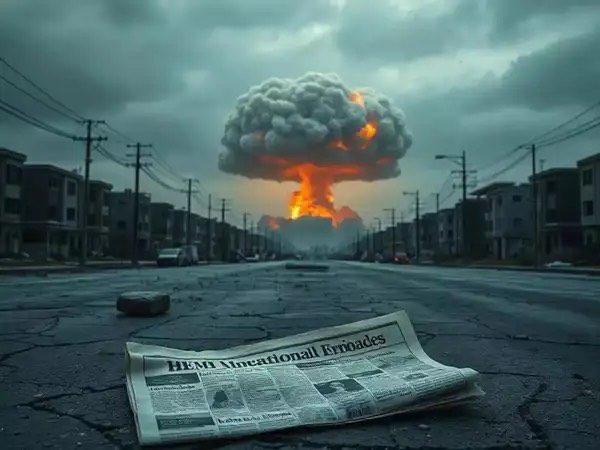
The Kremlin just signaled that the road to World War III might be paved with Donald Trump’s campaign promises.
In a move that sent shockwaves through diplomatic circles, Russian officials issued a blunt warning this week. They claim Trump’s proposed foreign policy—specifically his hardline stance on the Iran-Israel conflict—is a powder keg waiting for a match.
It wasn’t a suggestion. It was a threat.
Russian leadership argues that any attempt to dismantle the current Middle Eastern power balance will backfire spectacularly. They’re betting that Trump’s “peace through strength” rhetoric is actually a blueprint for a global wildfire.
Why is Moscow suddenly so concerned with a man they’ve historically tolerated?
The answer lies in the shifting sands of the Tehran-Moscow alliance. Russia has spent years tethering its military interests to Iran. If Trump returns to the White House and gives Israel a green light for total escalation, Russia’s backyard becomes a front line.
“The world is closer to the edge than it has been in decades,” one official noted, pointing to the crumbling guardrails of international law.
But does anyone actually believe the Kremlin is playing the role of peacemaker?
Probably not. Most analysts see this as a calculated play to rattle Western voters before they head to the polls. It’s a classic intimidation tactic designed to make the status quo look like the only safe option.
The friction point is simple: Trump wants to squeeze Iran until it breaks. Russia needs Iran to stay standing to keep the U.S. occupied.
When these two worldviews collide, the friction creates enough heat to burn down the neighborhood. Moscow is banking on the idea that the American public is too tired of “forever wars” to risk a leader who might start a new one.
Trump hasn’t backed down, though. He’s doubled down on his support for Israeli Prime Minister Benjamin Netanyahu, suggesting the current administration is too weak to prevent a catastrophe.
It’s a high-stakes game of geopolitical chicken.
One side claims strength prevents war. The other side claims that same strength is exactly what starts it.
The rhetoric coming out of Russia right now is designed to be visceral. They’re using words like “catastrophic” and “inevitable” to describe the fallout of a second Trump term. It’s a departure from the “wait and see” approach they took in 2016.
They aren’t just watching the election anymore; they’re trying to steer it.
Is this just more hollow bluster from a cornered Kremlin? Or have we reached a point where the traditional rules of diplomacy no longer apply?
The reality on the ground is grim. Drones are flying, sanctions are failing, and the old alliances are hardening into something much more dangerous. Russia is signaling that it won’t sit on the sidelines if its primary Middle Eastern partner is pushed into a corner.
This isn’t just about trade deals or border disputes. This is about the fundamental architecture of global power.
If Trump follows through on his promise to dismantle the “globalist” approach to the Middle East, Russia says it’s ready to flip the table. They’ve already proven in Ukraine that they’re willing to burn the manual if they don’t like the game.
Washington is currently a house divided on how to handle the threat. Some see the Russian warning as a desperate cry for relevance. Others see it as a legitimate red line that could lead to a nuclear-standard escalation.
Either way, the era of predictable conflict is over.
We’re moving into a phase where the rhetoric is just as lethal as the hardware. Moscow’s warning serves as a reminder that in a globalized world, a spark in Tehran can easily burn down a city in the West.
The coming months will determine if this was a bluff or a prophecy.
Trump’s team remains defiant, insisting that his “America First” policy is the only thing standing between the current chaos and a lasting peace. Russia, meanwhile, is digging in, preparing for a world where the old rules don’t exist.
The fuse is lit, and the world is watching to see who blinks first.
Whatever happens in November, the geopolitical map is being redrawn in real-time. The only certainty is that the quiet days of diplomacy are long gone, replaced by a loud, dangerous scramble for survival.