Bengaluru, India – The Indian Space Research Organisation (ISRO) has announced a groundbreaking scientific achievement from its Chandrayaan-2 lunar orbiter. For the first time ever, scientists have observed the impact of the Sun’s Coronal Mass Ejection (CME) on the Moon’s exosphere — a major milestone in lunar and space weather research.
The discovery was made by the Chandra’s Atmospheric Composition Explorer-2 (CHACE-2) payload aboard the Chandrayaan-2 orbiter. According to ISRO, CHACE-2 recorded a significant increase in the total pressure of the Moon’s dayside exosphere when a powerful solar CME struck the lunar surface.
ISRO’s Key Findings
ISRO reported that the total number density—the number of neutral atoms or molecules in a given volume—increased by more than ten times during the CME event. This spike aligns with theoretical predictions, but it is the first-ever direct observation confirming this phenomenon.
The rare event occurred on May 10, 2024, when a series of intense solar CMEs were ejected by the Sun. As these high-energy particles reached the Moon, they knocked atoms off the lunar surface, temporarily enhancing the exosphere pressure on the sunlit side.
Why This Discovery Matters
ISRO highlighted that this observation offers critical scientific insights into both the lunar exosphere and the effects of space weather on the Moon. It not only deepens our understanding of the Moon’s atmospheric dynamics but also underscores the challenges for future lunar habitats.
“Lunar base architects must consider such extreme solar events, which can temporarily alter the Moon’s environment, before designing sustainable bases on the lunar surface,” ISRO stated.
About Chandrayaan-2 Mission
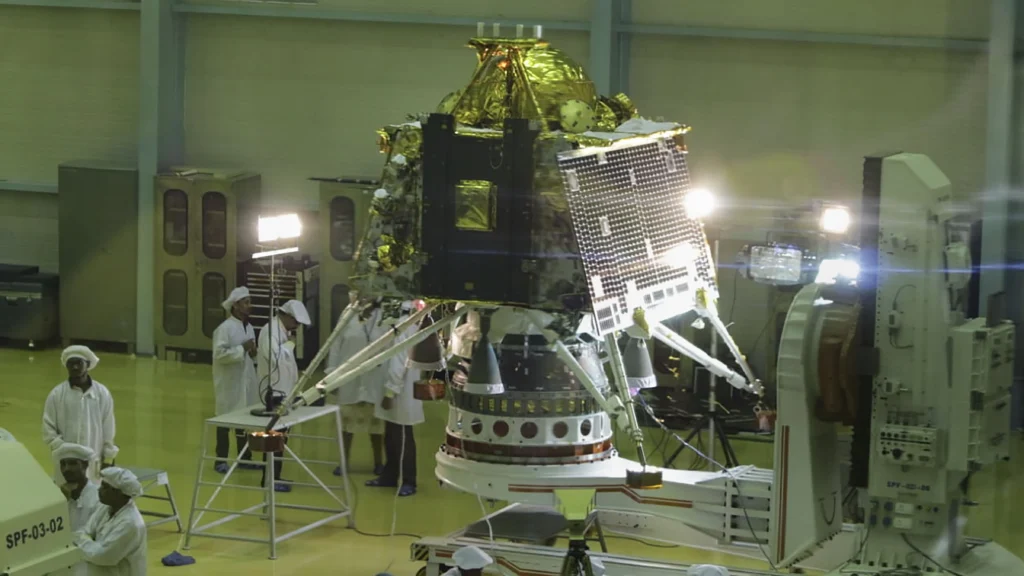
Launched in 2019, the Chandrayaan-2 mission consists of an orbiter, lander (Vikram), and rover (Pragyan). While the Vikram lander lost communication during its descent, the orbiter continues to operate flawlessly, carrying seven advanced payloads — including CHACE-2, which made this historic observation possible.
Conclusion
This latest finding by ISRO and the Chandrayaan-2 orbiter marks a significant step forward in lunar science. The first-ever observation of the Sun’s CME effects on the Moon not only validates decades of theoretical models but also opens new avenues for space weather research and lunar exploration.