
Forget the ballot box the fight for India’s Upper House happens behind closed doors through a complex math formula that keeps party bosses in power.
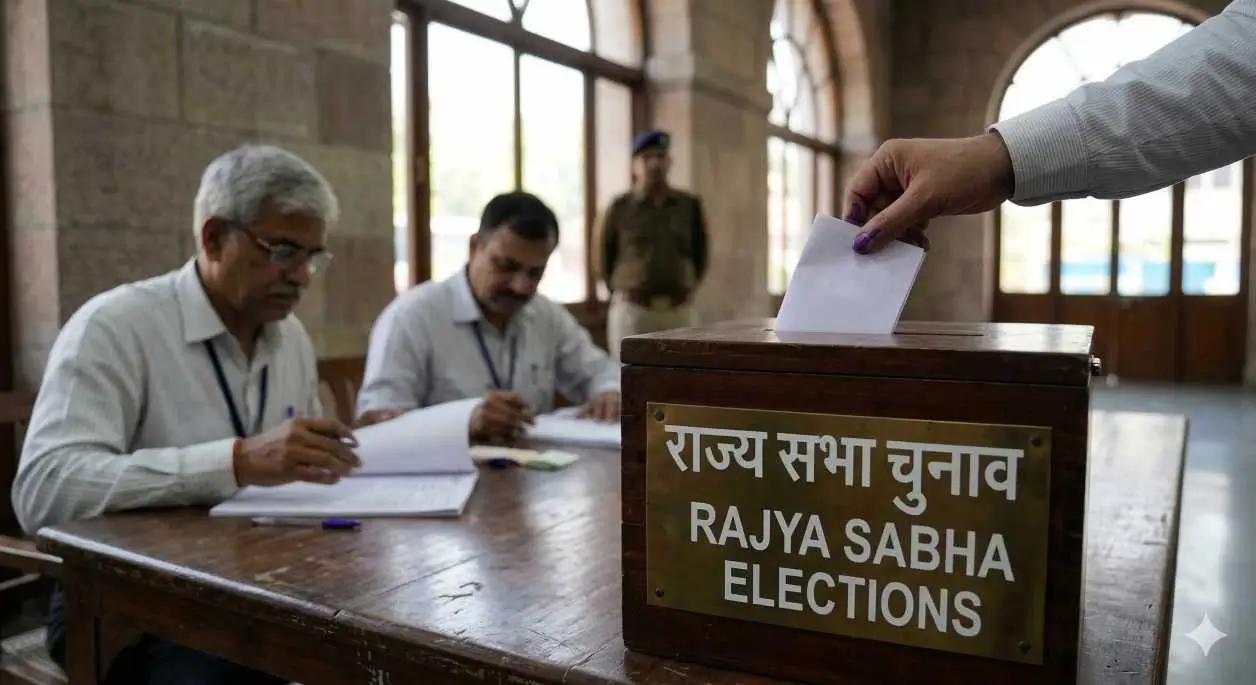
The Rajya Sabha isn’t a popularity contest. Most Indians don’t realize they have zero direct say in who sits in the “House of Elders,” yet these 245 seats hold the power to kill or clear the nation’s most controversial laws. It’s a game of high-stakes musical chairs played exclusively by state politicians.
Nobody is casting a vote at a local polling station for these seats today, even as 37 vacancies across 10 states hit the headlines this March 16. Instead, the power rests entirely with Members of the Legislative Assembly (MLAs). If you’ve ever wondered why parties scramble to win state elections even when the national mood shifts, this is the reason. State power equals federal muscle.
But how does the math actually work?
It’s called the Single Transferable Vote (STV) system. It sounds like a headache, and for the people counting the ballots, it usually is. Unlike a standard election where the person with the most votes wins, Rajya Sabha candidates need a specific “quota” to cross the finish line.
The formula is rigid. Take the total number of MLA votes, divide it by the number of vacant seats plus one, and then add one to the final result. In technical terms, it looks like this:
Quota = [ (Total Number of Votes / (Number of Seats + 1) ) + 1 ]
It’s a cold, calculated numbers game that leaves almost no room for error.
Parties don’t just hope for a win. They map out every single preference on the ballot. If a candidate gets more votes than they need, those “surplus” votes aren’t wasted. They’re passed down to the next person on the list.
So, why does this matter to the average person in Delhi or Mumbai?
Because the Rajya Sabha is permanent. Unlike the Lok Sabha, it never dissolves. Every two years, one-third of the members retire, making it a constant, evolving battlefield for legislative control. It’s the ultimate firewall against “check and balance” politics.
And let’s be honest: the process is ripe for drama. We’ve seen it time and again resort politics, cross-voting, and midnight disqualifications. When the margin for victory is a fraction of a percentage point, a single “rogue” MLA can flip the script for an entire state.
The Vice President of India sits at the head of this chamber, but the real influence is held by those who master the arithmetic. Since the 12 nominated members are hand-picked by the President for their “contributions” to arts or science, the government of the day always has a head start.
Critics argue the system is too detached from the common man. They aren’t entirely wrong. It’s a filtered version of democracy, designed by the Constitution’s framers to ensure that “sober” second thoughts prevail over the populist swings of the lower house.
But is it still sober? Or has it just become another arena for partisan warfare?
The complexity of the STV system ensures that smaller parties often hold the tie-breaking power. This forces the giants to negotiate, trade favors, and sometimes, swallow bitter pills just to get a seat at the table. It’s messy, quiet, and incredibly effective.
As the current 2026 cycle of retirements approaches, the spreadsheets are already out. Party whips are counting heads and checking loyalty. In the Rajya Sabha, you don’t need a campaign bus; you just need a calculator and a very disciplined room of legislators.
The next time a major bill stalls in Parliament, don’t look at the Prime Minister. Look at the state houses. That’s where the real Rajya Sabha map is drawn, one quota at a time.






One response
I was searching for this topic and finally i got here