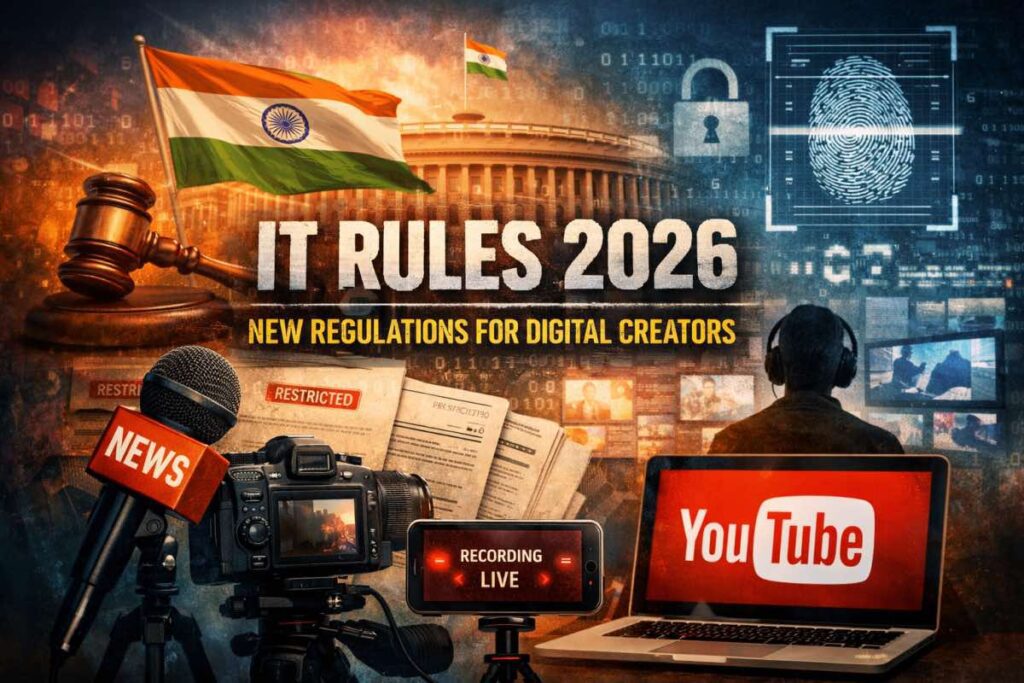
The Central Government’s proposed IT Rules amendment weaponizes tech platforms against ordinary users, turning every independent news post into a massive legal liability.
Raipur, March 31, 2026 — Ask the wrong question online, and the state will find you.
New Delhi just dropped a draft amendment to the Information Technology (IT) Rules, 2021. It reads like a death warrant for independent digital journalism. The government claims they want accountability. The actual text tells a different story. It reveals a sweeping mechanism to drag every unregistered digital journalist, YouTuber, and ordinary citizen sharing news into a brutal regulatory dragnet.
The Ministry opened a narrow window for public and stakeholder feedback. That door slams shut on April 14, 2026.
Until now, India’s stringent IT compliance rules kept large-scale digital news portals on a tight leash. The 2026 amendment obliterates that boundary. If you post, host, or share current affairs on a social feed, you fall squarely under the Digital Media Code of Ethics. You don’t need a press credential to face government scrutiny anymore. You just need a smartphone.
How does a state police millions of individual creators simultaneously?
They don’t. They force the tech giants to execute the crackdown.
Under the proposed rules, intermediaries—the social media platforms hosting your content—face severe, non-negotiable compliance mandates. They must embed every single government advisory, directive, and standard operating procedure directly into their user due diligence conditions. The platforms become deputized agents of the state. If an intermediary hesitates or fails to enforce these rules, they lose their legal safe harbor. They lose their immunity from prosecution over user content.
Faced with the threat of legal action, platforms won’t hesitate. They will ban accounts, throttle reach, and pull down posts rather than risk the wrath of the Ministry.
But the most dangerous weapon in the draft hides inside Rule 14.
The government plans to establish a powerful inter-departmental committee with unprecedented reach. This body isn’t designed to passively review public grievances. It holds the explicit authority to directly investigate cases handed down by the Ministry. It streamlines the censorship process. The state’s direct line to silencing digital content just got much shorter.
The fallout hits the ground level immediately. Independent journalists and digital influencers built their audiences on raw, unfiltered reporting outside the legacy corporate structure. Now, they carry the exact same regulatory burden as massive media conglomerates, but without the legal teams to protect them.
The threat trickles all the way down to the neighborhood level. Administrators running local WhatsApp and Telegram news groups in cities like Raipur and Bilaspur face immense liability. Sharing a single link to a critical local news story could trigger a federal review. Local news distribution relies on these networks. This amendment effectively criminalizes that distribution.
Industry experts warn this move shatters fundamental freedom of expression across the country. It creates a chilling environment where raising a valid question carries the implicit threat of state retribution.
The state isn’t just watching the platforms anymore. They are coming for the people sharing the links.
Discover more from Rootsalert
Subscribe to get the latest posts sent to your email.