The Pentagon targeted military installations on Iran’s most critical crude export terminal just hours before Washington’s ultimatum to reopen the Strait of Hormuz expired.
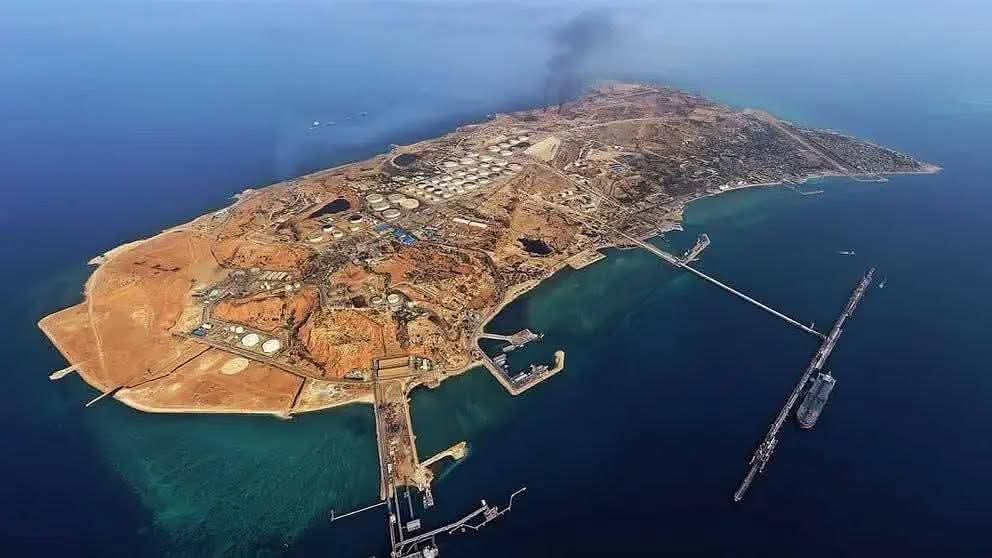
April 7 — The United States military bombed targets on Kharg Island today, driving a kinetic wedge right into the absolute nerve center of Iran’s oil economy. The attack hit just hours before a strict deadline set by US President Donald Trump for Tehran to reopen the Strait of Hormuz officially expired. It’s the sharpest, most economically perilous escalation yet in a grinding, six-week war that’s actively reshaping the Middle East.
A senior US official confirmed to Axios that American forces struck specific military installations on the small coral island. Reuters corroborated the intelligence shortly after. The Pentagon deliberately avoided the sprawling oil terminals and petrochemical facilities that dot the 8-kilometer strip of rocky land. They didn’t hit the crude pipelines. They didn’t bomb the deep-water docks.
But the message landed exactly as intended.
Kharg Island sits 50 kilometers off the Iranian mainland in the churning waters of the Persian Gulf. It handles roughly 90 percent of the nation’s crude oil shipments. The island’s deep-water access allows massive crude carriers to dock—a critical geographic advantage entirely absent along Iran’s mostly shallow coastline. It serves as the primary endpoint for pipelines draining Iran’s most massive onshore oil and gas fields. Destroying it wouldn’t just bankrupt Tehran overnight. It would send global energy markets into an immediate, violent tailspin.
So far, Washington has held back from pulling that specific trigger. Striking the crude infrastructure outright would catapult global oil prices rapidly toward $150 a barrel. The economic blowback would hit American consumers just as hard as European or Asian markets. But today’s bombing proves the US is entirely willing to operate right on the absolute edge of that economic cliff.
The Iranian response came fast and hard.
Iran’s Islamic Revolutionary Guard Corps issued a blunt statement declaring that restraint is over. Metro UK reported the stark warning shortly after Iran’s semi-official Mehr News Agency broke the news of the initial explosions. Tehran knows exactly what’s at stake. They’ve spent 39 days absorbing joint US-Israeli strikes across their sovereign territory, and now the bombs are dropping on their last remaining financial lifeline.
This attack didn’t happen in a vacuum. Just 24 hours earlier, Tehran flatly rejected a 45-day ceasefire proposal backed by Washington. Iran attempted to counter with a 10-point peace plan passed through regional mediators. US officials dismissed the Iranian proposal immediately, stating it completely failed to meet baseline American conditions for halting the violence.
Trump responded by drawing a hard line in the sand regarding the Strait of Hormuz. The strait is the most vital global choke point on earth. Roughly a fifth of the entire world’s oil supply flows through its narrow waters daily. Iran choked it off, effectively holding global shipping hostage, and Washington demanded it opened. The deadline loomed. The US military didn’t wait for the clock to run out entirely before launching their aircraft toward Kharg.
And the violence is bleeding out rapidly across the map.
While Kharg Island burned, Israeli forces hit a petrochemical facility deep inside Iran. The IDF claimed the plant manufactured nitric acid—a core, critical component used by the Iranian military to build explosives and ballistic missile propellants. Simultaneously, projectiles smashed into a civilian residential building in the Iranian city of Shahriar. Iran’s YJC agency reported nine dead and 15 injured in that specific strike. Blood on the streets, dust in the air.
The infrastructure war is widening by the hour. Iranian railways took heavy hits today in Karaj, Kashan, and Zanjan. Two people died in the Kashan railway strike alone. In response to the growing chaos, the Israeli Defense Forces took the highly unusual step of warning all civilians in Iran to avoid train travel entirely until 21:00 local time. The IDF explicitly warned that being on trains or anywhere near railway lines could be fatal.
Are we watching the systematic, real-time dismantling of the Iranian state?
President Masoud Pezeshkian insists his country won’t break under the pressure. He took to X today, stating publicly that 14 million brave Iranians are fully prepared to sacrifice their lives to defend the Islamic Republic. He wrote that he has sacrificed his life for Iran and will continue to do so. But ideological resilience doesn’t fix bombed railways. It doesn’t rebuild shattered petrochemical plants. And it definitely doesn’t protect deep-water oil terminals from advanced American munitions.
The war kicked off on February 28. It’s now deep into its sixth week, and the battlefield shifts its geometry daily. The US military recently lost an F-15E Strike Eagle to an Iranian shoulder-fired missile. Extracting the downed crew required a massive, high-risk 150-aircraft deception operation to blind and evade Iranian ground forces. Iran lost its own intelligence chief, Majid Khademi, in a targeted joint US-Israeli strike.
The geography of the conflict simply refuses to hold still.
A terror attack hit near the Israeli consulate in Istanbul today, leaving one attacker dead and two Turkish police officers injured in a street gunfight, according to Reuters. Meanwhile, an Iranian missile slammed into the Thuraya Telecommunications administrative building in Sharjah, expanding the footprint of the war right into the United Arab Emirates. Back in the Persian Gulf, 16 commercial vessels remain entirely stranded in the crossfire, though Indian officials confirmed today that two Indian-flagged LPG tankers successfully navigated the heavily mined Strait of Hormuz and are currently steaming toward the subcontinent.
The global oil market is watching Kharg Island with raw, unfiltered panic. Analysts know the math. If the US decides to stop threading the needle—if Trump orders the absolute destruction of the export terminals as he previously warned he could—the economic shockwave will hit every gas pump and shipping manifest on earth. Millions of barrels of daily supply will simply vanish from the global ledger.
Trump warned earlier in the conflict that the US possesses the sheer firepower to set Iran back decades by systematically destroying its bridges, power plants, and critical infrastructure within hours. Hitting military targets on Kharg Island isn’t just a tactical strike. It’s a preview of that exact promise. The Pentagon is showing Tehran that American forces can penetrate their most heavily guarded, economically vital airspace completely at will.
The clock on the Hormuz deadline has expired. The ceasefire is dead on arrival. The IRGC says their restraint is over.
Global crude markets open tomorrow to a Middle East where the red lines have officially vanished.