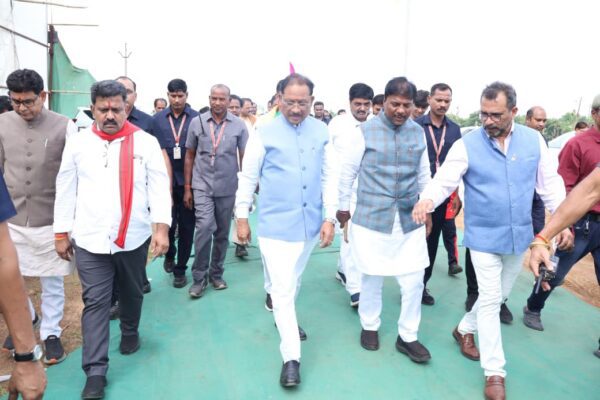
The district magistrate warned that agencies supplying manpower will lose their licenses if workers protest, effectively making third-party contractors responsible for quelling dissent.
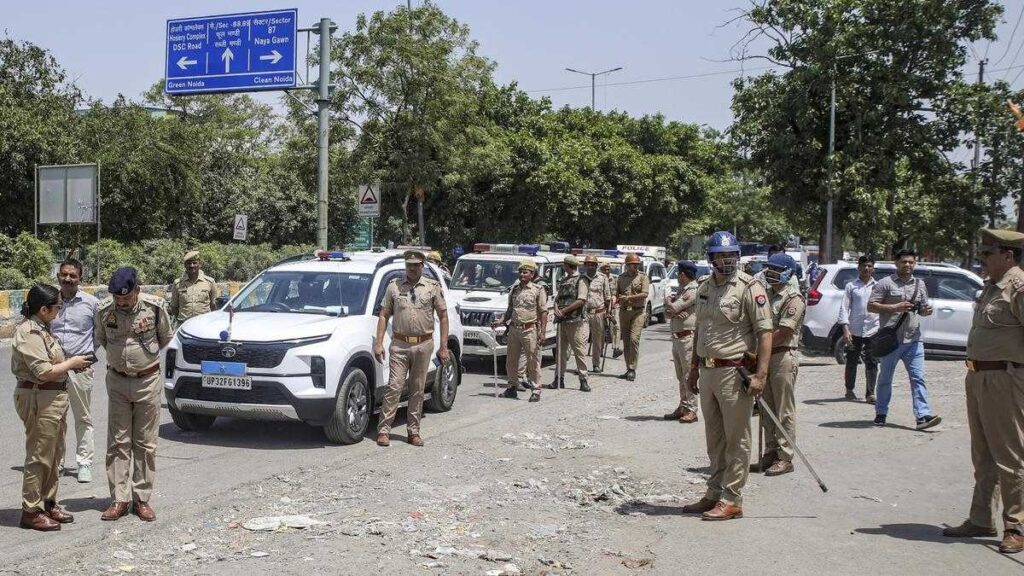
The state is outsourcing its crackdown.
Following days of violent wage protests across Noida’s industrial belt, the district administration has issued a blunt ultimatum. If factory workers step out of line, the agencies that hired them will pay the price.
Gautam Buddha Nagar District Magistrate Medha Roopam confirmed the new directive on Wednesday. Outsourcing firms—the third-party middlemen supplying thousands of contract labourers to local manufacturing units—now face immediate blacklisting and license cancellation if their workers engage in unruly behaviour.
“Outsourcing agency acts as a critical link between industrial units and workers,” Roopam said in a video statement. She made it clear that any disruptive conduct by employees holds the supplying agency directly responsible.
It’s a calculated move. It shifts the burden of maintaining industrial peace from the state and corporate factory owners directly onto the shoulders of labour contractors.
And it arrives on the heels of absolute chaos.
On Monday, thousands of contract workers poured into the streets of Noida. They demanded a living wage. They demanded basic overtime pay. Frustration that had been building since last Friday finally boiled over into stone-pelting, vandalism, and barricaded roads. Noida police responded with batons and widespread detentions, arresting 396 people—including four women—and registering seven FIRs.
Authorities are now treating the labour uprising like an organised crime ring. Police are scanning WhatsApp groups used to mobilise workers, probing an alleged “syndicate,” and investigating external funding sources. Police Commissioner Lakshmi Singh locked down key hubs like Sector 80, blanketing the industrial zone with heavy security to enforce a fragile normalcy. The administration issued severe warnings against spreading rumours, threatening strict legal action for anyone caught circulating unverified information.
The Uttar Pradesh government tried to douse the fire late Tuesday with a stopgap financial fix. Chief Minister Yogi Adityanath’s administration announced an interim 21 percent hike in minimum wages for unskilled workers in Noida and Ghaziabad. The baseline monthly pay jumped from ₹11,313 to ₹13,690, effective retroactively from April 1. Semi-skilled workers saw a bump to ₹15,059, while skilled labourers will now earn ₹16,868. Workers in municipalities got a 15 percent raise, and those in other state regions received 9 percent.
But is an extra ₹2,377 a month enough to survive the crushing cost of living in the National Capital Region?
Trade unions say no. The Centre of Indian Trade Unions called the wage increase a sham that keeps workers well below survival levels. Opposition leaders pointed out the brutal math. Rent alone for a tiny room in Noida eats up ₹4,000 to ₹7,000. Food, fuel, and transport devour the rest. Minimum wages in Uttar Pradesh hadn’t seen a real revision since 2014. Meanwhile, neighbouring Haryana recently bumped its pay scales, throwing the stark disparity into sharp relief for Noida’s workforce.
Congress national secretary Shahnawaz Alam called the administration’s threat against outsourcing firms the “height of exploitation.”
“With such announcements, the State is trying to further curb any kind of dissent by workers,” Alam said. He argued the government wants to add an invisible layer of pressure on labourers. If contractors risk losing their business over a strike, they’ll ensure strikes don’t happen. So the state won’t have to intervene because the middlemen will crush the dissent first.
The unrest isn’t isolated to Gautam Buddha Nagar. It’s bleeding across North India. Workers in Manesar, Faridabad, and Bhiwandi have staged similar walkouts in recent months. Former MP Udit Raj linked the explosion of anger directly to the Union government’s new Labour Codes, which unions argue normalise fixed-term employment, strip away job security, and effectively kill the right to strike.
Workers expected wage revisions when the codes rolled out last November. Instead, they got stagnant paychecks while inflation skyrocketed. The All India Central Council of Trade Unions noted that the protests from Panipat to Noida prove workers outright reject the punishing 12-hour workdays pushed by the new regulations.
The Polit Bureau of the Communist Party of India-Marxist condemned what it called brutal repression by BJP-ruled governments in Haryana and Uttar Pradesh. They pointed out that over the past ten weeks, workers across North India have spontaneously risen against inhuman working conditions, stagnant wages, and the callous, pro-management attitude of state labour departments.
Even the Bharatiya Mazdoor Sangh, a trade union affiliated with the Rashtriya Swayamsevak Sangh, broke ranks to warn the government. The BMS stated that while violence must be punished, the unrest reflects genuine, ignored grievances. They cited wage disparities, excessive contractualisation, and a total lack of grievance redressal mechanisms in the industrial clusters.
“When these concerns are ignored or delayed, they inevitably manifest in unrest,” the BMS noted. They urged the government to show equal firmness in punishing industries that violate labour laws and deny rightful benefits.
Roopam, the district magistrate, countered that corporate stability serves everyone. She summoned contractors and factory managers late Tuesday for an emergency meeting, flanked by Additional District Magistrate Atul Kumar and other officials. Roopam told contractors that the smooth functioning of industries safeguards jobs. Without employer stability, she warned, the workers have no future. Officials ordered the contractors to ensure proper wage distribution and to actively train their workers to maintain discipline.
They want peace on the factory floors. They’ve decided to hold the middlemen hostage to get it.