
Global health data reveals a terrifying surge in youth relationship violence, exposing how constant digital surveillance is rapidly escalating modern romance into lethal obsession.
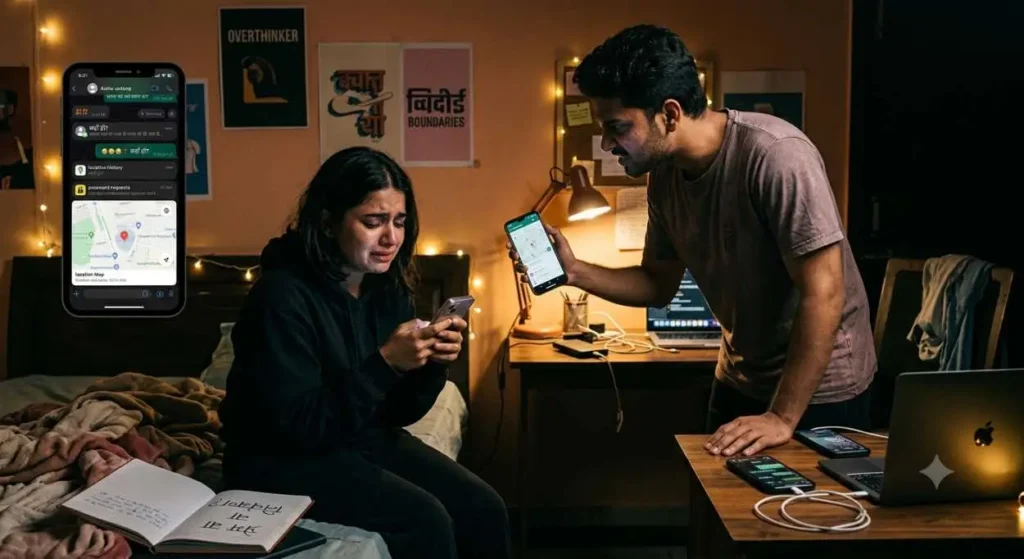
NEW DELHI, June 27 — Nearly a quarter of adolescent girls globally have already faced physical or sexual violence from an intimate partner before turning twenty. The World Health Organization published this devastating metric in July 2024, confirming that roughly 19 million young women are navigating a deadly epidemic. It’s not just teenage angst anymore. Modern romance for Generation Z has fundamentally mutated into a landscape of extreme psychological manipulation, digital surveillance, and lethal escalation.
And the abuse actually intensifies as they age.
University College London released a landmark study in March 2026 tracking 10,000 young people. Lead author Dr. Aase Villadsen found that one in ten Gen Z adults reported severe emotional abuse from a partner by age 23. They’ve discovered that unwanted sexual approaches and assaults are far more common for this generation in their early twenties than during their teenage years. The researchers explicitly noted that three per cent of these young adults experienced direct physical violence in the past year alone. Young women bore the brunt of this trauma, reporting vastly higher rates of emotional abuse and coercive control than their male peers. So why are these violent dynamics accelerating instead of burning out?
The answer lies in the digital panopticon they’ve inherited.
Unlike previous generations, Gen Z manages their romantic lives through 24/7 technological surveillance. Psychologists and sociologists note that tech-facilitated intimate partner violence rarely starts with a physical blow. Instead, it begins with real-time location tracking on apps like Life360, mandatory password sharing, and relentless digital monitoring. This constant surveillance rewires young minds to normalize extreme jealousy and total control as genuine expressions of love. They’ve effectively gamified possessiveness.
How does a victim escape a stalker who lives permanently inside their smartphone?
They usually don’t. Criminologists warn that relationship homicides rarely happen in a vacuum. They serve as the final, fatal act in a long, predictable timeline of coercive control. Because perpetrators now have unprecedented access to their partners’ whereabouts, the traditional breakup period has become a lethal trap. Victims can’t just walk away and sever ties. The abuser holds a permanent digital leash, often weaponising generative AI to create non-consensual imagery or threatening to expose private communications to enforce compliance.
The Centers for Disease Control and Prevention confirms that one in twelve high school students currently experiences physical or sexual dating violence. This psychological conditioning early in life sets a highly volatile precedent. Young women learn to accept extreme boundary violations as normal relationship friction. But when these youth carry that warped reality into their twenties, the stakes escalate. They face immense economic anxieties and severe post-pandemic social isolation. They lack basic, face-to-face conflict-resolution skills. The extreme power imbalances in these relationships frequently combust into fatal violence, directly fueling the rapid spike in youth homicides flooding today’s news cycle.
Editor Shubhankar Shukla didn’t mince words about the core of this crisis. “We are witnessing a generation that is hyper-connected yet psychologically suffocated,” he stated. “For Gen Z, abuse no longer begins with a physical blow; it starts with an unread receipt, a demanded password, and relentless digital surveillance. We keep treating youth relationship homicides as isolated ‘crimes of passion,’ when in reality, they are the fatal endpoints of a normalized culture of psychological ownership.”
Global health authorities demand an immediate, systemic intervention. Dr. Pascale Allotey, Director of WHO’s Sexual and Reproductive Health Department, warned that violence during these critical formative years causes profound, lifelong harm. She urged governments to treat intimate partner violence as a severe public health emergency, demanding targeted support networks over superficial awareness campaigns. Society can’t keep dismissing this as a youthful phase. We’ve handed young people the tools for total digital control without teaching them the fundamental boundaries of human respect.
The body count proves we’re failing them.