
By Global Affairs Desk
January 8, 2026
The shadow war between Washington and Moscow threatened to erupt into direct military confrontation on Thursday, after the Kremlin vowed an “immediate and asymmetrical” response to the U.S. Navy’s seizure of a Russian-flagged oil tanker in the North Atlantic.
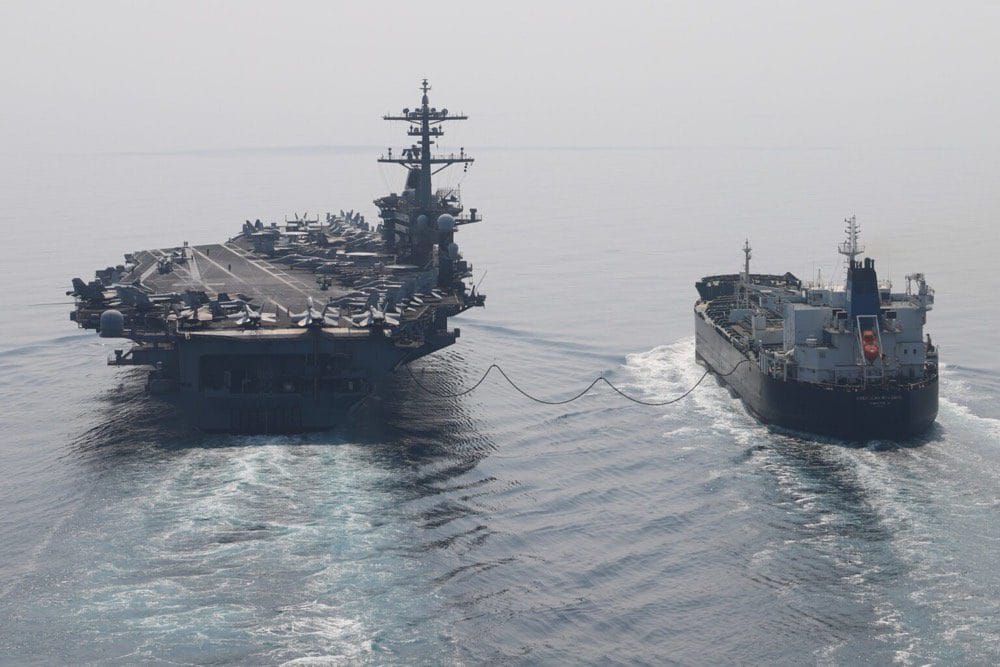
Photo Credit: US Navy / Department of Defense (File Photo)
The incident, which U.S. officials described as a routine enforcement of international sanctions, has been characterized by Russian President Vladimir Putin as an “act of war” and “high-seas piracy,” sending shockwaves through global energy markets and putting NATO forces on high alert.
The Atlantic Standoff
According to a Pentagon briefing, the Marinera—a Russian-flagged vessel suspected of transporting illicit Venezuelan crude in violation of the U.S. blockade—was intercepted by the USS Gravely approximately 400 nautical miles east of the Caribbean. When the vessel refused to halt, U.S. Navy SEALs reportedly executed a boarding operation at dawn.
“The vessel was operating as part of a ‘ghost fleet’ specifically designed to bypass international law and fund regimes hostile to the United States,” said Pentagon Press Secretary Maj. Gen. Patrick Ryder. “The operation was conducted safely, and the crew is currently detained pending investigation.”
However, intelligence sources suggest the operation was fraught with risk. Satellite imagery released by private firms appeared to show a Russian Yasen-class nuclear submarine surfacing less than 20 miles from the seizure site shortly after the incident—a rare and aggressive signal of Moscow’s naval reach.
Diplomatic Fallout
The diplomatic reverberations were immediate. In Moscow, the U.S. Ambassador was summoned to the Foreign Ministry for a 20-minute meeting described by diplomatic sources as “icily brief.”
Kremlin spokesman Dmitry Peskov later addressed reporters, issuing a stark warning: “Washington has crossed a red line. Seizing a sovereign vessel under the Russian flag is not law enforcement; it is a declaration of hostilities. The United States should expect consequences in theaters of our choosing, not limited to the Atlantic.”
This escalation comes less than a week after U.S. special forces conducted a covert operation to extract Venezuelan leader Nicolás Maduro, a key Putin ally. Analysts believe the Kremlin views the double blow—losing a strategic partner in Caracas and having a vessel seized—as a humiliation that requires a forceful countermove to maintain credibility.
Markets and Alliances React
The geopolitical uncertainty triggered a sell-off in global equities and a sharp spike in oil prices, with Brent Crude jumping 4% in early trading on fears of Russian retaliation against Western energy infrastructure.
In Brussels, NATO Secretary-General Mark Rutte called for calm but confirmed that the alliance had increased maritime patrols in the Baltic and Mediterranean seas. “We urge the Russian Federation to de-escalate rhetoric and engage through diplomatic channels,” Rutte stated.
Privately, however, European diplomats expressed concern that the U.S. strategy might be pushing Moscow into a corner. “There is a fear that we are sleepwalking into a direct naval clash,” said one EU defense official, speaking on condition of anonymity. “The Atlantic is a big ocean, but it is feeling very small today.”