By The Roots Alert Desk
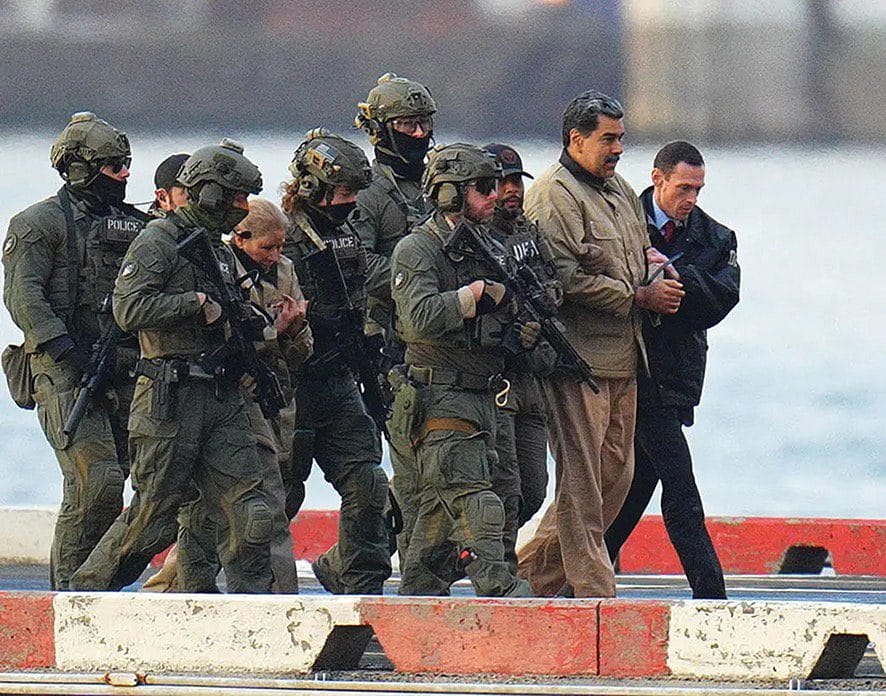
CARACAS/WASHINGTON — In a unilateral military operation that has fundamentally altered the geopolitical landscape of the Western Hemisphere, U.S. Special Forces successfully extracted Venezuelan President Nicolás Maduro and his wife, Cilia Flores, from a fortified bunker in Caracas early last week.
The operation, codenamed “Operation Absolute Resolve,” has plunged Venezuela into a power vacuum and sparked a diplomatic firestorm following the White House’s subsequent announcement that the United States will assume “indefinite administrative control” over Venezuela’s state-run oil industry.
The Operation
Pentagon officials confirmed on Sunday that the raid was executed on January 3 by a contingent of approximately 200 elite U.S. commandos. Utilizing advanced “pattern of life” intelligence, forces breached the Fort Tiuna Military Complex at 02:00 local time.
While U.S. officials reported zero American casualties, the extraction was fierce. Reports from Caracas indicate a firefight that left an estimated 75 dead, including 32 members of the Cuban special forces acting as Maduro’s personal guard.
Maduro and Flores were immediately flown to New York, where they are currently detained in a federal facility awaiting trial on charges of narco-terrorism, referencing indictments unsealed by the Department of Justice in 2020.
“This was not an invasion, but a necessary law enforcement operation supported by military assets,” a White House spokesperson told reporters on Saturday. “The era of the narco-state in the Americas is over.”
Control of Energy Reserves
The most contentious fallout concerns Venezuela’s energy sector, home to the world’s largest proven oil reserves. In an Executive Order signed shortly after the raid, the U.S. administration declared it would manage the sale of Venezuelan crude to prevent the misappropriation of funds.
“We are securing these assets for the future of the Venezuelan people,” the statement read. Proceeds are reportedly being directed to U.S.-controlled accounts earmarked for humanitarian aid and infrastructure reconstruction.
However, the move has triggered immediate friction on the high seas. U.S. Naval forces confirmed the interception of a Russian-flagged tanker attempting to transport Venezuelan crude on Friday, redirecting the vessel to a U.S. port.
Global Reaction: A “Geopolitical Earthquake”
The raid has drawn sharp divides across the international community.
In Miami, the Venezuelan diaspora flooded the streets of Doral in celebration, waving flags and cheering the end of the Chavista regime. Conversely, protests have erupted in Mexico City, Buenos Aires, and Madrid, with demonstrators condemning what they term a return to “Yankee Imperialism.”
European allies appear caught off guard. Diplomatic sources in Brussels, speaking on condition of anonymity, described the mood as paralyzed.
“There is relief that a dictator is gone, but terror at the precedent this sets,” said one senior EU diplomat. “This is a geopolitical earthquake. It is a warning shot to Europe that Washington is willing to act alone, and with overwhelming force, to secure its interests.”
Regional Instability
The power vacuum in Caracas has had immediate ripple effects. With the Maduro regime—a longtime patron of Colombian guerrilla groups—dismantled, leaders of the ELN and FARC dissidents are reportedly fleeing back across the border into Colombia. Bogota has responded by deploying thousands of troops to the frontier to intercept them.
Meanwhile, an interim government has been hastily formed in Caracas under former Vice President Delcy Rodríguez, though her authority remains severely constrained by the overwhelming U.S. presence.
As the United Nations Security Council convenes for an emergency session later today, the world watches to see if this bold projection of American power stabilizes the region or ignites a broader conflict.