Located 3,060 feet above sea level in Korba, this historic site offers misty peaks and ancient temples to a growing wave of domestic travelers.
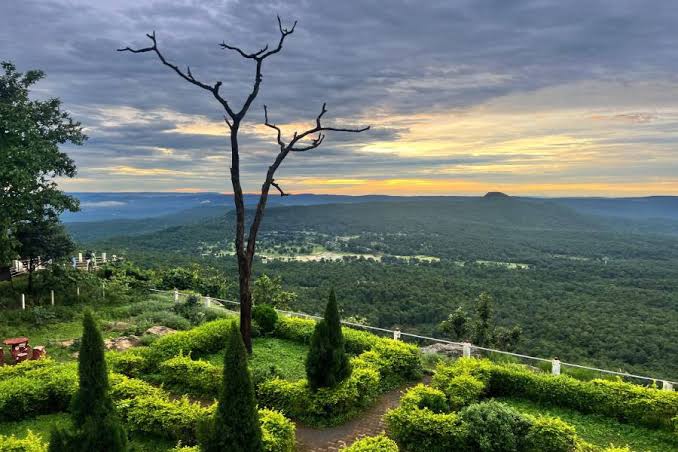
The peak of Chaiturgarh stands 3,060 feet above the sea and looks nothing like the industrial coal hubs that define the rest of Korba district. Local travelers have started calling it the Kashmir of Chhattisgarh. It is a title earned through a combination of high-altitude mist, dense forest canopies, and a temperature that stays consistently lower than the surrounding plains.
Tourism officials in the region report a steady increase in foot traffic to this hilltop. Most come for the views, but they stay for the history. The site is anchored by the Mahishasura Mardini temple, an ancient structure that remains a centerpiece of the local culture. It isn’t just a religious site; it’s a strategic one. The hill serves as a natural fortress, protected by sheer cliffs and thick greenery that once made it nearly impenetrable.
Getting there requires a climb. The road unspools through the Pali development block, winding through the Satpura mountain ranges. It is a rugged trek. The air thins as the elevation rises, shifting the landscape from dry brush to the lush, damp vegetation that gives the area its nickname. Local guides point to the five different entrances to the fort—Menaka, Humkara, Simhadwar, and others—as evidence of its ancient defensive importance.
And why wouldn’t people flock to a place that feels this removed from the heat?
The plateau at the top covers roughly five square miles. It holds several natural springs and ponds that never seem to run dry, even during the peak of the Indian summer. These water bodies, like the Jata Shankara, provide a cooling effect that settles over the entire summit. It is a biological anomaly in a state known for its punishing humidity and sun.
But the appeal isn’t just the climate. It’s the silence. Unlike the crowded hill stations of the north, Chaiturgarh hasn’t been swallowed by massive hotel chains or neon-lit commercial strips. It remains raw. Visitors often find themselves standing alone on the edge of the cliffs, looking out over a horizon that looks like a green ocean.
The Archaeological Survey of India and state tourism boards have tracked the site’s growing profile. They’ve noted that the combination of the 10th-century temple architecture and the natural scenery makes it a rare “double-threat” destination. It appeals to the spiritual and the adventurous simultaneously. The temple itself features a unique twelve-armed statue of the goddess, a detail that brings in scholars as often as it brings in hikers.
So the infrastructure is beginning to catch up. The state has improved the access roads from Korba and Bilaspur, making it a viable weekend trip for the urban population. They’ve realized that the “Kashmir” branding isn’t just marketing—it’s an accurate description of the relief the mountain provides.
The forest department keeps a tight grip on the surrounding woods. This is a protected environment. The trees are old, the wildlife is present, and the “no-trace” ethos is heavily encouraged by local authorities. They want to avoid the plastic-heavy fate of other popular Indian viewpoints.
Chaiturgarh represents a shift in how Chhattisgarh is viewed by the outside world. It is moving away from a reputation built solely on mining and industry. This peak is a reminder that the state holds some of the most pristine ecological pockets in central India. As more people discover the 3,000-foot escape, the quiet of the Satpura ranges is quickly becoming the region’s most valuable commodity.
The mountain remains open year-round, but the monsoon season transforms it into something truly otherworldly. When the clouds sit directly on the temple gates, the industrial reality of the valley below completely disappears.