
The Masihi Samaj is challenging the state’s newly enacted legislation, which threatens life imprisonment for conversions and publicly exposes those seeking to change their faith.
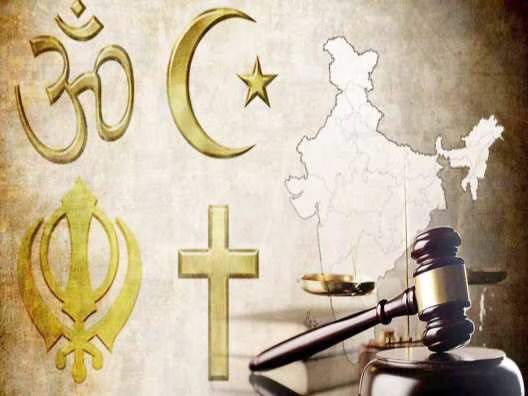
RAIPUR, April 18 — The Christian community in Chhattisgarh isn’t waiting for the state’s new anti-conversion dragnet to tighten. They’ve moved the High Court to strike down the Freedom of Religion Bill 2026, challenging a framework that weaponizes the state apparatus against religious minorities and threatens life imprisonment for faith choices.
Governor Ramen Deka recently signed the sweeping legislation. The Chhattisgarh assembly rammed the bill through on March 19 via a voice vote, while the main opposition boycotted the session. Now, the Masihi Samaj and the Chhattisgarh Christian Forum are dragging the government into court. They argue the law doesn’t protect religious freedom; it systemically criminalizes it.
The 1968 law it replaces, passed when Chhattisgarh was still part of undivided Madhya Pradesh, capped penalties at minor fines and a single year in jail. The 2026 upgrade didn’t just tweak the rules. It rewrote the entire legal landscape to ensure minority faith practitioners operate under constant threat of incarceration.
The penalties are unprecedented.
Under the state’s new rulebook, a “mass conversion” doesn’t require a tent revival or a crowded hall. The law explicitly defines it as the conversion of just two people in a single event. Hitting that threshold triggers a minimum sentence of 10 years, stretchable to life behind bars, alongside a crushing ₹25 lakh fine. Repeat offenders automatically face life imprisonment.
If a single convert is a woman, a minor, a person of unsound mind, or a member of the Scheduled Castes, Scheduled Tribes, or Other Backward Classes, the baseline penalty spikes to between 10 and 20 years in prison, plus a ₹10 lakh fine. For context, these sentences dwarf the punishments for several violent felonies under Indian criminal law.
But the state isn’t just relying on harsh sentencing. They’ve built an administrative wall around the private act of conversion itself.
Anyone intending to change their religion must submit a declaration to the District Magistrate 60 days in advance. Authorities don’t keep this paperwork quiet. They are mandated to publish the applicant’s details on an official government website and plaster physical notices at local tehsildar offices, gram panchayats, and police stations. It’s a mandatory public exposure designed to invite scrutiny, formal objections, and inevitable community backlash before any spiritual transition occurs.
Those assisting in the process face their own gauntlet. The law forces pastors, priests, and local facilitators to register with a competent state authority. They must submit annual audited financial accounts tracking all received funds, specifically flagging foreign sources. Conversion certificates issued under this system won’t even serve as valid proof of identity, and the government’s approval simply lapses if the conversion doesn’t happen within 90 days.
And the government fundamentally redefined what constitutes illegal influence. The legislation outlaws conversions driven by force, fraud, coercion, misrepresentation, or “allurement.” The problem lies in the fine print. The state expanded “allurement” to cover monetary benefits, employment, free education, medical facilities, and the vague promise of a “better lifestyle.”
How do you prove a rural medical clinic isn’t a conversion trap when the law assumes guilt by proximity?
Christian organizations warn this specific language directly targets their historical footprint in the region. They run schools, hospitals, and social programs deep in Chhattisgarh’s tribal belts. Under the new statute, offering a tribal student a free education or treating a patient at a mission hospital could be legally construed as criminal allurement if that person later chooses to convert. Digital platforms aren’t safe either. The law explicitly covers alleged coercion or misrepresentation carried out through social media and electronic messaging.
The Masihi Samaj’s petition directly challenges the constitutionality of these extreme measures. Their legal counsel argues the bill violently breaches Article 25 of the Indian Constitution, which guarantees the freedom of conscience and the right to freely profess, practice, and propagate religion. They also contend the mandatory public publication of intent violates the fundamental right to privacy established by the Supreme Court.
The government maintains a rigid defense. State officials insist the law exists purely to eradicate manipulative conversion tactics, not to ban voluntary religious shifts. Deputy Chief Minister Vijay Sharma argued on the assembly floor that previous laws failed to stop a wave of conversions in the Bastar region between 2004 and 2021, necessitating this draconian upgrade.
Yet, the state built a massive legal loophole into the text. The law explicitly states that returning to one’s “ancestral religion” does not qualify as a conversion. The 60-day notices, the public websites, and the life sentences suddenly don’t apply to reconversions—a clause critics argue exposes the bill’s true political intent.
This localized legal battle is feeding into a much larger national war over religious liberty. The Supreme Court of India is currently examining a sprawling petition filed by the National Council of Churches in India. That case targets anti-conversion frameworks across a dozen states, including Uttar Pradesh, Madhya Pradesh, Gujarat, and Karnataka. The central and state governments have been directed to file counter-affidavits, elevating the issue to a three-judge bench due to its severe constitutional implications.
Recent history in Chhattisgarh gives the Christian community little reason to trust the judicial baseline. Just two months ago, the Supreme Court upheld a lower court ruling that dismissed a plea challenging resolutions passed by elected village councils in the state. Those local councils had explicitly banned the entry of Christian pastors and tribal converts into their villages. The courts reasoned the bans were precautionary measures to protect indigenous cultural heritage, citing the dangers of inducement and manipulation.
Chhattisgarh just pushed the ceiling higher than any of its neighbors. By weaponizing administrative delays, redefining basic charity as criminal allurement, and threatening life imprisonment for two people changing their faith, the state has drafted a blueprint for total religious containment.
The High Court’s impending decision won’t just dictate the daily reality for minorities in Chhattisgarh; it will draw the hard line on exactly how much constitutional rights can be eroded before the judiciary finally breaks the state’s grip.