
Five infant orangutans from Southeast Asia were abandoned in a Balasore coastal forest, triggering a Wildlife Crime Control Bureau probe into sea smuggling routes.
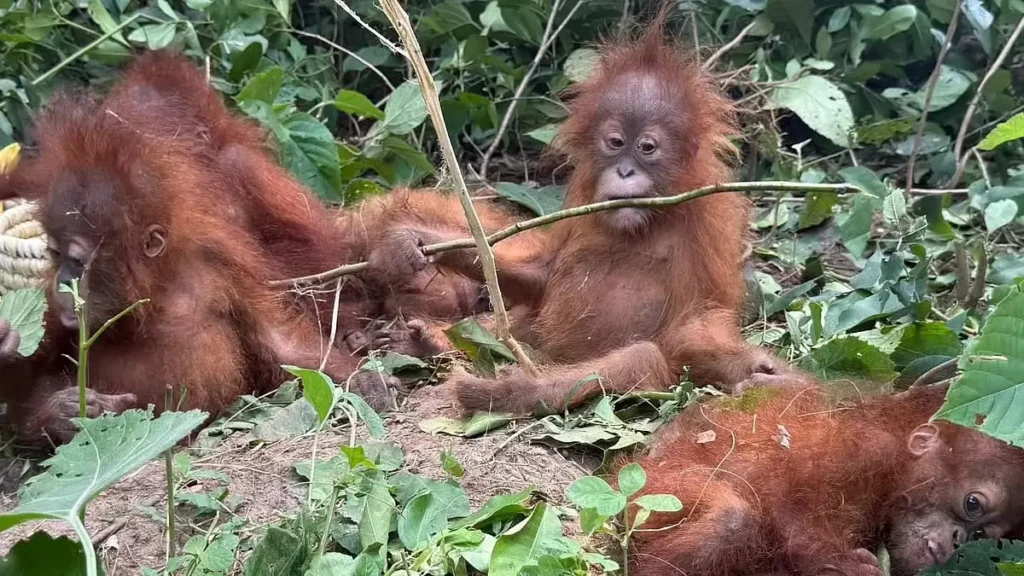
BALASORE, 9 September —Five baby orangutans found Tuesday in an abandoned casuarina plantation along the Odisha coast, an endangered great ape species that is found only in the tropical rainforests of Indonesia and Malaysia, were recovered, revealing an international wildlife trafficking route going through eastern India.
The three males and two females (between six months and one year old) were found clinging to tree branches and lying in a huddle on the ground in the Udayapur – Talsari forest belt in Balasore district, just a kilometre away from the Bay of Bengal coast.
They didn’t walk to there.
The forest department guards on their regular dawn patrol spotted the reddish-brown primates in the Udayapur section of forest range Jaleswar. Animals were disoriented and malnourished, but responsive. They were loaded into covered cane baskets, carried to the forest section office where they were given electrolytes and mashed fruit, and started emergency veterinary care.
It seems that it has been a haphazard transportation system, Regional Chief Conservator of Forests Prakash Chand Gogineni said. The animals were clearly dumped in the plantation after running into an unanticipated police checkpoint or patrol on the coastal road at night.
There are no wild orangutans left to be seen in India. They live only in the remote islands of Borneo and Sumatra, thousands of sea miles off the coast. The Convention on International Trade in Endangered Species of Wild Fauna and Flora (CITES) has designated orangutans as listed under Appendix I, meaning that the commercial trade of wild-caught orangutans is completely banned all over the world.
The rescue has brought to the fore the extent of the illegal exotic pet trade in India:
No visible fractures on any infant who was rescued alive (5 infants)
These were followed clinically with three males and two females.
1 suspected drop off point in the sea off the coast of Odisha and Bengal.
4 coastal forest divisions have been put on high alert for further dumps.
Balasore Divisional Forest Officer Indalkar Pratik Prakash said that a criminal case has been registered under the relevant schedules of the Wildlife Protection Act.
At first, they were still and inactive, but once they are fed they are active,” Prakash said. They were unloaded either directly from an offshore trawler or transported by humans across state borders; “Their natural range is Southeast Asian rainforests, so human agency is the only explanation.
Traffickers lure infant orangutans in by shooting nursing mothers from canopy trees in Borneo and Sumatra, and smuggle the babies through secret sea lanes to be kept in private menageries and exotic pet collectors throughout South Asia in wooden crates and/or duffel bags. An orangutan baby sells for more than ₹25 lakh to ₹40 lakh in the international black market.
The Forest and Environment Minister of Odisha Ganesh Ram Singhkhuntia announced that a special enforcement team has been deployed in Badapai-Ranakatha area on the east Bengal border to track the movement of vehicles.
The Wildlife Crime Control Bureau has been involved in the investigation to identify the port of entry and the organized syndicate behind this shipment,” Singhkhuntia said.
The investigators believe the apes were smuggled on board a fishing trawler that sailed from one of the international maritime routes before it was dropped to smaller motorized country boats near the mouth of Subarnarekha river. Usually animals are transported from the beach either by road or by train towards Kolkata or to other inland transit centres.
The five babies were then sent to the Nandankanan Zoological Park in Bhubaneswar after district veterinarians had given them a medical clearance.
All the five primates were put in an isolated quarantine enclosure for 30 days Wednesday morning at Nandankanan veterinary authorities for pathogen screening, TB test and DNA sequencing.


