
A coordinated raid inside the Udanti-Sitanadi core zone recovered weapons and wild game, landing two local hunters in judicial custody.
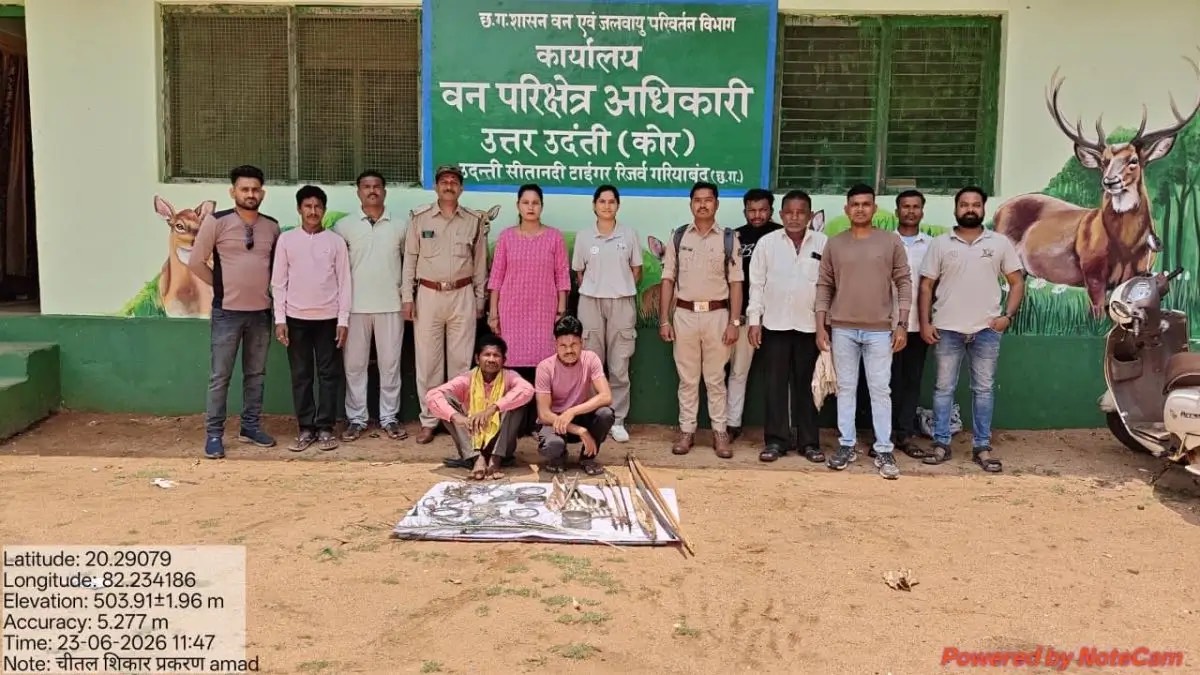
GARIABAND, June 24 — Forest guards haven’t let up their pressure on wildlife criminals, recovering cooked spotted deer meat and traditional hunting weapons from two men living deep inside the Udanti-Sitanadi Tiger Reserve. The June 21 raid dismantled a localised hunting operation that relied on silent traps and arrows to bypass modern anti-poaching patrols.
Acting on confidential intelligence, wildlife officers hit the residences of Naresh Kumar Bhunjia and Balaram Sori in Amad village. The settlement sits inside the North Udanti Forest Range, a strictly protected sector in Chhattisgarh’s Mainpur region. They didn’t find sophisticated firearms, discovering a lethal assortment of traditional killing tools instead.
They’ve seized four blood-stained arrows, two bows, two bow-slingshots, and five wire snares engineered specifically to trap rabbits.
Officers haven’t just found hunting gear; they also catalogued parts from protected bird species, including seven peafowl feathers and four eagle feathers. But the most damning evidence sat inside a simple tiffin box. The raiding party found the cooked meat of a chital, or spotted deer, which the men had prepared as a vegetable curry.
Who’d expect to find a crime scene hidden inside a lunchbox?
The state’s anti-poaching team, led by Nodal Officer Gopal Kashyap and guided by Reserve Director Gurunathan N., pushed Bhunjia during strict interrogation. He couldn’t withstand the pressure. Bhunjia confessed to tracking the deer to the nearby Taripani Ghat on June 17. He shot the animal with a bow, butchered the carcass, and brought the meat home. Following his admission, investigators escorted him back to the rugged ghat to formally verify the kill site.
The operation didn’t happen by accident.
Forest Minister Kedar Kashyap and Principal Chief Conservator Arun Kumar Pandey directed the crackdown as part of a zero-tolerance mandate for wildlife crime. Udanti-Sitanadi spans vast tracts of rugged terrain, serving as a critical habitat corridor for central India’s struggling predator populations. When prey species like chital vanish into snares and cooking pots, the ecological balance collapses. Tigers and leopards starve, pushing them toward human settlements in desperate searches for livestock. Poachers don’t just kill a single deer; they inflict long-term ecological damage by depleting the entire prey base that sustains the forest.
Human eyes can’t catch everything. So, the department deployed specialised assets to ensure nothing slipped through the cracks. A sniffer dog named Tina led the search operation. The trained canine tore through the suspects’ homes, quickly locating the hidden meat and weapons. Tina’s success underscores why frontline units increasingly rely on canine squads to break tough cases.
Officials immediately sealed the seized meat. They’ve shipped the samples to the School of Wildlife Forensic and Health in Jabalpur, Madhya Pradesh, for advanced DNA testing. The forensic results will lock the physical evidence to the crime scene, leaving the defence attorneys little room to maneuver in court. Indian wildlife agencies historically struggled with low conviction rates due to poor evidence collection, meaning today’s forest officials know they can’t rely solely on confessions, relying instead on solid science to secure convictions.
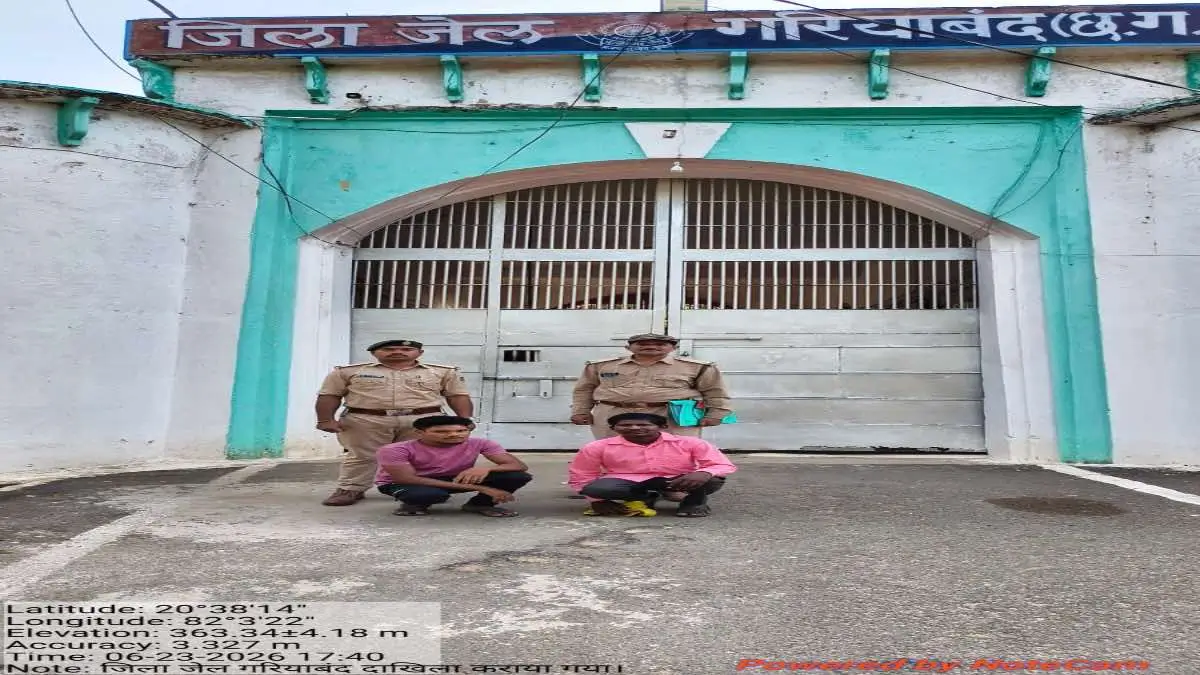
They aren’t getting out anytime soon. Authorities booked both men under the Wildlife (Protection) Act of 1972, citing Sections 9, 31, 39, 50, 51, and 52. These heavy statutes carry severe penalties for hunting Schedule I and II species, including mandatory prison time and massive fines. India designed this legislation specifically to crush commercial poaching rings and subsistence hunters alike. The District and Additional Sessions Court in Gariaband remanded both suspects to judicial custody, and they remain locked in a local jail today.
The forest guards on the ground broke this case through relentless surveillance. A nine-person field team executed the tactical raid alongside Range Officer Jyoti Dhruv and Assistant Punaram Sahu. They didn’t wait for the poachers to strike a larger target.
They’ve secured the reserve’s boundaries, one wire snare at a time.