By Rootsalert Global Desk| 08-February-2026
From Harleys to Walnuts: How the 2026 India-US Trade Agreement Impacts Your Monthly Budget and Lifestyle
The diplomatic handshakes in Washington and New Delhi are over, and the ink is finally dry on the 2026 India-US trade deal. But beyond the high-level policy talk, most of us are asking one simple question: What is this going to cost me?
From your morning snack bowl to the gadgets in your pocket, the landscape of the Indian market is about to shift. Here is the “human-scale” guide to what is getting cheaper, what is staying expensive, and where you might feel a pinch.
The “Good News” List: Luxury and Lifestyle
If you enjoy premium imports, your shopping list is about to become significantly more affordable.
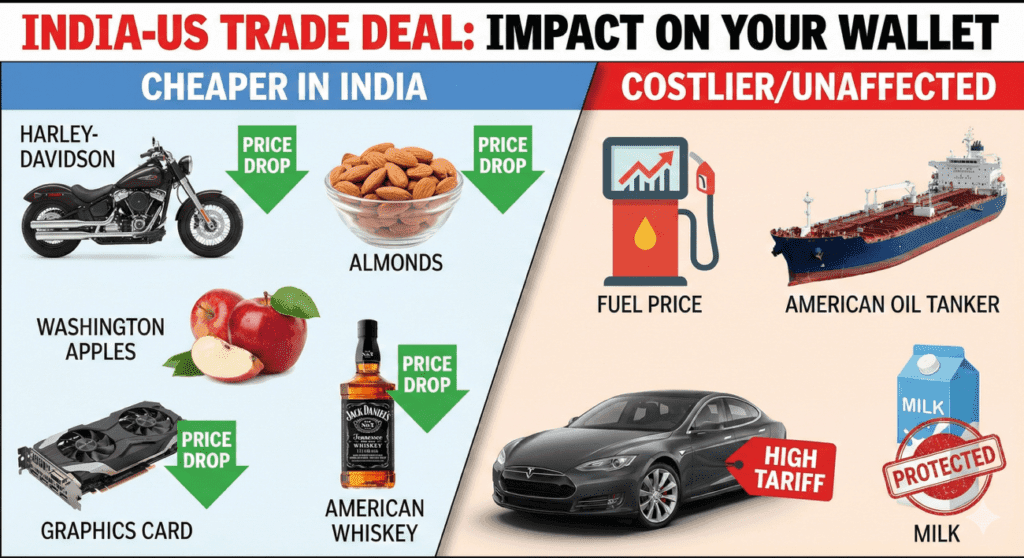
• The Health Kick: American almonds, walnuts, and pistachios—long considered a premium luxury—are expected to see price drops. If you’ve been holding back on Washington apples or California cherries, keep an eye on the supermarket shelves; duties are being slashed.
• The Tech Upgrade: For the gamers and the tech-savvy, there’s a win. High-end computer hardware, specifically GPUs and specialized electronics, are part of the tax-cut list. Medical equipment is also included, which could eventually lower the cost of high-tech diagnostic tests.
• The “Dream Bike” Factor: If you’ve been eyeing a Harley-Davidson, the road just got smoother. Import duties on iconic American motorcycles and large-engine luxury cars are being phased out, making these status symbols more accessible to the Indian enthusiast.
The Reality Check: The Fuel Tank
It’s not all discounts. There is a catch, and it’s located at the petrol pump.
As part of the deal, India is shifting its energy strategy, moving away from discounted Russian oil toward more expensive American LNG and crude. While this strengthens geopolitical ties, it creates a risk for the average commuter. We may see a gradual upward pressure on petrol and diesel prices, as the “discount era” of fuel imports begins to fade.
Don’t expect a cheaper Tesla or cheaper cheese just yet. The Indian government has stood firm on a few “sensitive” items to protect local livelihoods:
• Dairy & Poultry: To protect millions of Indian farmers, American milk, butter, and chicken remain outside the deal.
• Electric Vehicles (EVs): Foreign-made EVs like Tesla did not get the tax break many hoped for. If you want a cheaper EV, it will still have to be “Made in India.”
The 2026 trade deal is a classic “give and take.” You’ll likely save money on your lifestyle choices—electronics, dry fruits, and luxury hobbies—but you might end up paying a bit more to keep your car running.
For the Indian exporter, however, it’s a massive win. With US tariffs on Indian textiles and jewelry dropping from 50% to 18%, “Brand India” is about to become a lot more common in American malls.