The power company says the state’s massive water charge demand violates a 2025 bankruptcy ruling that wiped out its subsidiary’s past debts.

Bilaspur, April 21 — The state of Chhattisgarh wants ₹1,447.34 crore from JSW Energy. The company isn’t paying.
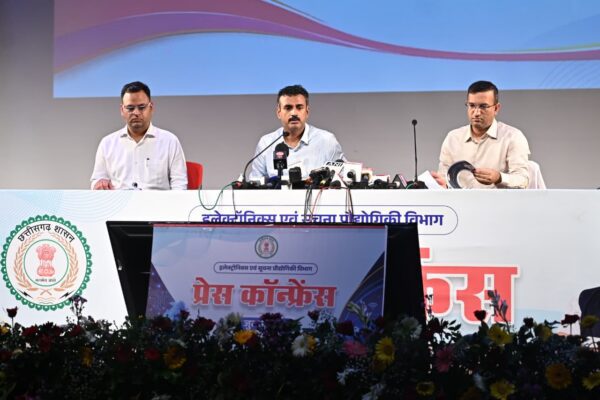
The demand arrived Tuesday. It came from the Water Resources Division in Janjgir, a district built on agriculture and heavy industry. The target is JSW Mahanadi Power Company Limited, a subsidiary the energy giant recently pulled from the wreckage of insolvency. The state says the subsidiary owes a massive backlog of water charges.
JSW Energy says the state is trying to collect a ghost debt.
The dispute exposes a critical fault line in India’s corporate rescue machinery. It pits state revenue targets against federal bankruptcy laws. JSW acquired the Mahanadi unit through the Insolvency and Bankruptcy Code (IBC). When a company goes through the IBC, it is supposed to emerge with a clean slate.
The National Company Law Tribunal in Hyderabad made that explicit. On February 13, 2025, the tribunal approved JSW’s resolution plan for the distressed asset. That order came with a binding legal shield. The tribunal ruled that all crystallised and unclaimed liabilities existing on that exact date were permanently extinguished. It stated clearly that no creditor, whether a private bank or a government agency, could suddenly surface to claim money beyond what was locked into the final rescue package.
Yet, over a year later, the Chhattisgarh water division sent an invoice.
JSW Energy issued a regulatory filing confirming the demand. The company pointed out a glaring detail. The state is chasing water dues that accumulated long before the tribunal hammered the final gavel. JSW also made it clear they aren’t dodging their current obligations. Since taking over the asset and implementing the resolution plan, JSW Mahanadi has paid every water bill the state has sent.
Now, they are taking the state government to court.
JSW has formally challenged the ₹1,447 crore demand in the High Court of Chhattisgarh at Bilaspur. They are armed with the tribunal’s order and a string of judicial precedents that protect new owners from the buried landmines of old promoters.
The timing of the legal showdown is sharp. JSW Energy is flush with capital and expanding aggressively. The company just posted a blockbuster third quarter. Net profit soared to ₹420 crore — two and a half times the ₹168 crore they reported a year ago. Revenue spiked 67.4 percent year-on-year, hitting ₹4,081 crore. Operating margins widened massively. Earnings before interest, taxes, depreciation, and amortisation grew to ₹2,030 crore, pushing their margin from 37.5 percent up to nearly 50 percent.
They are generating power faster than ever. Over the past twelve months, they’ve added 5.2 gigawatts of capacity. Net generation climbed 65 percent to 11.1 billion units, driven by massive spikes in both renewable and thermal output.
They have the money. That isn’t the point.
The issue at Bilaspur isn’t just about a single thermal plant’s water bill. It is about the integrity of the insolvency code. India built these bankruptcy laws to convince buyers to take over dead or dying companies. The core promise was certainty. If you buy the asset, you don’t buy the past.
If the High Court allows a state department to bypass a federal tribunal’s clean-slate order, it rewrites the rules of corporate acquisition in India. It tells every prospective investor that a bankrupt company comes with hidden traps that local governments can spring whenever they need to pad a budget.