As temperatures cross 45°C across Chhattisgarh, hundreds of migratory bats have died from severe heatstroke near a Korba district waterbody.
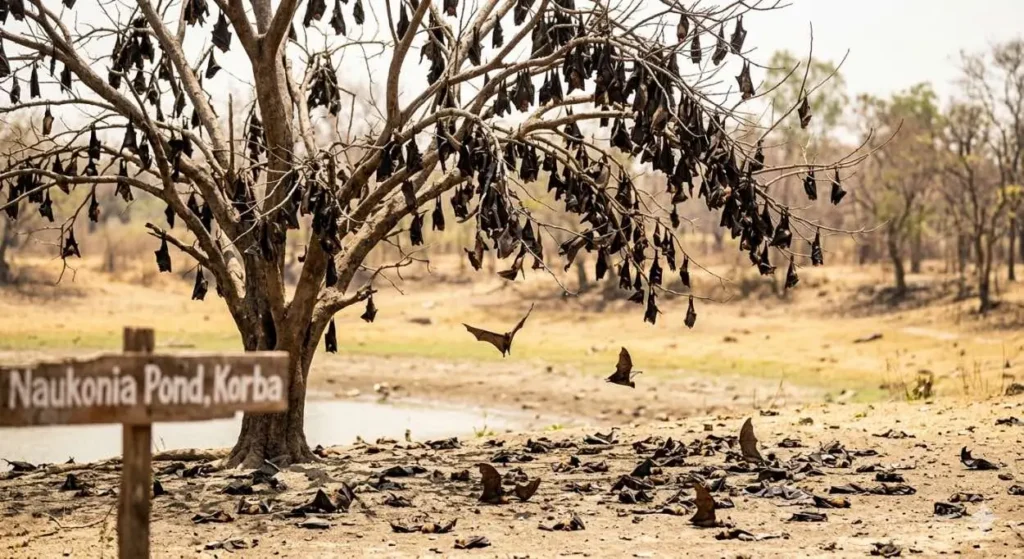
KORBA, May 26 — Nearly 200 bats are dead after extreme temperatures turned their seasonal roost into a graveyard. The carcasses hung motionless from branches around Naukonia pond in Pali nagar panchayat, while dozens more littered the dirt below. It’s a brutal indicator of the heatwave currently suffocating Chhattisgarh.
The state isn’t just hot right now; it’s baking under extreme ultraviolet radiation. The India Meteorological Department (IMD) issued a heatwave warning across 20 districts, telling residents to stay indoors during peak afternoon hours. Korba and its adjoining regions have seen the mercury hover between 42 and 44 degrees Celsius, pushing local wildlife past the brink of survival.
But what happens when animals can’t escape the sun?
Thousands of migratory bats arrive at this specific pond every February and March. The colony usually draws crowds, with residents watching the massive clusters cling to the tall trees lining the water. This week, the spectacle turned grim. One local resident described the mammals dropping from branches like burnt fruits, noting that many were already dead before they hit the ground. They’ve witnessed similar mass deaths at ponds in neighbouring villages.
Katghora Divisional Forest Officer Kumar Nishant confirmed the death toll sits around 200. He told reporters the preliminary findings point squarely at heatstroke. Veterinary teams have pulled samples from the carcasses to lock down the exact cause, but Nishant didn’t hesitate to name the environmental trigger. He stated the colony simply couldn’t withstand the blistering conditions.
Veterinary officials explain the brutal biology behind the collapse. Bats typically maintain a body temperature around 38 degrees Celsius. Once the air hits 40 degrees, they’re in severe distress. Push that ambient temperature past 42 degrees, and the heat becomes lethal. The animals suffer rapid dehydration, their bodies shut down, and they die.
They didn’t stand a chance.
So the district braces for the next wave. The extreme weather hasn’t just devastated this local wildlife population; officials warn the heat is now threatening regional agriculture and human health. The skies remain clear, and the heat isn’t letting up.