South Eastern Coalfields Limited has opened a modernised facility in Lingiadih, kicking off a district-wide overhaul of early childhood education and sanitation infrastructure.

BILASPUR, June 09 — South Eastern Coalfields Limited just unleashed a ₹4.72 crore financial package to completely rebuild 200 early childhood learning centres across the district. They’ve kicked off this aggressive corporate social responsibility campaign by opening a flagship model Anganwadi in the village of Lingiadih. The Miniratna mining giant is directly stepping into a gaping social infrastructure void, systematically replacing crumbling state facilities with modernised, fully equipped learning hubs.
The Lingiadih centre currently serves 22 enrolled children. But it isn’t operating like a typical neglected rural outpost anymore. SECL has completely transformed the physical space, installing dedicated child-friendly learning environments, brand new ergonomic furniture, and critically needed sanitation infrastructure. Biranchi Das, the company’s Director of Human Resources, personally inaugurated the site, distributing sketchbooks, reading materials, drawing pads, and pencils directly into the hands of the toddlers. He told the local community that these upgraded environments don’t just keep young learners occupied, they physically lay the groundwork for vital cognitive and social development.
Do corporate interventions actually solve the systemic rot of rural poverty? Officials within SECL’s corporate social responsibility department insist they’re doing the heavy lifting where local municipal budgets repeatedly fall short. General Manager Ajay Behera stood alongside Das during the facility handover, a clear signal of the corporate board’s total alignment on localised grassroots spending. The coal producer didn’t just write a cheque; they mandated a holistic blueprint explicitly targeting health, hygiene, and baseline early education.
You won’t see structural transformation overnight.
And this specific Anganwadi is only the first piece of a much larger, district-wide puzzle. The company’s overarching project will rapidly sweep across Bilaspur to modernise another 199 locations under the exact same financial outlay. Srishti Seva Samiti, a specialised non-governmental organisation based out of Udaipur, partnered with the coal producer earlier this year to execute the massive rollout. They’ve taken on the immense logistical challenge of standardising these 200 rural centres across a sprawling, geographically complex district, ensuring every single site meets rigorous new operational metrics.
So where exactly is all this development money coming from? South Eastern Coalfields Limited operates 67 massive coal mines across the states of Chhattisgarh and Madhya Pradesh, generating the kind of sheer industrial revenue that triggers substantial mandatory social reinvestment under Indian corporate law. They aren’t just focusing on toddlers and early education. The Lingiadih Anganwadi modernisation fits seamlessly into a staggering ₹11.87 crore regional spending spree the company formally authorised back in January.
The company’s financial footprint extends straight from the rural classroom to the urban emergency room. SECL recently funnelled ₹3.49 crore to purchase and install 77 high-tech, semiconductor-based air steriliser units at the Kumar Sahab Late Dilip Singh Judev Government Super Specialty Hospital right here in Bilaspur. They’re targeting the most vulnerable vectors of airborne infection, placing the advanced medical tech directly inside intensive care units, neonatal wards, and active operating theatres. You can’t separate the physical health of a mining community from the education of its youngest citizens, and the company’s corporate strategists clearly recognise that critical intersection.
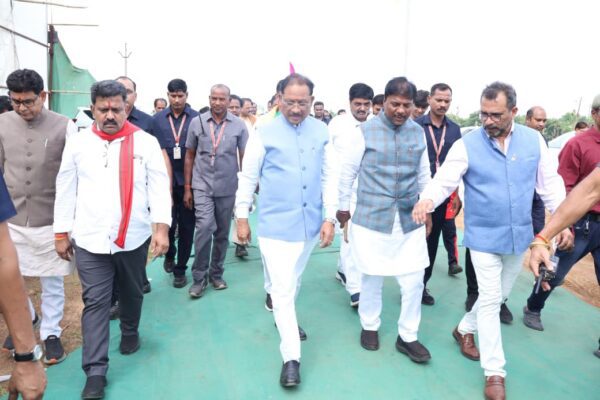
Beyond hospitals and primary schools, the regional state administration has increasingly leaned on SECL to handle major elder care and disability services. Chhattisgarh Chief Minister Vishnu Deo Sai recently visited the district to lay the foundation stone for a massive, state-of-the-art Old Age Home and Divyangjan Rehabilitation Centre in Sakri. The mining company’s corporate social responsibility budget funds the entire facility. They’ve consistently proven that when the state requires a rapid, massive capital injection for public welfare infrastructure, the coal fields provide the necessary cash flow.
The impact of these localised interventions is rigorously tracked. SECL routinely commissions independent academic bodies, like the Indira Gandhi National Tribal University, to run extensive impact assessment studies on their community projects. They won’t just build a facility and walk away; they track the long-term utility of the infrastructure, interviewing villagers, teachers, and panchayat officials to verify the real-world outcomes. This data-driven approach forces accountability onto a system that historically swallowed public funds with little to show for it.
We haven’t witnessed a synchronised, multi-sector infrastructure push of this magnitude in Bilaspur for years. The sheer volume of concurrent projects suggests a highly deliberate strategy to overhaul the region’s failing safety nets from the ground up. From the 22 children learning to read in Lingiadih to the critical care patients breathing sterile air in the government hospital, the corporate cash is aggressively doing the work the state frequently struggles to manage.
It’s about time the wealth pulled from the ground actually reached the people living right on top of it.