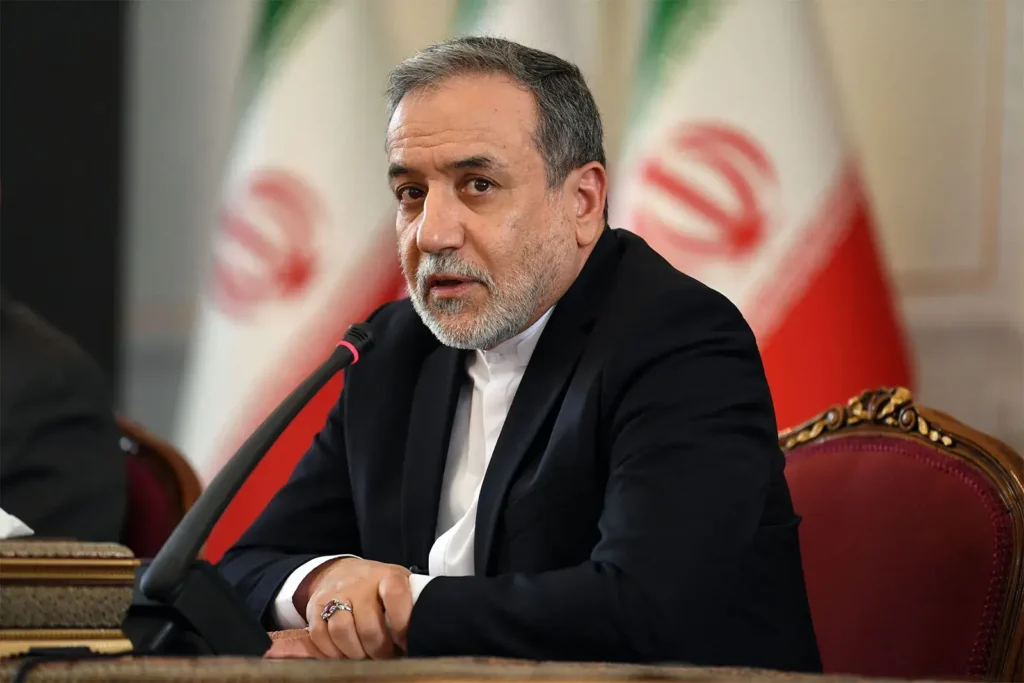
Foreign Minister Abbas Araghchi condemns the destruction of Sharif University of Technology as a “war on knowledge” while bunker-busters strike the nation’s premier AI infrastructure.
April 6 — U.S. and Israeli fighter jets leveled critical infrastructure at the Sharif University of Technology on Monday.
The strikes, which hit the heart of Tehran, targeted the institution widely known as the “MIT of Iran.” It is the most direct hit on the country’s intellectual elite since the joint offensive began on February 28.
Foreign Minister Abbas Araghchi confirmed the attack in a statement on X. He didn’t just call it a military strike; he called it a systematic assault on Iranian academia. “The aggressors will see our might,” Araghchi warned. He invoked a religious tradition from Prophet Muhammad about the pursuit of knowledge being a sacred duty. For the Foreign Minister, this isn’t just about buildings. It’s about a deliberate attempt to cripple the mind of the nation.
The damage is extensive.
Fars News Agency reported that the Sunday evening strike specifically targeted the university’s primary data center. This facility is the backbone of Iran’s national artificial intelligence platform. It also supports thousands of digital services used across the country. University President Masoud Tehranchi, speaking via a video message recorded amid the rubble, described the strike as “brutality” by the enemies of the land.
While no student casualties were reported—largely because the war has forced classes to move online—the surrounding Sharif neighborhood wasn’t as lucky.
A nearby natural gas distribution site was also hit. The explosion triggered a massive outage across District 9. State broadcaster IRIB confirmed that residents are now without heat as fighter jets continue to circle the capital. It’s a city on edge. Low-flying jets have been heard intermittently for hours, a psychological weight that has become the new normal for Tehran’s residents.
But why Sharif?
Western intelligence and various sanctioning bodies have long pointed to the university’s links to the Iranian military. Specifically, they claim the campus houses research critical to the ballistic missile program overseen by the Revolutionary Guard. To the U.S. and Israel, these aren’t just classrooms. They’re secondary operational points.
Iranian First Vice President Mohammad Reza Aref didn’t hold back. He claimed bunker-buster bombs were used in the attack. He slammed the operation as a “symbol of madness and ignorance” on the part of U.S. President Donald Trump.
“He does not understand that Iran’s knowledge does not lie in concrete,” Aref said. “The real bulwark is the will of our professors.”
This isn’t the only campus under fire. On Friday, the medical research institute and laboratory buildings at Shahid Beheshti University were nearly obliterated. These strikes are part of a massive, multi-city campaign. On Monday alone, at least 12 cities across Iran were hit, including Bandar Abbas, Shiraz, and Isfahan.
The human cost is mounting. In Baharestan County, reports indicate at least 23 people were killed in simultaneous strikes, including six children under the age of 10. In the holy city of Qom, airstrikes leveled residential houses, killing five. Since the start of the conflict in late February, the death toll has climbed past 1,340.
The timing of the university strikes carries a heavy political weight. President Trump has set a Tuesday, April 7 deadline for Iran to fully reopen the Strait of Hormuz. If the lanes don’t open, the U.S. has threatened to pivot its focus to the nation’s entire energy grid and bridge network.
The bombardment of Sharif University sends a clear signal. The “red lines” of civilian and academic life have dissolved. For the Iranian government, the destruction of its “MIT” is a call to mobilize. For the coalition, it’s the systematic dismantling of the infrastructure that powers Iran’s future military and technological reach.
What happens on Wednesday?
If the Strait remains closed, the fire currently raining down on universities will likely move to the refineries. The “might” Araghchi promised is yet to be seen, but the ruins of Tehran’s elite labs suggest the time for rhetoric is over.
The war for the Middle East has entered the laboratory.