
The Public Examinations Amendment Bill 2026 mandates 10-year prison terms and ₹50 lakh fines to dismantle organised exam syndicates across India.
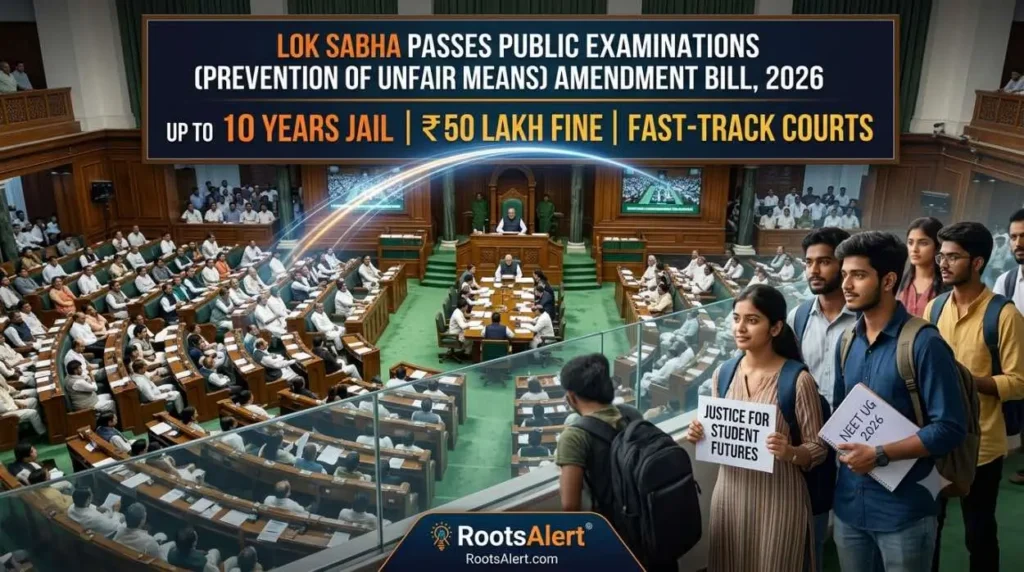
NEW DELHI, July 30 — Parliament has moved to criminalize exam fraud syndicates with unprecedented severity, passing a law that hits organized cheating networks with decade-long prison terms and massive financial penalties. The Lok Sabha cleared the Public Examinations (Prevention of Unfair Means) Amendment Bill, 2026 by voice vote on Wednesday, updating a law passed just months prior. The legislation follows a 36-day nationwide student agitation led by the Cockroach Janta Party (CJP) over the disastrous NEET-UG paper leak. It doesn’t just aim to punish the individuals caught selling papers; it systematically targets the institutional partners and criminal networks facilitating the leaks.
How will this structural overhaul actually change the landscape for students facing high-stakes medical and civil service exams?
Aspirants in Chhattisgarh and across central India are watching the political manoeuvres in Delhi closely, demanding structural guarantees over political rhetoric. The amended legislation establishes rigid timelines that force authorities to act. State governments must now designate Special Fast Track Courts for day-to-day trials, with investigations capped at 60 days and trials required to conclude within three months of filing a chargesheet.
The penalties are steep and unforgiving.
Individuals caught leaking papers now face a minimum of five and up to 10 years in prison, with maximum fines leaping from ₹10 lakh to ₹50 lakh. Private service providers—the tech companies, printing presses, and logistics firms handling the exams—risk ₹5 crore fines and an eight-year ban if compromised. For the organised crime syndicates driving the largest leaks, the law mandates minimum seven-year sentences and staggering fines up to ₹10 crore.
But Wednesday’s parliamentary passage was nearly overshadowed by bitter political fighting over the government’s handling of the student protests.
Leader of the Opposition Rahul Gandhi clashed fiercely with the treasury benches, directly accusing Home Minister Amit Shah of authorising the use of pellet guns against students marching in Delhi on July 20. Union Minister Jitendra Singh, who piloted the bill, forcefully rejected the claim. Singh maintained that authorities exercised utmost restraint, insisting no shots were fired and tear gas was only deployed under magisterial orders. The debate underscored the deep political fault lines surrounding the education crisis.
The legislative push coincides with rapid developments in the courts. The CBI has already submitted a massive 20,000-page chargesheet against 13 individuals—all currently in judicial custody—before a designated fast-track court in Delhi. Investigators allege that questions were leaked by an NTA panel member, causing profound distress to 22 lakh medical aspirants and massive financial losses. Prime Minister Narendra Modi reinforced the government’s stance with a late-night video message, pledging that those who compromise students’ futures will face the full force of the law. For the students preparing for their next shot at a medical college, the true test of this legislation won’t be in the parliament, but in the integrity of the next testing cycle.