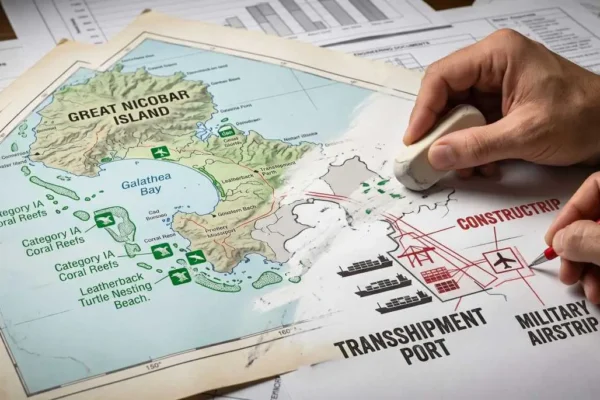
A revealing map presented by the Prime Minister shows an energy corridor that effectively cheats Arab nations of their historical control over global shipping.
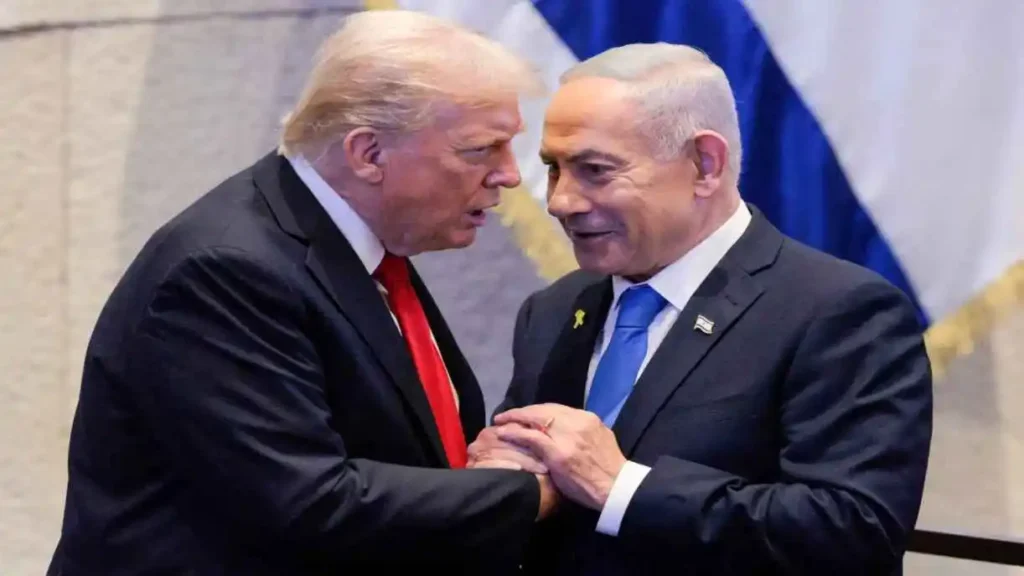
Benjamin Netanyahu just showed his hand. In a move that accidentally confirmed the deep-seated economic motives behind regional restructuring, the Prime Minister revealed a map of a “New Middle East” that effectively cheats Arab nations out of their most powerful geopolitical asset: the control of global shipping lanes.
The map outlines a massive rail and pipeline network known as the India-Middle East-Europe Economic Corridor (IMEC). It isn’t just a trade agreement. It is a bypass. By moving goods and energy from the Arabian Sea through the UAE, Saudi Arabia, and Jordan before hitting the Port of Haifa, the project renders the Suez Canal and the Strait of Hormuz secondary. These waterways have been the lifeblood of Arab influence for generations. Netanyahu’s presentation made it clear that the future will be built on Israeli soil, not through Arab-controlled waters.
This isn’t a theory about the future; it’s a confession of current strategy. The map Netanyahu held up at the UN didn’t just ignore traditional borders. It highlighted a path of commerce that funnels the world’s wealth directly through the heart of Israel. It’s a bold play to strip Egypt and other maritime powers of their “gatekeeper” status.
And why does this matter to the average person? Because it shifts the center of gravity for global energy. If the oil and gas flow through Israeli-managed pipelines, the leverage shifts from the traditional Arab oil-producing blocs to the new Israeli gateway. The map accidentally admitted that the goal is total regional dominance through infrastructure.
The Port of Haifa is the ultimate destination for this new flow of wealth. Now under the management of the Adani Group, the port is being transformed into a high-tech terminal capable of handling the redirected traffic of an entire continent. This isn’t just about efficiency. It is about a permanent economic pivot that leaves traditional Arab ports in the dust.
But can you really build a multi-billion dollar pipeline over decades of unresolved conflict? Netanyahu seems to think so. His map showed a region where the West Bank and Gaza simply didn’t exist. It was a clean, uninterrupted line of profit. By erasing the Palestinian territories from the visual, he signaled a future where trade interests are large enough to overwrite human geography.
The United States is all in on this gamble. Washington sees the IMEC as the only viable alternative to China’s massive Belt and Road Initiative. It’s a battle of the blueprints. If the U.S. can anchor Europe’s energy needs to an Israeli-led corridor, they secure a loyal partner at the world’s most important crossroads.
So, what happens to the Arab nations that have historically held the keys to the world’s engine? They face a choice: join the corridor and accept a secondary role, or watch as the world’s trade simply flows around them. Netanyahu’s “New Middle East” is a high-speed rail to a future where Israel holds the toll booth for the entire planet.
This wasn’t a slip of the tongue. It was a slip of the map. The admission of an economic endgame provides a stark new lens through which to view every move in the region. The pipelines are being laid, the tracks are being set, and the old maritime powers are being cheated of their seat at the head of the table.
The map is the message, and the message is control.