U.S. special forces recovered one crew member from an F-15E shot down over Iran on Friday, while the desperate search for the second continues.
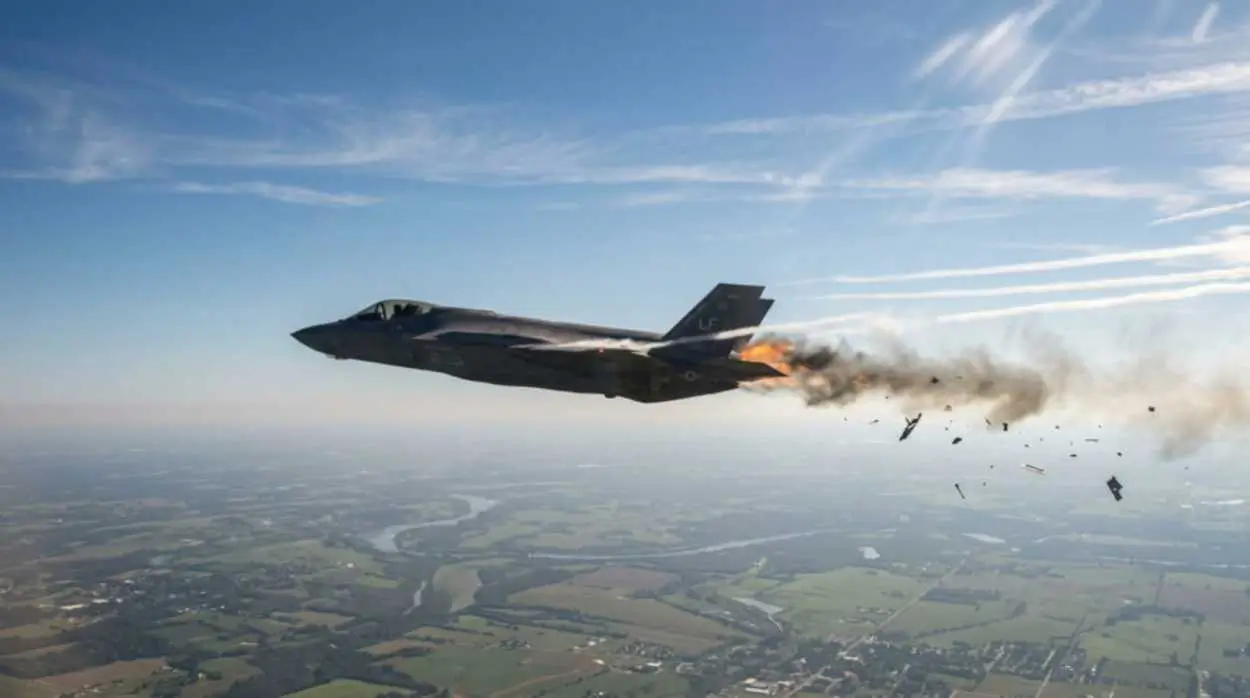
April 3, 2026 — U.S. special forces pulled one American aviator out of Iran alive on Friday. They’re still hunting for the second.
The rescue mission follows the violent downing of a U.S. fighter jet deep inside Iranian airspace. It marks the first known American aircraft lost over Iranian territory since President Donald Trump ordered the current war. Unidentified sources quoted by Axios and CBS News confirmed the successful extraction, but the fate of the remaining crew member hangs in the balance.
What kind of plane went down? That depends entirely on who you ask.
Early Iranian media reports boasted they knocked a fifth-generation F-35 stealth fighter out of the sky. The reality appears older, heavier, and built for a profoundly different kind of fight.
It was an F-15E Strike Eagle.
The Strike Eagle didn’t fly into Iranian airspace by accident. Introduced in the late 1980s and hardened through decades of combat over Iraq, Afghanistan, and Syria, the F-15E executes deep interdiction missions. It carries a massive payload of precision-guided munitions designed to obliterate hardened targets on the ground. Its presence over Iran suggests the U.S. military actively targeted critical Iranian infrastructure or command installations, moving well beyond simple border patrols.
Both The New York Times and The Wall Street Journal identified the downed aircraft as the F-15E. CNN backed that reporting, citing a visual analysis of wreckage photos aggressively circulated by Iranian state media. The jagged, scorched metal in those images perfectly matches the profile of the workhorse Strike Eagle. It doesn’t resemble the radar-evading F-35 in the slightest.
That specific distinction matters heavily on the ground right now.
An F-15E requires two people to fight and fly. You have a pilot in the front seat driving the aircraft, and a weapons-systems officer sitting behind them managing the radar suite and tracking incoming threats. It’s a tandem operation. When enemy fire cripples the jet and the canopy blows, both seats eject in a rapid, staggered sequence to prevent mid-air collisions. The crew comes down under separate parachutes. They almost always land apart.
That physical separation dictates the nightmare scenario playing out across the Iranian landscape today. One aviator is safe. The other is somewhere in hostile territory, trying to survive.
Who gets rescued first? And how much time does the second aviator really have?
Combat search and rescue inside an active, sovereign warzone isn’t a theoretical exercise. It’s brutal, math-driven chaos. When an aircraft drops off the radar in denied territory, the survival timeline shrinks to minutes. Command and control aircraft scramble to catch signals from the downed crew’s radios. Special tactics squadrons prep for immediate insertion. They face a razor-thin window to locate the survivors, suppress Iranian air defenses, and get a recovery helicopter on the dirt before the Revolutionary Guard converges on the crash site.
And Iran knows exactly where that jet fell.
The fact that American commandos already breached Iranian airspace, located one of the aviators, and got them out without losing the recovery team stands as a staggering feat of modern military logistics. It requires overlapping layers of fighter cover, aggressive electronic jamming, and sheer firepower.
But half a mission accomplished leaves a massive strategic liability hiding in the dirt.
Intelligence officials briefed President Trump on the shootdown and the agonizingly incomplete rescue operation, according to U.S. media reports. The political stakes instantly rival the tactical ones. This conflict hasn’t seen the loss of an American fighter jet inside Iranian borders until today. An American prisoner of war, captured and paraded on television by Tehran, would permanently alter the strategic calculus in Washington.
It’s the exact scenario Pentagon planners dread most when ordering manned aircraft into heavily defended airspace.
Iranian state media already attempts to dominate the narrative. They rushed the F-35 claim to the press to project absolute air superiority. The F-35 Lightning II operates as America’s premier stealth fighter, a highly classified flying supercomputer. Downing one provides Tehran with a massive propaganda victory, signaling their surface-to-air missiles can pierce America’s most expensive technology.
Propaganda shatters against hard photographic evidence, though. The wreckage proves the loss of an older, fourth-generation airframe. The F-15E flies fast and hits hard, but it remains fundamentally visible to enemy radar.
Right now, the Pentagon maintains a hard wall of silence. U.S. Central Command—the military apparatus running the entire war in West Asia from its headquarters in Florida—ignored immediate requests for comment from the French news agency AFP.
That silence isn’t an oversight. CENTCOM’s refusal to speak operates as the strictest rule of combat rescue operations.
When American forces end up trapped behind enemy lines, military leadership doesn’t brief the press. They don’t confirm exact crash locations. They don’t specify the downed unit. They absolutely refuse to confirm the identity of the missing pilot or weapons officer. Every piece of data leaked to the media serves as a data point Iranian forces can exploit to tighten their search grid.
The airspace over the crash region remains a highly volatile kill zone. U.S. forces will pull every available satellite pass, drone feed, and signals intelligence intercept to locate the missing crew member before Iranian patrols do.
The coming hours dictate the next brutal phase of this war. Either the military pulls off a second miracle extraction deep inside a hostile nation, or Tehran secures the ultimate human leverage.