After weeks of threats following US airstrikes, FIFA confirms the Iranian national team will face off in Inglewood and Seattle this June.
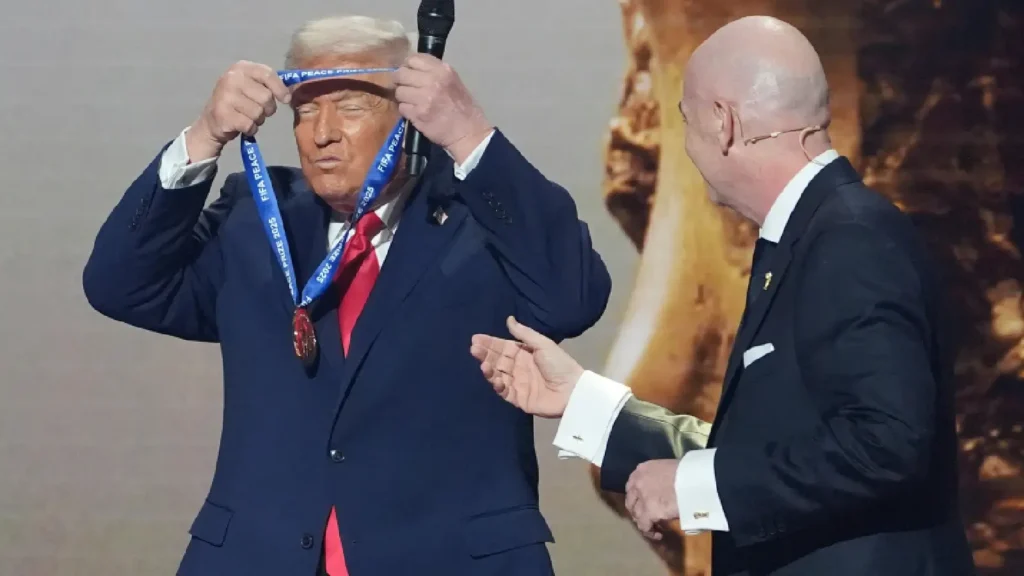
Gianni Infantino just ended a month of diplomatic crossfire.
The FIFA president confirmed Thursday that Iran’s national football team will travel to the United States to compete in the 2026 World Cup. They are coming, Infantino told reporters, “for sure.”
The announcement torpedoes weeks of boycott threats from Tehran and sideways warnings from Washington. It locks in a massive, unprecedented security operation that will unfold on American soil in less than sixty days.
Iran lands in Group G. They play New Zealand on June 15 in Inglewood, California. Six days later, they face Belgium in the same stadium. On June 26, they wrap up the group stage against Egypt in Seattle.
They will play these matches inside the borders of a nation they are currently at war with.
The backdrop to this tournament isn’t geopolitical friction. It’s active combat. In late February, the United States and Israel launched coordinated airstrikes inside Iran. The strikes killed Iran’s Supreme Leader, Ayatollah Ali Khamenei. According to Amir Saeid Iravani, Iran’s UN ambassador, more than 1,300 Iranian civilians have died since the bombing campaign began.
That bloodshed nearly broke the World Cup.
Just over a month ago, Iranian Sports Minister Ahmad Donyamali drew a hard line in the sand. He went on state television and declared the team would not travel.
“Considering that this corrupt regime has assassinated our leader, under no circumstances can we participate in the World Cup,” Donyamali said at the time. “Our children are not safe and, fundamentally, such conditions for participation do not exist.”
Tehran wanted a compromise. They demanded FIFA move their Group G matches to co-host nation Mexico. They argued the logistics could be reworked. They insisted playing in the US was an impossible ask.
FIFA didn’t blink.
Infantino and the governing body bluntly refused the entreaties. The draw was final. The venues were set. Moving Iran to Mexico would have required a massive, last-minute logistical reshuffle, impacting three other national teams and thousands of traveling fans. Furthermore, if Iran advanced to the knockout stages, they could potentially draw the United States. FIFA saw the schedule as locked.
If Iran wanted out, they had to pull the ripcord themselves.
Doing so carried a steep price. FIFA regulations dictate that any team withdrawing from the World Cup within thirty days of their first match faces severe penalties. The baseline is a 250,000 Swiss franc fine — roughly $320,800. But the real threat rested in the disciplinary committee’s power to expel the Iranian federation from future international competitions. For a football-obsessed nation, an outright ban from the sport’s global stage was the nuclear option.
Did FIFA call Tehran’s bluff, or did the Iranian federation realize the cost of staying home was simply too high?
Whatever the calculus behind closed doors in Tehran, the players themselves made their stance clear weeks ago. The rhetoric from the White House hadn’t helped ease tensions. US President Donald Trump initially signaled indifference, claiming he didn’t care if Iran showed up. He later met with Infantino in early March, reportedly assuring the FIFA boss that the Iranian players and coaches would be welcome to compete.
Then Trump picked up his phone. He posted on X that while they were welcome, “I really don’t believe it is appropriate that they be there, for their own life and safety.”
The Iranian national team fired right back. Bypassing diplomatic channels, the players issued a unified statement via their official Instagram account.
“The World Cup is a historic and international event and its governing body is FIFA – not any individual, country,” the team wrote. “Certainly, no one can exclude Iran’s national team from the World Cup; the only country that could be excluded is one that merely carries the title of ‘host’ yet lacks the ability to provide security for the teams participating in this global event.”
They demanded their right to play. Now, they have it.
This isn’t the first time the two nations have collided on a football pitch. They met in the 1998 World Cup in France, a match remembered for pre-game handshakes and white roses pitched as an olive branch. They played again in Qatar in 2022. But those games were fought on neutral ground. This is different. This is the Iranian flag flying in the heart of California, just months after American munitions hit Iranian soil.
Infantino’s role in brokering this standoff hasn’t escaped scrutiny. The FIFA boss has cultivated a public friendship with Trump, a relationship that has drawn the ire of the International Olympic Committee. Earlier this year, the IOC investigated Infantino for violating political neutrality rules after he attended a US “Board of Peace” event alongside the American president. Critics whispered that Infantino was too close to Washington to handle the Iran crisis objectively.
But in the end, Infantino’s mandate wasn’t to orchestrate peace between Washington and Tehran. His mandate was to protect his tournament.
By refusing to alter the schedule, FIFA forced Iran’s hand. The governing body knew the power of the World Cup. Even amidst active conflict, the Iranian populace views the national team as a source of immense pride. The players dominated their Asian qualifying rounds to earn their spot. Scuttling that achievement over a political boycott would have risked severe domestic backlash.
The diplomatic hurdle is cleared, but the logistical reality is just beginning. The US government placed a strict travel ban on Iranian citizens entering the country. However, athletes and coaching staff fall under a specific exemption. Visas will be issued. The team will land in California.
Security protocols around the squad will rival those of a visiting head of state. Los Angeles and Seattle law enforcement agencies, backed by federal authorities, are now tasked with protecting a team representing a hostile foreign power on American streets. Every hotel transfer, every training session, and every stadium arrival will be locked down.
The stakes extend far beyond the pitch. The 2026 World Cup was marketed as a unifying North American spectacle. Now, it serves as a live stress test for global sports amidst escalating warfare.
The whistle blows in Inglewood on June 15. The world will watch a football match, but the real test is whether the host nation can keep the war outside the stadium gates.