
The state’s wild tiger count has surged to 35, proving aggressive conservation and cross-border translocations can resurrect failing habitats in central India.
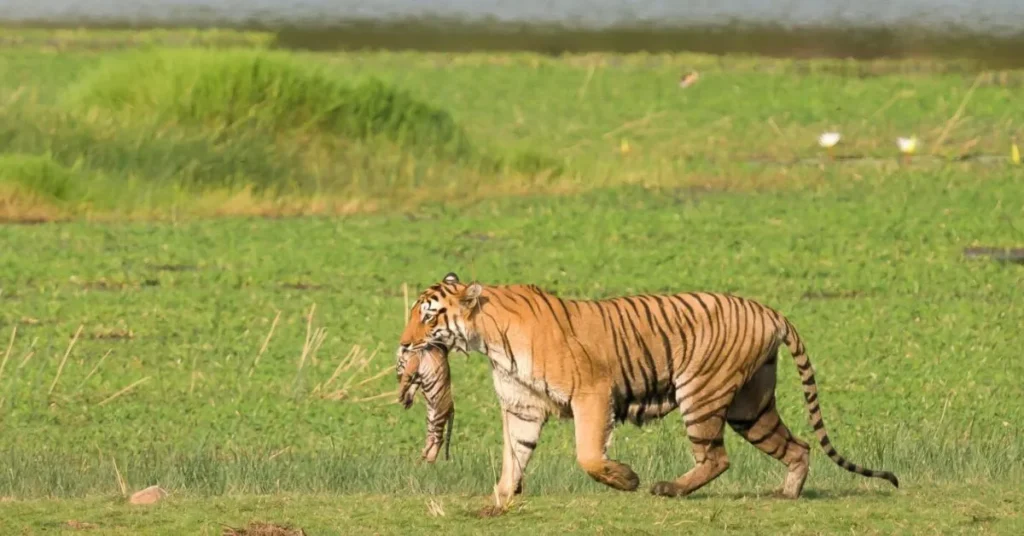
RAIPUR, July 29 — Chhattisgarh’s wild tiger population has violently reversed a decade-long death spiral, proving it isn’t too late to save the state’s apex predators as numbers surged from a bleak 17 in 2022 to 35 confirmed adults this year.
The National Tiger Conservation Authority (NTCA) laid out the stark numbers today. We’re observing International Tiger Day, an annual global stocktake meant to highlight the predator’s fragile existence. Politicians usually roll out the same tired promises on this date. But this time, the data out of central India actually backs up the grandstanding.
For years, this state wasn’t just losing big cats, it was bleeding them. Back in 2006, census data showed 26 tigers roaming Chhattisgarh’s dense corridors. By 2022, that number had plummeted to 17. Poaching, habitat fragmentation, and deep-seated human-wildlife conflicts had gutted the reserves.
So what’s changed the trajectory?
Chief Minister Vishnu Deo Sai recently chaired the State Wildlife Welfare Board, revealing the state didn’t just wait for nature to heal itself. They’ve engineered a turnaround through aggressive monitoring and a massive overhaul of reserve management. Achanakmar Tiger Reserve now anchors the state’s population with 18 tigers. Guru Ghasidas-Tamor Pingla (GGTP) holds seven. Down in Bastar, Indravati clings to six.
They aren’t stopping there.
The NTCA has just greenlit a high-stakes translocation operation. They’ll pull five tigers out of Madhya Pradesh’s booming reserves and drop them directly into Chhattisgarh’s struggling zones. Two females and a male are bound for Udanti-Sitanadi, a reserve currently starving for genetic diversity with just one surviving tiger. Three more males will reinforce Guru Ghasidas.
Wildlife experts at the Wildlife Institute of India know that moving a tiger isn’t like moving a piece of machinery. It requires sedating a highly dangerous apex predator, transporting it hundreds of miles, and releasing it into an unfamiliar forest where it must establish a new territory without starving or getting killed by rival males. It’s a desperate play, but Chhattisgarh doesn’t have the luxury of time.
And this isn’t just a local victory. India holds roughly 70 percent of the world’s wild tigers. The 2022 census clocked the national population at 3,682, a massive leap from the 1,411 recorded in 2006. Madhya Pradesh currently dominates the map with 785 tigers. Karnataka sits second with 563, followed closely by Uttarakhand at 560.
International Tiger Day exists entirely because of the 2010 Saint Petersburg declaration. Thirteen tiger range countries realized they were watching the species vanish in real-time. They didn’t just vow to double the global population; they established an actionable blueprint. India hit that target four years early, thanks largely to the enduring architecture of Project Tiger.
But raw numbers don’t tell the whole story.
Researchers have repeatedly warned that while national numbers look great, local extinctions aren’t stopping. Look at Jharkhand, where the count dropped to just one at the Palamau reserve. Or Mizoram’s Dampa reserve, which recorded zero.
Chhattisgarh was dangerously close to joining that graveyard list. The reserves were failing structurally. Now, the state is finalizing a comprehensive Tiger Conservation Plan designed to fix shattered habitats and integrate local communities into eco-tourism. If locals don’t see financial value in a living tiger, the animal won’t survive the decade.
Achanakmar’s deputy director, U.R. Ganesh, confirmed the reserve hasn’t taken any chances, deploying heavily armed Special Tiger Protection Forces and implementing daily GPS-tracked foot patrols. Guards cover ten kilometers a day through core zones using the M-STrIPES mobile app. They’ve also brought in the World Wide Fund for Nature (WWF) for advanced phase-four monitoring. It’s a military-grade operation built to keep these cats breathing.
The success of GGTP is equally critical to the region’s future. Declared India’s 56th tiger reserve in 2024, it’s now the third-largest in the country by sheer landmass. It forms a crucial biological corridor linking Madhya Pradesh’s Bandhavgarh and Sanjay-Dubri reserves to Jharkhand. Without it, central India’s tigers are marooned on genetic islands, doomed to inbreed until the local population collapses.
We can’t ignore the collateral benefits of this operation. When you protect the apex predator, you protect the entire ecosystem beneath it. Rivers run cleaner. Forests hold their ground against illegal logging. The tiger is simply the gauge on the dashboard telling us if the engine is running or tearing itself apart.
Today’s figures prove the engine in Chhattisgarh hasn’t stalled out. The state has bought itself time, but the margin for error remains razor-thin. One bad poaching syndicate or a breakdown in border patrols could wipe out three years of brutal, exhausting work.
The wild doesn’t forgive complacency.




Leave a Reply