In a major push for community-driven eco-tourism, local PVTG youths will take the wheel as trained nature guides in Chhattisgarh’s emerging biodiversity hub.
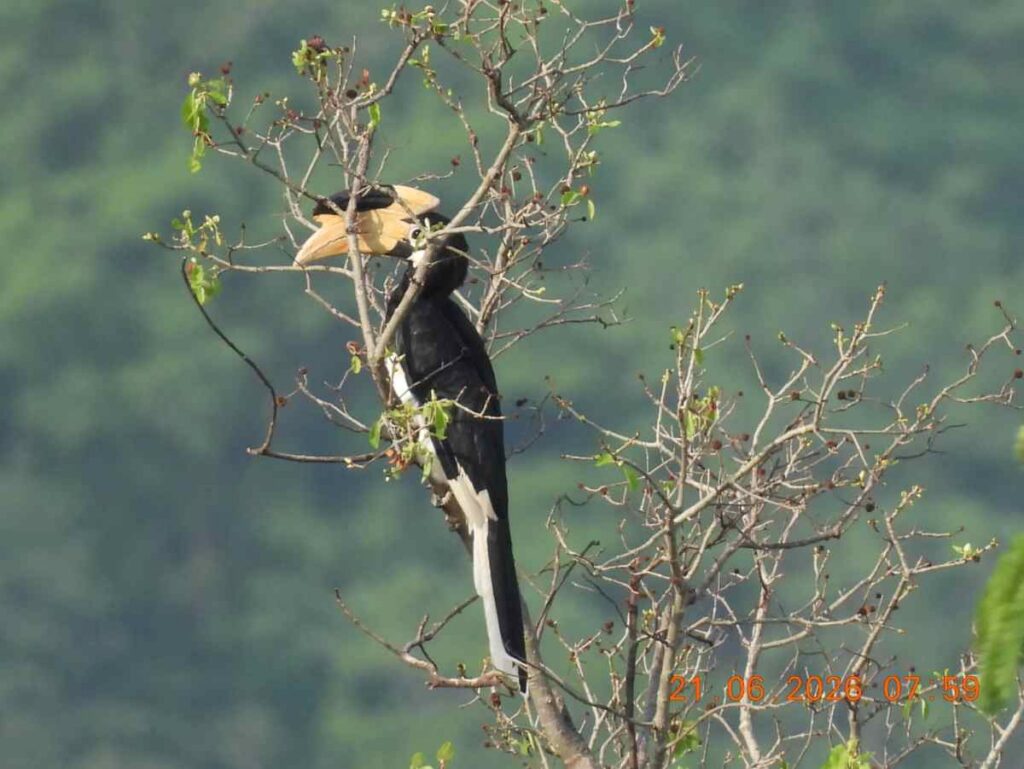
RAIPUR — For decades, the dense canopies of the Udanti-Sitanadi Tiger Reserve (USTR) have held ecological secrets known primarily to indigenous forest dwellers. Now, the Chhattisgarh government is opening a rare window into this wilderness with the launch of a specialized ‘Hornbill Safari’. Pioneered under the vision of Honorable Forest Minister Shri Kedar Kashyap and steered administratively by Principal Chief Conservator of Forests (PCCF) and Head of Forest Force (HoFF) Shri Arun Kumar Pandey, the initiative shifts the state’s ecological spotlight to the striking Malabar Pied Hornbill and the tribal communities tasked with protecting it.
This move marks a strategic pivot in regional wildlife conservation. The administration’s focus is no longer confined to merely policing forest borders; it is actively transitioning Particularly Vulnerable Tribal Groups (PVTGs) from the villages of Odh, Amlor, and Aamamora into direct economic beneficiaries. By deploying operational models that balance ecological integrity with sustainable rural livelihoods, the department is effectively aligning the financial success of the locals with the survival of the forest.
The Four-Year Turnaround
The rollout of the safari is not a sudden administrative decision, but the culmination of a grueling four-year groundwork phase. Forest officials have logged a remarkable surge in both the population and sighting frequency of the Malabar Pied Hornbill across the reserve.
This ecological revival was engineered through aggressive anti-poaching and anti-encroachment operations. Crucially, it was bolstered by a novel habitat-enrichment concept termed the ‘Hornbill Restaurant’—a targeted plantation and preservation drive focused exclusively on the indigenous fruit-bearing trees that form the bird’s staple diet.
The Ground Crew Behind the Numbers
The real architects of this turnaround, however, are the frontline workers. A dedicated Hornbill Tracking Team has spent years navigating difficult terrain to monitor nesting sites, avian behaviors, and territorial movements.
The department credits the joint surveillance of its beat guards—Rakesh Markandey, Faleshwar Diwan, Om Prakash Rao, Virendra Dhruv, and Takeshwar Dewangan—who worked shoulder-to-shoulder with local tribal trackers Kesar, Bhagwan, Kartilal, Gayaram, Devendra Yadav, and Chhavilal. Their localized intelligence and daily patrols have effectively transformed the peripheral forests of Odh, Amlor, and Aamamora into secure, high-density habitats.
Handing Over the Steering Wheel
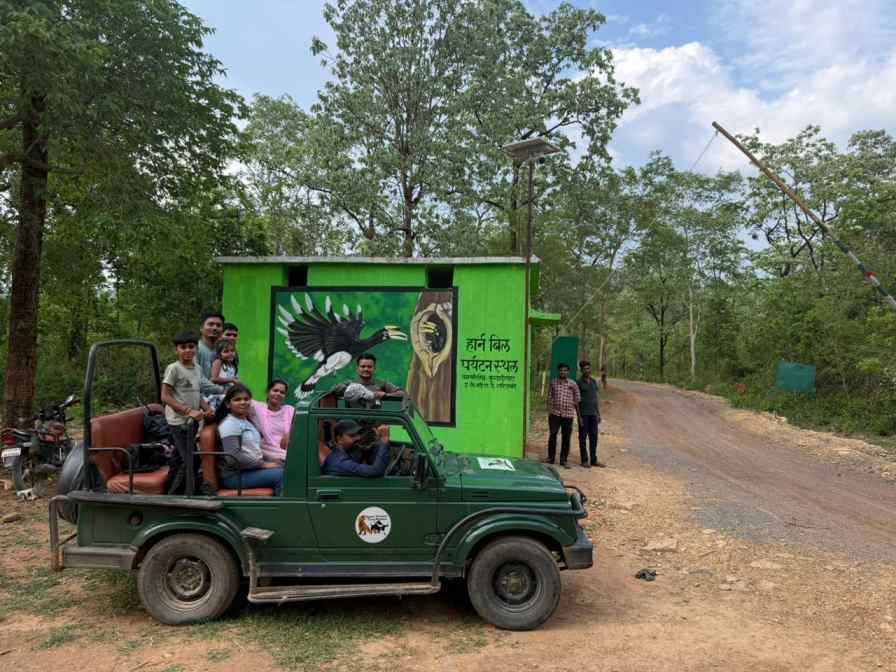
When the safari rolls out its initial fleet of two retrofitted Gypsy vehicles, the operational control—and the resulting revenue—will bypass private contractors and go directly to the locals.
Youth from the targeted PVTG villages are currently undergoing intensive field training in bird watching and nature interpretation. Once their training is complete, they will lead the expeditions as certified Nature and Hornbill Guides, securing a sustainable, long-term income stream.
Central India’s Emerging Biodiversity Hub
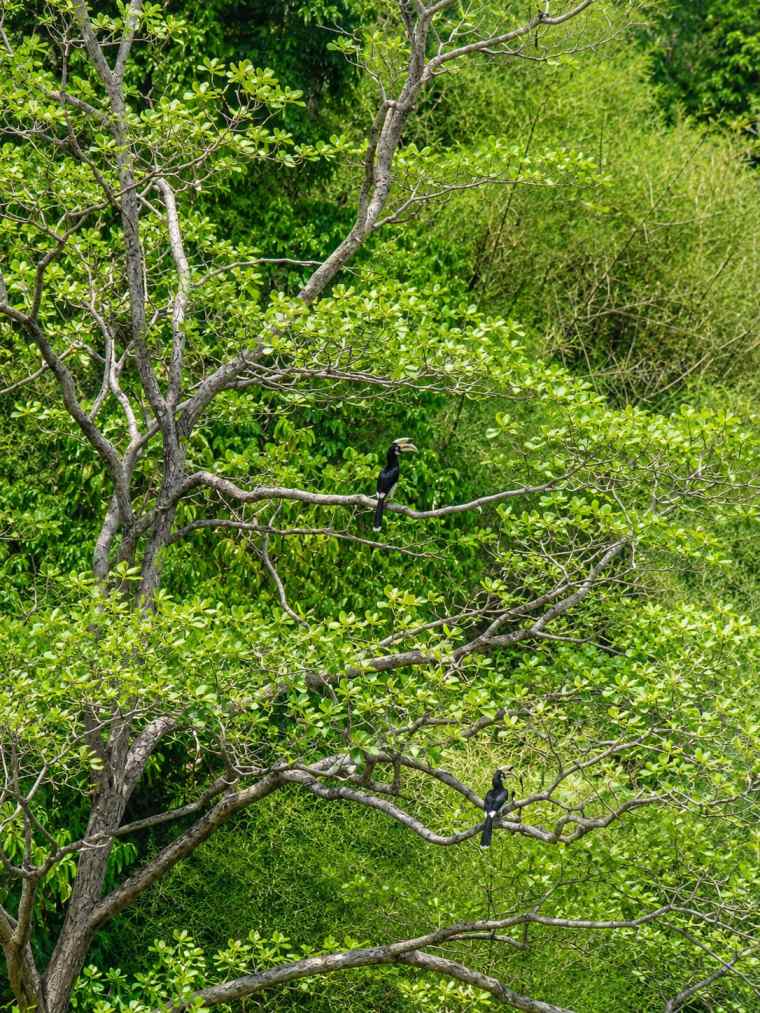
Located approximately 130 kilometers from Raipur, USTR’s appeal extends far beyond the hornbill. The reserve is quietly emerging as a premier hotspot for birders and wildlife photographers.
The canopy is shared by apex aerial predators like the Shaheen Falcon—globally recognized for its breathtaking flight speed—alongside the Indian Pitta, Brown Fish Owl, Grey-headed Fish Eagle, and a vibrant mix of woodpeckers, barbets, and minivets. For mammalian enthusiasts, the designated safari routes also offer highly sought-after sightings of the Indian Giant Squirrel and the elusive Indian Giant Flying Squirrel.
Grounded in the core departmental mandate—“Our Resolve – Trust among the public, fear among poachers”—the USTR administration is setting a new precedent. By weaving together scientific forest management, political will, and indigenous empowerment, the Hornbill Safari stands as a highly replicable blueprint for public interest eco-tourism in Chhattisgarh.
Visitor & Booking Information
For scheduling inquiries and technical research permits, the Udanti-Sitanadi Tiger Reserve administration has established dedicated communication lines:
Contact: 7976688165, 7566510937