Tehran’s Revolutionary Guard captures two cargo vessels, exposing the collapse of Pakistan’s mediation efforts and threatening a devastating oil shock for India.
Delhi, April 23 — Iranian commandos just hijacked two international cargo ships in the Strait of Hormuz. They’ve effectively shattered a fragile two-week ceasefire with the United States. And the immediate fallout threatens to detonate India’s economy through skyrocketing oil prices.
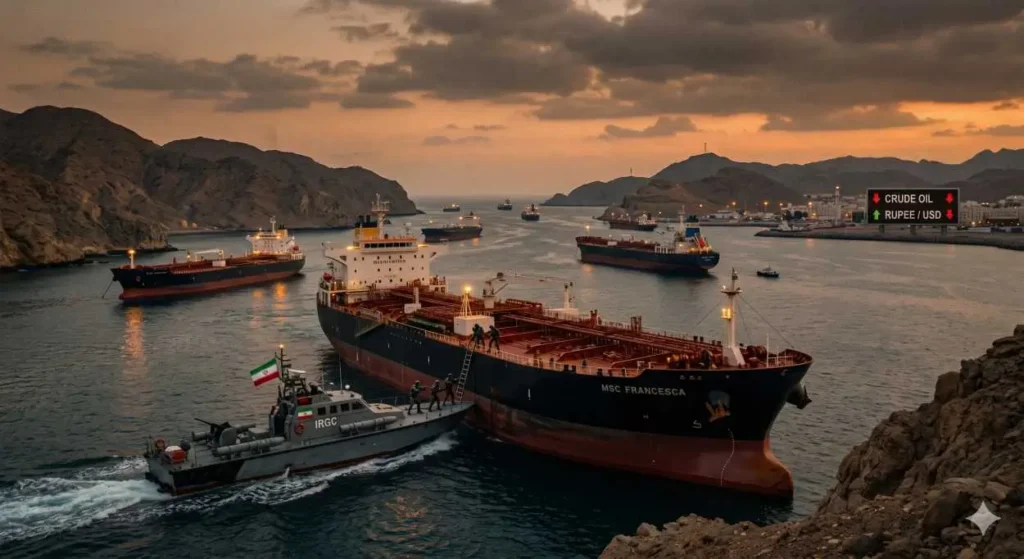
The Islamic Revolutionary Guard Corps captured the Panama-flagged MSC Francesca and the Liberia-flagged Epaminondas on Wednesday morning. Iranian state media confirmed the seizures, claiming both vessels attempted to covertly exit the vital maritime choke point. A third ship took heavy fire from an Iranian gunboat, and it hasn’t recovered from severe bridge damage according to the United Kingdom Maritime Trade Operations agency. Greece’s foreign minister also confirmed a separate attack against a Greek-operated cargo ship, proving no nation’s fleet is safe in these waters.
These attacks render the diplomatic theatre in Islamabad entirely irrelevant, confirming it’s a complete breakdown of international order.
U.S. President Donald Trump had announced an indefinite extension to the ceasefire just hours earlier. He’d done so at the urgent request of Pakistan’s Prime Minister Shehbaz Sharif and Army Chief Field Marshal Asim Munir. Sharif publicly thanked Trump for giving peace a chance, urging Tehran to open the Strait of Hormuz as a goodwill gesture. But Trump attached a fatal caveat to his olive branch. He confirmed the U.S. Navy wouldn’t lift its suffocating blockade on Iranian ports until Tehran submitted a unified peace proposal, claiming the Iranian government is seriously fractured.
Iran didn’t blink.
Mohammad Bagher Ghalibaf, speaker of the Iranian parliament, took to X late Wednesday to declare reopening the Strait of Hormuz impossible. He blamed flagrant ceasefire breaches by Washington and Israel, calling the American naval blockade a hostage-taking of the world’s economy. Mahdi Mohammadi, an adviser to Ghalibaf, dismissed Trump’s extension entirely. He told reporters the losing side can’t dictate terms, labelling the continued siege as an act of bombardment that demands a military response. Iranian officials firmly stated they refuse to negotiate under threat and force.
So what does a collapsed ceasefire mean for New Delhi? Roughly 20 percent of the world’s oil and liquefied gas passes through the Strait of Hormuz during peacetime. The International Energy Agency already classifies the 2026 Iran war as the biggest energy crisis in history. If the strait remains a war zone, crude oil prices won’t just creep up. They’ll spike violently. India imports over 80 percent of its crude requirements, meaning any sustained disruption in the Middle East translates directly into brutal inflation, higher petrol costs, and bleeding foreign exchange reserves back home.
Pakistan’s bid to play global peacemaker has spectacularly imploded. Sharif and Munir convinced Trump to hold off on a massive bombing campaign earlier this month, framing themselves as the saviours of regional stability. Now, they’re presiding over a humiliating flop show. The White House just shelved Vice President J.D. Vance’s planned trip to Islamabad for a second round of peace talks. Those negotiations featured plans to bring U.S. special envoy Steve Witkoff and Iranian Foreign Minister Abbas Araghchi to the table. Instead, Iran’s negotiation team sees no prospect of participating in further discussions, according to the semi-official Tasnim news agency.
The diplomatic chasm remains impossibly wide. Washington delivered a 15-point proposal demanding an immediate reopening of the Strait of Hormuz and a guaranteed maritime security framework. Tehran rejected it outright. Iranian leaders countered with their own 10-point plan, demanding the complete lifting of economic sanctions and a comprehensive solution to all regional conflicts before they even consider unblocking the waterway. Neither side is willing to concede an inch, and they aren’t pretending otherwise.
Trump doesn’t possess much patience for diplomatic stalemates. Officials in Washington confirmed to reporters that the U.S. president only gave Iran a three-to-five-day window to engage in talks before American forces resume their assault. Trump previously told CNBC his military is raring to go, predicting he’d likely be bombing soon because it offers a better negotiating attitude. Washington also just slapped new sanctions on 14 individuals and entities across Iran, Turkey, and the United Arab Emirates for procuring weapons components, proving the economic war hasn’t paused for a second.
The timeline of this failed truce reveals just how quickly trust evaporated. Constant skirmishes marred the original two-week ceasefire, brokered on April 8. Just days before the IRGC seized the cargo ships this week, the U.S. Navy intercepted and captured the Iranian vessel Touska in the Sea of Oman. Tehran immediately branded the U.S. operation an act of piracy and a direct breach of the ceasefire. Washington shot back, accusing Iranian forces of attempting to bypass the maritime blockade. You can’t sustain a peace deal when both sides actively hunt each other in the open water.
Global powers are scrambling to prepare for the worst. The United Kingdom launched a two-day conference on Wednesday with military planners from over 30 countries. They’re urgently trying to advance military plans to forcefully reopen the Strait of Hormuz as soon as conditions permit. Meanwhile, Israel continues its own regional campaigns, with Prime Minister Benjamin Netanyahu confirming Israeli troops will remain in Lebanon despite a separate 10-day ceasefire agreement diplomats are currently debating in Washington.
Iran’s military commanders aren’t backing down either. Gen. Majid Mousavi, a senior IRGC commander, threatened to obliterate the entire Middle Eastern oil industry if the U.S. resumes combat operations. He warned that if neighbouring countries allow American forces to use their facilities, they can say goodbye to oil production altogether.
We’re watching two heavily armed adversaries barrel toward a catastrophic collision. The resulting economic shockwaves won’t spare anyone.