
By Rootsalert Global Desk
Tehran Escalates Retaliation with Missile Barrage Targeting Israeli Leadership and Military Assets
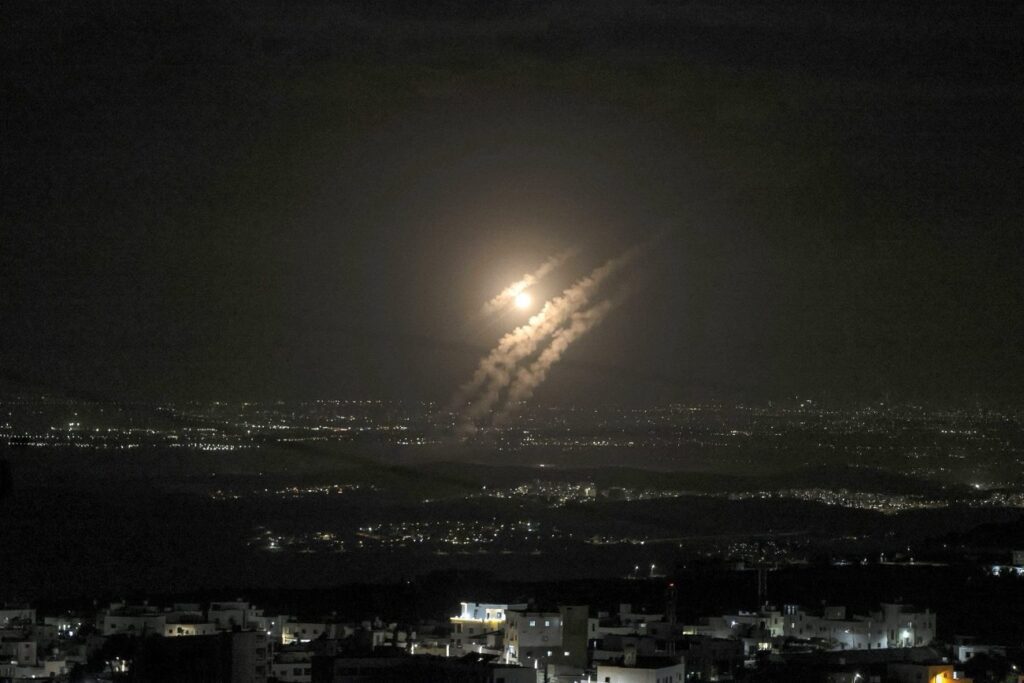
March 2, 2026 – In a dramatic escalation of the burgeoning conflict between Iran and Israel, Tehran’s Islamic Revolutionary Guard Corps (IRGC) announced late Sunday that it had launched a series of precision missile strikes directly targeting Israeli Prime Minister Benjamin Netanyahu’s official residence and a major air base housing the Israeli Air Force’s command headquarters. The claims, broadcast across Iranian state media, come amid a flurry of retaliatory attacks following the joint U.S.-Israeli operation that resulted in the death of Iran’s Supreme Leader Ayatollah Ali Khamenei on Saturday.
The IRGC’s statement, carried by the semi-official Fars News Agency, described the operation as part of a broader “tenth wave” of missile assaults aimed at crippling Israel’s military and political infrastructure. “The office and residence of the criminal prime minister of the Zionist regime, along with the headquarters of the regime’s air force commander, were precisely targeted using advanced Kheibar missiles,” the Guards proclaimed. These long-range ballistic missiles, capable of evading radar detection and carrying substantial payloads, have been a cornerstone of Iran’s arsenal, developed over years of regional tensions.
Israeli officials have yet to confirm any direct hits on Netanyahu’s personal residence in Jerusalem’s Rehavia neighborhood, a fortified compound that serves as both his home and a hub for high-level meetings. However, reports from the ground indicate significant damage to nearby government complexes in Tel Aviv and Jerusalem, where sirens blared for hours as interceptor systems like the Iron Dome and David’s Sling scrambled to neutralize incoming threats. Eyewitnesses in the capital described plumes of smoke rising from the direction of the Prime Minister’s Office, though military censors have restricted detailed imagery from the sites.
The alleged strike on the air base – widely believed to refer to the Nevatim Airbase in southern Israel, a critical node for F-35 stealth fighters and intelligence operations – marks a bold attempt by Iran to disrupt Israel’s aerial superiority. Israeli Defense Forces (IDF) spokesperson Rear Adm. Daniel Hagari acknowledged “multiple impacts” across central Israel but emphasized that key military installations remained operational. “Our defenses held strong against this cowardly barrage,” Hagari said in a televised briefing. “Iran’s attempts to sow chaos will only strengthen our resolve.”
The attacks unfolded against a backdrop of chaos in the region. Just hours earlier, an Iranian missile struck a residential area in Beit Shemesh, a town 30 kilometers west of Jerusalem, killing at least nine civilians – including children – who had sought shelter in a reinforced bunker. The strike, which demolished several homes and left a crater the size of a small building, has been condemned internationally as a violation of civilian protections under the Geneva Conventions. Magen David Adom, Israel’s emergency service, reported over 20 injuries, with hospitals in Jerusalem overflowing as medics treated shrapnel wounds and blast trauma.
This latest volley is part of Iran’s multifaceted response to the assassination of Khamenei and other top officials in a daring airstrike on Tehran. U.S. President Donald Trump, who authorized the operation dubbed “Epic Fury,” has vowed to continue the campaign, stating in a White House address that the strikes would persist for “four or five weeks” until Iran’s nuclear ambitions and proxy networks are dismantled. Israel, under Netanyahu’s leadership, has conducted thousands of sorties over Iranian airspace, targeting missile silos, nuclear facilities in Isfahan and Natanz, and IRGC command centers.
Analysts suggest Iran’s strategy is twofold: to demonstrate resilience at home while inflicting symbolic blows on Israeli leadership. “Targeting Netanyahu’s home isn’t just military; it’s psychological warfare,” said Dr. Emily Landau, a senior fellow at the Institute for National Security Studies in Tel Aviv. “Iran wants to show its people that retribution is swift and personal, even if the actual damage is limited by Israel’s defenses.”
The international community has reacted with alarm. United Nations Secretary-General António Guterres called for an immediate ceasefire, warning that the conflict risks engulfing the entire Middle East. European Union foreign policy chief Josep Borrell urged restraint, while China and Russia – traditional allies of Iran – condemned the initial U.S.-Israeli strikes as “aggression.” In the Gulf, Iranian drones and missiles have also targeted U.S. bases in Bahrain, Qatar, and Kuwait, injuring several American service members and prompting evacuations.
On the streets of Tehran, crowds gathered in defiance, chanting anti-Israel slogans as state TV looped footage of missile launches. Interim Iranian leadership, now under Acting Supreme Leader Mohammad Ali Jafari, has pledged to “avenge the martyrs” with unrelenting force. “Our missiles will rain down until the Zionist entity is erased,” Jafari declared in a fiery speech.
In Israel, the mood is one of grim determination. Netanyahu, speaking from an undisclosed secure location, addressed the nation: “We will strike thousands more targets in the coming days. To the people of Iran: Rise up and free yourselves from tyranny.” Civil defense measures have been ramped up, with schools closed and bomb shelters stocked across the country.
The human toll is mounting. In Iran, U.S.-Israeli airstrikes have killed hundreds, including civilians caught in the crossfire near military sites. Power outages plague Tehran, and fuel shortages have sparked protests in several cities. In Israel, the Beit Shemesh attack has fueled calls for a ground invasion, though experts warn that could lead to a protracted war involving Hezbollah in Lebanon and other Iranian proxies.
As night falls over the Levant, the skies remain tense. Hezbollah, Iran’s Lebanese ally, has exchanged fire with Israeli forces along the border, opening a second front. Drones buzzed over Beirut, and Israeli jets struck Hezbollah positions south of the capital, killing at least a dozen militants.
The path to de-escalation seems distant. With both sides dug in, the risk of miscalculation – a stray missile hitting a holy site or a cyberattack crippling infrastructure – looms large. For now, the world watches as two ancient adversaries clash in a modern inferno, with the stakes higher than ever.
This conflict, rooted in decades of enmity over nuclear programs, proxy wars in Syria and Yemen, and ideological clashes, shows no signs of abating. As one Israeli resident in Jerusalem put it, sheltering from yet another siren: “We’ve lived through intifadas and wars, but this feels different – like the whole region is on fire.”