An Israeli drone strike in southern Lebanon killed reporter Amal Khalil, and troops fired sound grenades to stop ambulances from reaching the rubble.
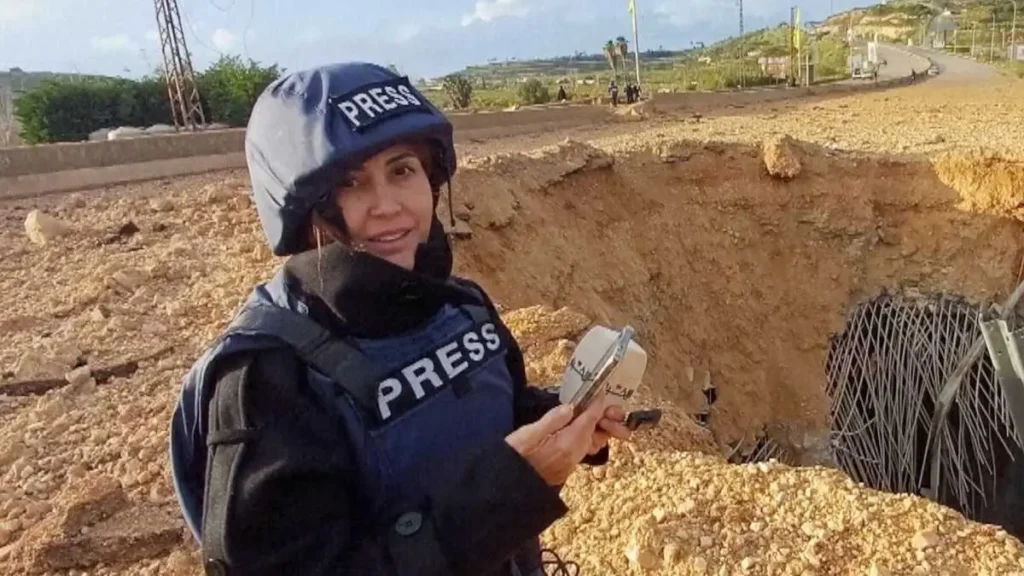
Israeli forces killed Lebanese journalist Amal Khalil and injured her photographer in a targeted double-tap strike on Wednesday in southern Lebanon. The Al-Akhbar reporter didn’t survive. An Israeli drone collapsed a building in the village of al-Tayri right on top of the journalists as they fled a previous hit, shattering a fragile ten-day ceasefire and pushing the daily death toll to five.
The journalists were covering unfolding military developments when an initial missile hit the vehicle directly in front of them. The blast killed two civilians instantly. The reporters ran for their lives, sprinting through the dust into a nearby house for cover. An Israeli drone immediately obliterated the structure. Heavy concrete trapped both women until Lebanese Red Cross emergency responders rushed to the site and dragged freelance photographer Zeinab Faraj out of the wreckage with a severe head wound.
But they couldn’t reach Khalil.
When paramedics returned to dig the 43-year-old reporter out, Israeli soldiers deliberately blocked the rescue. Troops fired a sound grenade and live ammunition directly at the ambulance, Lebanon’s health ministry confirmed. It wasn’t a warning. Medics retreated and waited four agonising hours before they could safely re-enter the combat zone. They spent another three hours shifting debris before civil defence teams finally pulled her corpse from the ruins. Elsy Moufarrej, director of the Union of Journalists in Lebanon, stated the military intentionally stalled the extraction.
So how does a modern army justify firing on an ambulance? The Israeli military issued a statement claiming individuals in the village violated the April 16 ceasefire and posed a threat. Commanders flatly denied obstructing the humanitarian mission or deliberately targeting the press. Lebanese Prime Minister Nawaf Salam rejected that defence completely. He branded the attack a war crime and promised his government won’t stop pursuing international charges against the soldiers involved.
Lebanon’s Information Minister Paul Morcos echoed the outrage, calling the assassination a flagrant violation of international law. The diplomatic timing couldn’t be worse. Negotiators from Lebanon and Israel flew to Washington for a critical second round of talks this week. They planned to extend the exact ceasefire Israeli drones just bombed. American mediators face an impossible task keeping both sides at the table while the region burns.
The fighting reignited in early March amid wider geopolitical tremors tied to the US-Israeli confrontation with Iran. As Washington scrambles to salvage a fragile truce in the broader war, the violence rapidly consumed the Lebanese border. A separate drone strike on Wednesday hit the town of Yohmar al-Shqif, killing two more civilians and injuring several others. Lebanon faces a stark choice: watch its southern towns systematically erased, or retaliate and risk a full-scale invasion. The military machine isn’t slowing down.
Khalil knew the risks of the border better than anyone. She covered regional conflicts for twenty years, building a reputation for fearless on-the-ground reporting since the 2006 war. Her most recent dispatches exposed systematic Israeli demolitions of border villages where invading troops established forward operating bases inside sovereign Lebanese territory. She didn’t rely on press releases. She went to the front lines to document the destruction firsthand, and she paid for that proximity with her life.
This assassination fits a brutal, undeniable pattern of violence against the press. Late last month, an Israeli airstrike slaughtered three journalists in a single day in southern Lebanon. The military eliminated Ali Shoeib of Al-Manar TV, baselessly branding him a Hezbollah intelligence operative. Commanders haven’t released a single shred of evidence to support the claim. The exact same strike killed Al-Mayadeen TV reporter Fatima Ftouni and her brother Mohammed. Just days earlier, another precision strike in Beirut wiped out journalist Mohammed Sherri and his wife.
The broader numbers paint a devastating picture of the humanitarian cost. Israeli operations have killed at least 2,300 people across Lebanon and displaced more than one million residents. They aren’t sparing the cities. Entire neighbourhoods lie in ruins. Drones continue hunting targets in residential zones, and artillery shells rain down on civilian infrastructure despite international condemnation.
President Joseph Aoun demanded immediate coordinated intervention. He ordered the Lebanese army, the Red Cross, and United Nations peacekeepers to force safe corridors for emergency teams. First responders can’t operate without facing the constant threat of secondary strikes. The al-Tayri assault proves a press badge offers zero protection against an army willing to bomb the ambulances sent to clean up the wreckage.
And the media death toll hasn’t stopped climbing. Reporters Without Borders and the Committee to Protect Journalists warned the targeted killing of reporters constitutes a severe war crime. The international community watches the carnage unfold and issues strongly worded statements. Israel has eliminated nine media workers in Lebanon this year alone.