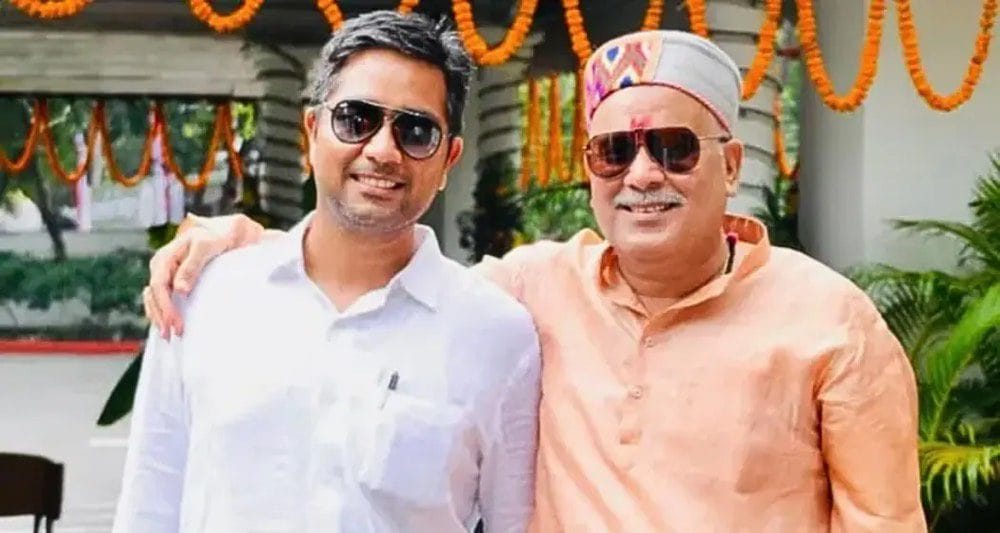
Raipur: The multi-crore liquor scam investigation has entered a critical phase with the Economic Offences Wing (EOW) and Anti-Corruption Bureau (ACB) filing their 8th chargesheet, formally naming Chaitanya Baghel, son of former Chief Minister Bhupesh Baghel, as a central figure in the alleged syndicate.
While Chaitanya Baghel secured bail from the High Court just days ago citing a lack of “concrete documentary evidence,” the 3,800-page chargesheet filed by the state agency paints a picture of a deep-rooted conspiracy, keeping the political temperature in Chhattisgarh at a boiling point.
The Core Allegation: The ‘Bridge’ Between Power and Mafia
The EOW’s latest submission to the Special Court describes Chaitanya Baghel not merely as a beneficiary, but as a key “protector and coordinator” of the illegal liquor syndicate.
According to the agency, the scam—which allegedly siphoned off over ₹2,800 crore from the state exchequer between 2019 and 2022—could not have functioned without high-level political shielding. The chargesheet alleges that Chaitanya acted as the critical link between:
• The Bureaucracy: Senior officials like Anil Tuteja, Saumya Chaurasia, and Arun Pati Tripathi.
• The Ground Operatives: The network led by Anwar Dhebar and Arvind Singh.
The agency claims this protection allowed the syndicate to collect illegal cess on every bottle of liquor sold in the state, essentially running a parallel excise department.
The Money Trail: ₹200-250 Crore in Alleged Proceeds
The most damaging allegation in the EOW chargesheet is the quantification of Chaitanya Baghel’s personal gain. Investigators assert:
• Chaitanya Baghel allegedly received a share of ₹200 to ₹250 crore from the scam’s proceeds.
• Method of Transfer: The funds were reportedly routed through firms linked to liquor businessman Trilok Singh Dhillon and subsequently transferred via banking channels into family-owned firms of the Baghels.
• End Use: The agency claims these funds were then diverted into real estate projects and other investments.
This contrasts with the Enforcement Directorate’s (ED) earlier prosecution complaint, which had accused him of “handling” nearly ₹1,000 crore of the crime proceeds.
Legal Paradox: Strong Charges vs. Judicial Relief
Despite the severity of these charges, the case faces a significant legal hurdle. On January 2, 2026, the Chhattisgarh High Court granted bail to Chaitanya Baghel in both the ED and EOW cases.
In its order, the High Court observed that the agencies had relied heavily on “broad assertions” and statements recorded under Section 50 of the PMLA, rather than providing a “concrete documentary trail”—such as direct bank transactions or property records—that conclusively linked him to the generation of the proceeds of crime.
The Political Fallout
The filing of this chargesheet has intensified the war of words between the ruling BJP and the opposition Congress.
• The Government Stance: The chargesheet is presented as proof that the corruption rotted the system from the very top.
• The Defense: Former CM Bhupesh Baghel has consistently termed the investigation a “political vendetta,” highlighting the High Court’s observations as vindication that the agencies are overreaching without evidence.
What Next?
For the EOW/ACB, the challenge is now to substantiate the “syndicate protector” theory with hard evidence during the trial. For Chaitanya Baghel, despite walking out of jail on January 3, the legal battle is far from over as the trial on the chargesheet’s contents begins.
Roots Alert will continue to track the documentary evidence as it emerges in court.