
Just days after leading a massive seven-MP defection from the AAP to the BJP, the Mungeli-born political strategist faces non-bailable charges in Punjab.
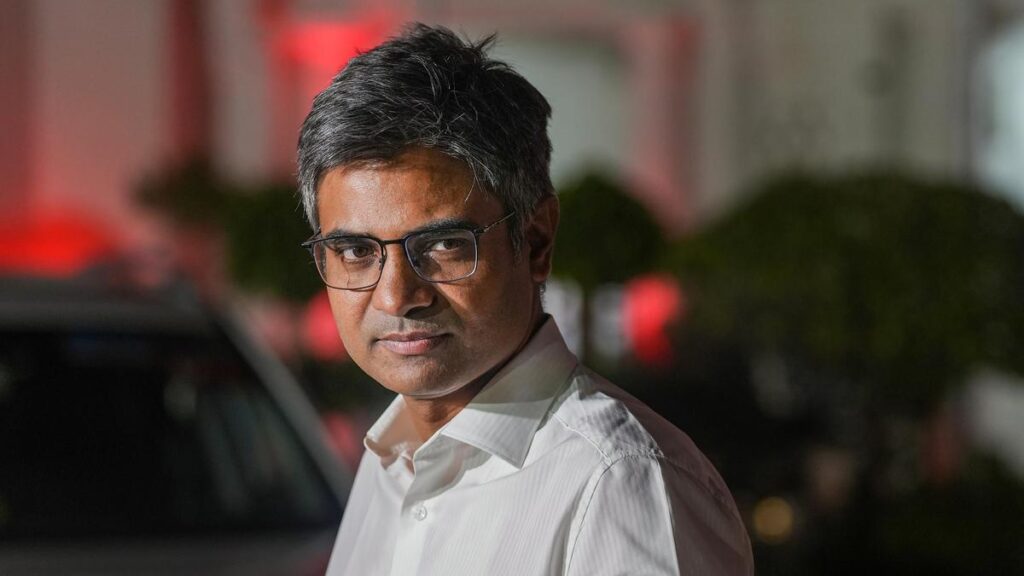
Raipur, May 2 — Punjab Police booked Rajya Sabha Member of Parliament Sandeep Pathak under non-bailable sections on Saturday. Police sources confirmed the registration of two First Information Reports against the high-profile politician, striking just days after he’d orchestrated a highly damaging mass defection to the Bharatiya Janata Party.
Officers haven’t released the specific charges yet. They’ve kept the text of the documents tightly sealed. But in politics, timing speaks volumes. Pathak recently led a crippling walkout from the Aam Aadmi Party, gutting their legislative presence and deeply wounding their national ambitions.
They didn’t leave quietly.
When Pathak and six others quit on April 24, they didn’t mince words. The group—which included heavyweights like Raghav Chadha, Ashok Mittal, Harbhajan Singh, Rajendra Gupta, Vikramjit Sahney, and Swati Maliwal publicly accused Arvind Kejriwal’s party of straying from its principles, values, and core morals. They painted a picture of a party consumed by internal rot. So is this swift police action a genuine legal necessity or raw political retaliation?
Six of those seven defectors represent Punjab. This is a state where the AAP firmly controls the government and, by extension, the state police machinery. The sudden exodus completely wiped out the AAP’s parliamentary leverage. Once Rajya Sabha Chairman C.P. Radhakrishnan officially accepted their merger with the BJP, he slashed the AAP’s Upper House strength from ten members down to just three. They’ve lost their loudest voices in Delhi, practically overnight. This drastically alters the voting mathematics on crucial national bills, giving the ruling BJP coalition an even tighter grip on the legislative agenda.
The target of this police action isn’t a typical politician. Pathak hails from Mungeli in Chhattisgarh. Before entering the political fray, he was a quiet academic—an assistant professor at IIT Delhi. He wasn’t a rally speaker; he was a backroom architect. Pathak built the very electoral strategies that secured the AAP’s landslide victory in Punjab back in 2022. He mapped the state, engineered the grassroots campaigns, and delivered the government to Chief Minister Bhagwant Mann. Now, the very state apparatus he helped install is hunting him.
And the stakes couldn’t be higher. The BJP didn’t just acquire seven random politicians. They absorbed the AAP’s strategic brain trust. By bringing Pathak into their fold, the BJP gains deep, granular intelligence on the AAP’s internal operations, financial networks, and electoral vulnerabilities across northern India. Pathak knows how the AAP wins. More importantly, he knows exactly how they can lose.
This makes him a massive, existential threat to his former party. The AAP’s leadership clearly recognizes this danger. The decision to slap non-bailable charges on a sitting MP indicates they aren’t looking for a simple intimidation tactic. They want him out of the picture. Authorities haven’t clarified if they’ll launch inter-state raids to seek his immediate arrest, but non-bailable sections give them that exact power. The police haven’t named the complainants driving these two FIRs, shielding the origins of the accusations from public scrutiny.
Legal experts tracking the fallout anticipate a brutal, drawn-out fight in the high courts. Pathak’s legal team will likely move for immediate anticipatory bail, challenging the jurisdiction and the motives of the Punjab Police. The BJP’s national leadership will undoubtedly frame this as a desperate, authoritarian vendetta by a crumbling state government. They’ll use these FIRs as proof of the AAP’s vindictive nature.
But the immediate reality remains perilous for the Mungeli-born strategist. He traded the AAP’s inner circle for the BJP’s formidable national machinery, fundamentally altering the political map of the Upper House. He drew the ultimate line in the sand.
The battle for Punjab’s political control won’t stay confined to the parliament building. It’s already spilling into the interrogation rooms.




Leave a Reply