Three labourers suffocated under tonnes of earth in Chhattisgarh, triggering the suspension of two Bhilai Steel Plant bosses and a criminal negligence probe.
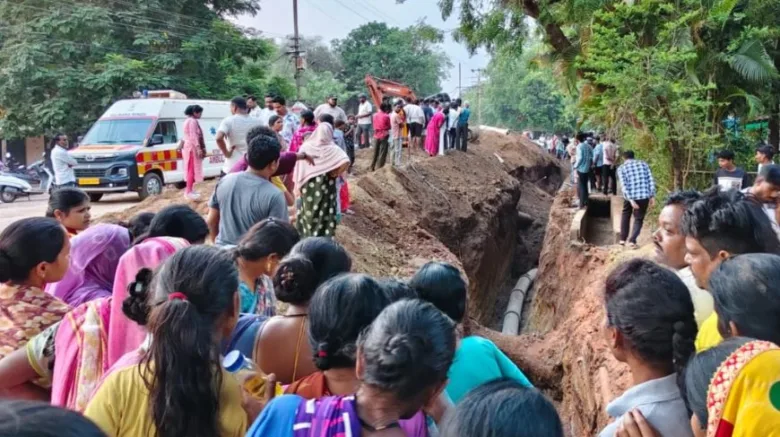
DALLI RAJHARA, May 14 — Three labourers suffocated under tonnes of collapsed earth at a sewerage pipeline site in Chhattisgarh’s Balod district, triggering immediate corporate suspensions and a widening police investigation. The men were digging deep into the soil of Dalli Rajhara when the trench walls failed. They didn’t stand a chance against the crushing weight.
The collapse wasn’t a slow, predictable slide. The earth gave way with brutal speed, burying the three workers instantly at the bottom of the pit. They died on the spot, long before any rescue crew could mobilise or dig through the heavy dirt to reach them. The horrific nature of the deaths sent immediate shockwaves through the surrounding area. It didn’t take long for the panic to morph into fury. Relatives of the deceased labourers arrived at the construction zone, and their heavy anger quickly spread through the local community, pushing the crisis to a boiling point. They’ve demanded immediate answers from the contractors who put their loved ones in the ground.
Management at the Bhilai Steel Plant, a massive facility operated by the state-run Steel Authority of India Limited, moved quickly to stem the fallout from the disaster. They didn’t wait for a final police report to assign blame. Taking preliminary action, BSP executives immediately suspended two senior officials overseeing the municipal project. Deputy General Manager Mangesh Selkar and Assistant General Manager of Civil Works Ramesh Kumar were abruptly stripped of their duties, and they’ve been removed from the site.
The corporate charge sheet against the two executives is stark and damning. SAIL administrators accuse Selkar and Kumar of blatant negligence regarding worksite safety protocols. They’ve also been cited for a complete failure to monitor the hazardous excavation while the vulnerable labourers were exposed in the deep trench. This rapid administrative punishment has only added fuel to the fire, giving the incident far more momentum in the public eye because it proves the company knows they’ve messed up.
But an internal corporate suspension doesn’t close a fatal worksite failure. Local police quickly registered a formal ‘marg’—an unnatural death report—and locked down the Dalli Rajhara pipeline site. Officers aren’t just processing a tragedy; they’re actively hunting for criminal liability.
Why didn’t anyone stop a routine civic excavation from transforming into a mass grave in a matter of seconds?
Detectives want the exact answer, and they aren’t taking the company’s word for anything. They’re demanding the project’s safety logs, contractor agreements, and daily inspection records. Officers have publicly stated they are forensically examining every single aspect of the deadly operation.
Investigators are particularly focused on the physical safety measures—or the severe lack thereof. They’re checking what specific safety equipment the contractors actually handed to the labourers before sending them down the hole. They also want to know if anyone bothered to follow the basic engineering standards required for such pipeline work, like installing shoring or trench boxes to keep loose soil from crushing the excavation crew. They haven’t released their initial findings yet.
Someone signed off on that death trap, and they’ve got nowhere to hide.
The families of the dead men aren’t waiting patiently for bureaucratic reviews or internal audits. Their anger is raw, vocal, and directed squarely at the project’s management. They’ve lost their primary earners to an entirely preventable infrastructure failure, and they demand strict accountability for the dirt that crushed their relatives.
So the stakes for Selkar, Kumar, and the contracting companies extend far beyond a temporary loss of salary or corporate rank. Police officials made it completely clear that this probe has teeth, and they won’t hesitate to escalate it. If the evidence confirms that supervisors bypassed mandatory safety standards to speed up the pipeline work, investigators will file a formal First Information Report against the responsible individuals.
An FIR pushes the disaster out of the corporate human resources department and straight into the criminal justice system. A suspension is a reprimand; an FIR carries the threat of prison time. SAIL tried to contain the damage by cutting off two managers, but the state’s law enforcement machinery has only just begun to turn. The final reckoning won’t be decided in a boardroom.