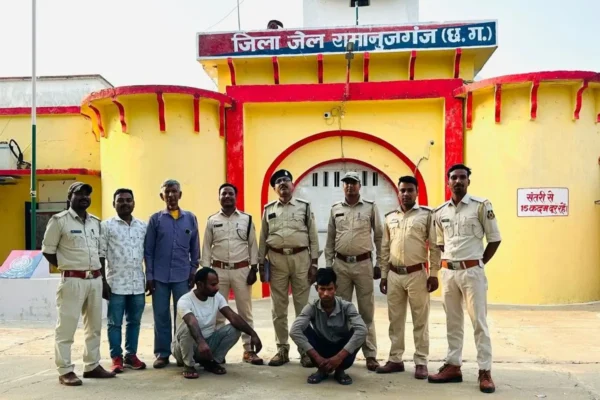
Four Chhattisgarh policemen died defusing an underground explosive trap, shattering a five-week-old government declaration that the Bastar region was completely free of armed Maoists.
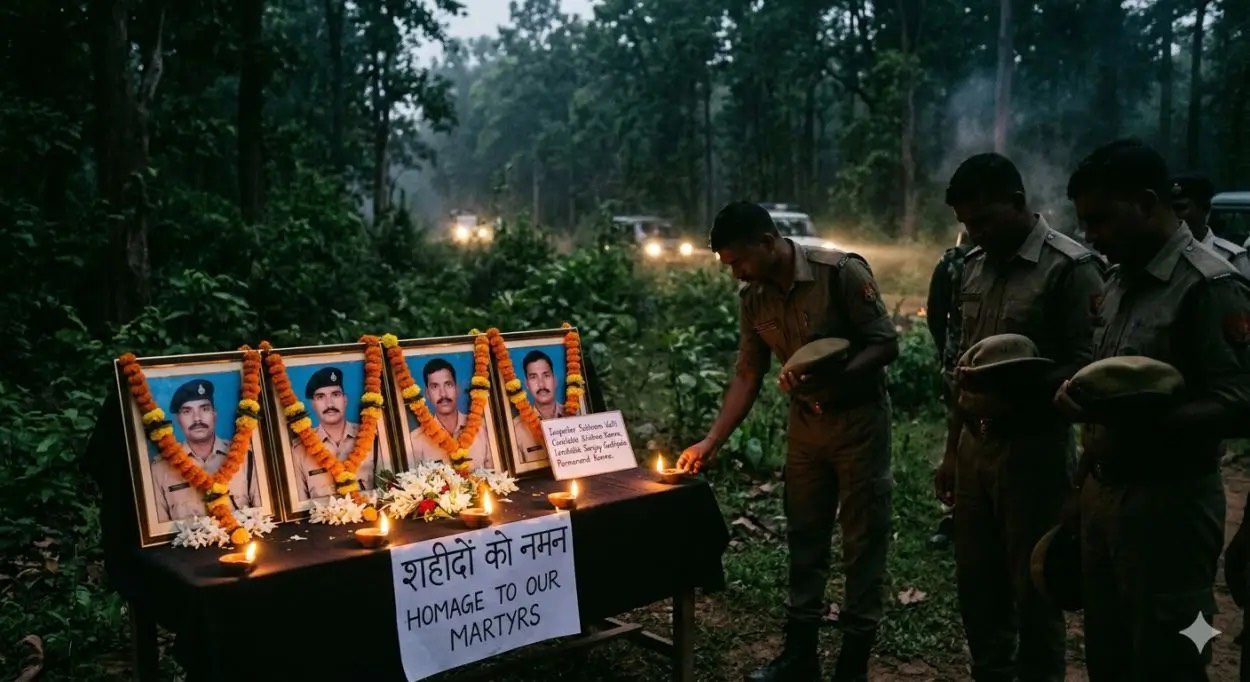
KANKER, May 2 — Four policemen are dead because a surrendered insurgent’s map didn’t just lead them to a weapons cache—it led them straight into a rigged grave.
Inspector Sukhram Vatti and three of his constables bled out in the Chhotebethiya forests on Saturday morning. A sudden ambush didn’t catch them, nor did they fight a rearguard action. Commanders sent them to sanitize a patch of land that the government already insists is safe, executing the unglamorous, lethal work of digging up history. A joint security team comprising the District Reserve Guard (DRG), the Bastar Fighters, and the district force crossed into the dense, unforgiving terrain near Aadnar village along the Kanker-Narayanpur border.
Just five weeks ago, on March 31, politicians confidently declared Chhattisgarh wouldn’t see armed Maoist insurgency again. State officials pronounced the region free of the violent cadres that controlled these jungles for decades.
So why didn’t four veteran local operatives survive a patrol in a zone their superiors consider completely pacified?
The answer lies beneath the soil, in the legacy of a war that isn’t entirely over. Inspector General of Police for the Bastar Range, P. Sundarraj, confirmed the tactical team moved out based on fresh, highly specific intelligence. Former Maoist cadres who’d recently surrendered pointed police toward hidden weapons caches in the sector. At approximately 11:30 a.m., the squad found exactly what they sought. They successfully cleared the first subterranean dump, recovering a haul of electronic materials that retreating insurgents left behind, and then they pushed further into the tree line toward the second set of coordinates.
The dirt wasn’t just hiding weapons; an unexploded trap waited beneath the surface.
According to Deputy Chief Minister Vijay Sharma, who also holds the home portfolio, the team didn’t make a rookie tactical error. They followed strict standard operating procedures. The bomb-maker simply designed the improvised explosive device (IED) to detonate before anyone could neutralize it. The bomb blew with devastating force while the jawans physically pulled it from the ground. Vatti, a 40-year-old DRG inspector from Bijapur district who led the detachment, took the absolute brunt of the blast. Constable Krishna Komra, 35, and Constable Sanjay Gadhpale, 29, died instantly beside him in the dirt. Another 29-year-old Bastar Fighter, Parmanand Komra, survived the immediate shockwave but suffered catastrophic injuries. Medics scrambled a helicopter and airlifted him to Raipur, but he couldn’t survive the trauma. He died on the hospital operating table.
“They handled the device according to standard procedure, but the nature of its manufacturing was such that it triggered a powerful explosion,” Sharma told reporters in Nava Raipur. The government stands with the bereaved families, he added, praying for peace for the departed souls. But compensation cheques and official condolences won’t change the tactical reality on the ground for the men still out there.
It’s a reality the DRG and the Bastar Fighters know intimately. These units aren’t paramilitary outsiders that New Delhi buses in to blindly patrol alien terrain. They’re locals. Many actively fought as insurgents themselves in the past, or grew up as tribal youth in the exact districts they now police. They know the tree lines, the seasonal trails, and the psychological tactics of the enemy. But geographical familiarity doesn’t stop a rusted pressure plate from snapping under a boot.
And the sheer volume of hidden ordnance makes every patrol a brutal game of roulette. The Maoist insurgency didn’t just fight with rifles; fighters systematically mined the earth across the seven districts of the Bastar division. Sundarraj laid out the math of this underground war during his briefing. Security forces unearthed 900 IEDs in 2025. They’ve pulled another 300 from the dirt just in the first four months of 2026. That’s 1,200 hidden bombs saturating the region, waiting to tear apart a de-mining squad. Police also seized over 300 weapons, ranging from AK-47 assault rifles to grenade launchers, which significantly reduced the surface threat.
Sundarraj flatly refused to label Saturday’s disaster a failure of protocol. “This should not be viewed as a lapse because IEDs have always been a major challenge for security forces,” the Inspector General stated. He pointed out the extreme complexity of the buried hardware. These aren’t just simple tripwires strung between trees. The Maoists employed sophisticated command-wire IEDs, pressure-activated plates, and victim-operated traps that bomb-makers designed specifically to kill the technicians attempting to disarm them.
Environmental decay makes the threat exponentially worse. The intense Bastar summer heat bakes the chemical compounds hiding in the soil. Wires corrode in the monsoon damp, and detonators become highly volatile over time. A device that insurgents planted three years ago won’t behave the way a modern explosives textbook says it should. A specialized Bomb Disposal Squad currently stands in the blast crater in Aadnar, piecing together the fragmented casing to determine if the heat, a degraded circuit, or a deliberate anti-handling switch triggered the slaughter—they’re leaving nothing to chance in the ongoing forensic examination.
This blast marks the very first major Naxalite-linked bloodshed in the state since the March 31 declaration, and the first time this year that security personnel died during an anti-Maoist operation. It violently shatters the political illusion of a clean, absolute victory. Insurgencies rarely end with a neat treaty and a swept floor. The fighters might surrender, and the politicians might celebrate, but the weapons they buried don’t know the war is over.
But the cleanup won’t stop. Heavily armed reinforcements poured into the Chhotebethiya sector by Saturday afternoon, cordoning off the deep jungle. They’re systematically expanding the search grid, looking for any secondary devices that insurgents meant to target first responders. Sundarraj made it clear the de-mining teams will keep working through the intelligence that surrendered cadres provide, pushing to make the entire region completely IED-free for development and civilian movement.
Until they’ve found the very last wire, the Kanker-Narayanpur border remains a lethal lottery. The government claims the victory, but it’s the local cops who have to survive the peace.