
Labour Minister Lakhan Lal Dewangan expanded death benefits, housing subsidies, and subsidised meal programmes across 18 districts to secure the state’s most vulnerable workforce.
RAIPUR, Aug 21 — The Chhattisgarh government has successfully brought 56.83 lakh workers, who are unorganized, construction workers and formal workers, into its social security fold and recognised the huge invisible army that drives the mining and manufacturing sector of the state. The Financial Intervention is as massive as it gets, according to state data released Friday. Chhagal Lal Lonhare, the Public Relations Joint Director, said that the state has not only registered these individuals but also given monetary benefits of ₹173.32 crore to 3.48 lakh workers only in the first half of 2026. Labour Minister Lakhan Lal Dewangan says that in essence this is a “paradigm shift” in the way the state sees its economic engine. They are seeking to supplant an industrial past with a strict system of tracking and funding via a digital program.
Then the administration wasn’t satisfied with giving out cash. Recently, important changes have been made in the Chhattisgarh Shop and Establishment Act 2021 and the government has compelled the labour officials to issue identity certificates for labourers within 24 hours only. They have also revoked the antiquated 1962 Factories Act, a law that had not contained any safety measures, thereby creating new laws which are binding and require that women be allowed to enter these expanded factory jobs. Dewangan’s department has gradually increased its scope to accommodate the state’s load, as a state institution.As a state institution Dewangan’s department has expanded systematically its physical scope to accommodate the load in the state. They established five Assistant Labour Commissioner outposts, bringing the number of labour offices to 33 throughout the state.
The financial interventions focus on the immediate crushing poverty that is often faced by the informal sector. Labourers often move from rural belts to temporary camps of shoddy housing in a state where there are many heavy industries. The Chief Minister’s Construction Workers Housing Assistance Scheme has just raised the amount of direct housing assistance from ₹1 lakh to ₹1.5 lakh, giving the construction workers a fighting chance at having a permanent shelter over their heads. Women who are employed in these harsh industries are not being left behind, either. The state’s Didi e-Rickshaw scheme did not lack the financial jolt, it offered female worker collectives ₹1.5 lakh to buy e-mobility solutions and create their own livelihood, outside of construction sites.
It is direct investment to fight generational poverty.
But is it possible for a government to control the chaos of the informal labour market? In industrial centres such as Raipur and Bhilai, manual labour has been in the hands of contractors for decades without providing any registration. To avoid such middlemen, the state has rolled out the ‘e-Shram Sathi’ mobile application. It enables registered employees to directly link with “real” employers and bypass the middlemen who take their paychecks. In addition, officials are also deploying Model Labour Chowk Facilitation Centres in key urban transportation hubs. These aren’t just empty concrete shelters. The state is equipping them with drinking water, resting areas, and even direct digital access to government schemes on the street!
At the same time, the state is tackling the health impact of manual work. The government has run a total of 39 Shahid Veer Narayan Singh Shram Anna Yojana centres, which are located in 18 districts, and provide a subsidised meal of just ₹5 for hot and nutritious food. They have also announced periodic medical camps under the Chief Minister’s Construction Workers Health Check-up Scheme, which will help to identify chronic diseases before they can permanently take a worker off from his work. The factory managers must hire senior safety officials now under the law to actively help train their floor staff, and officials say that is already bringing down accident rates on the job in heavy industrial work.
If those safety measures don’t work, the state is finally coming to the rescue for the devastating consequences. The government will now compensate dependents of any registered construction worker killed at a construction site with ₹5 lakh and ₹2.5 lakh in case he or she becomes permanently disabled due to an incident. In the event of a construction worker not registering in the state, Dewangan’s department will provide a ₹1 lakh emergency compensation to their family. The unorganised sector workers outside of construction also get an equivalent safety net, with ₹1 lakh for a fatal accident and ₹50,000 in case of injuries that have changed their lives.
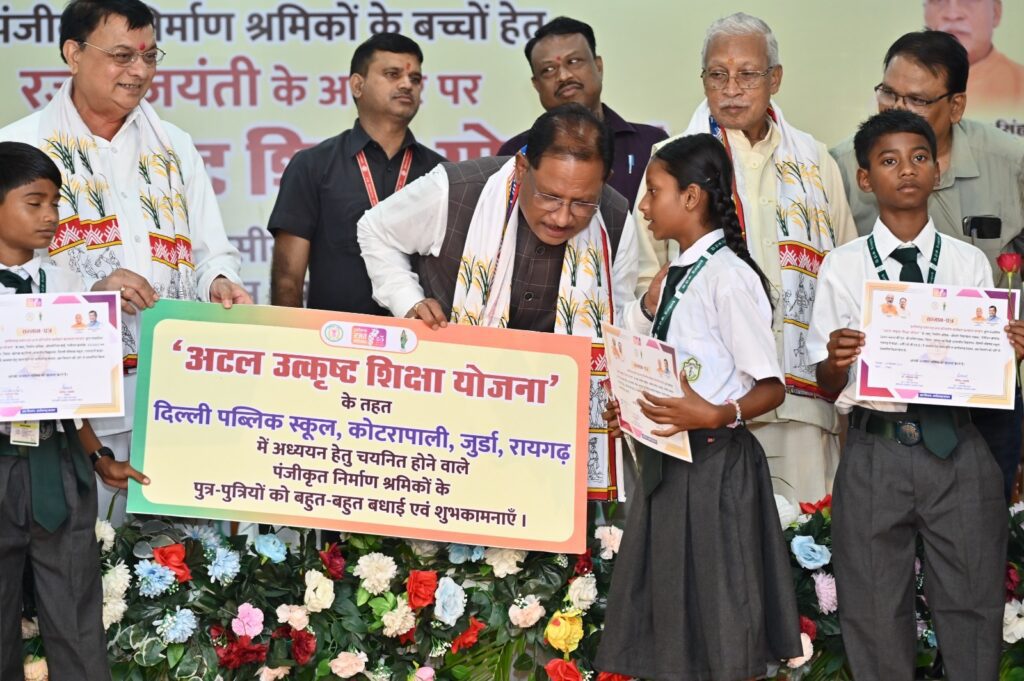
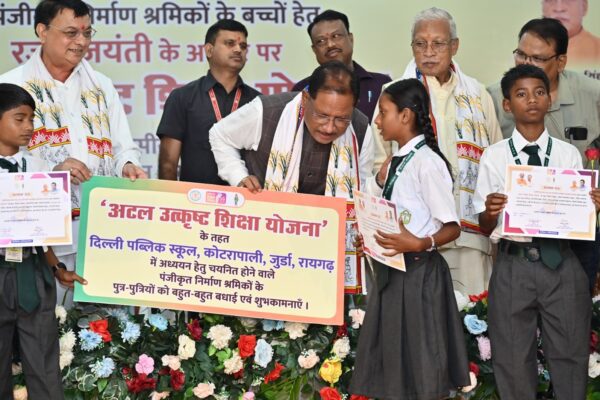
So the administration is taking a massive risk in trying to educate their young people out of the labour camps all together. The newly launched Atal Career Nirman Yojana has launched free-of-cost coaching for children of registered workers to crack the tough engineering/medical entrance tests. The Atal Utkrisht Shiksha Yojana provides full cost of Schooling (Classes 6th to 12th) in Private Residential School for younger students. The state has not only decided to keep this programme, but they have doubled the number of students from 100 to 200 for the 2026-27 academic year, thanks to a new directive from the Chief Minister.
These aren’t just welfare handouts. They are a strategic investment in the state’s industrial base.

Leave a Reply