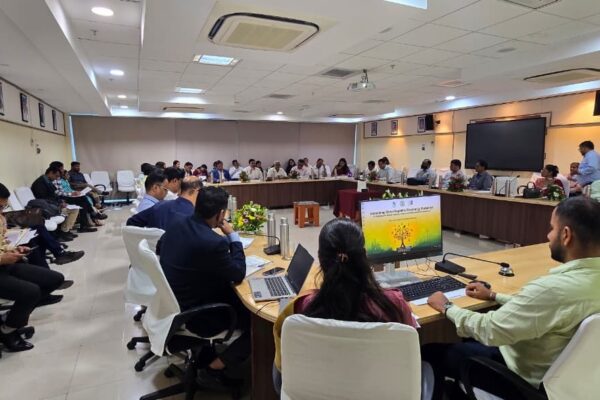
A high-level meeting in Naya Raipur aligns state bioenergy goals with national targets, leaning on grassroots farmer cooperatives to manage the massive biomass supply chain.
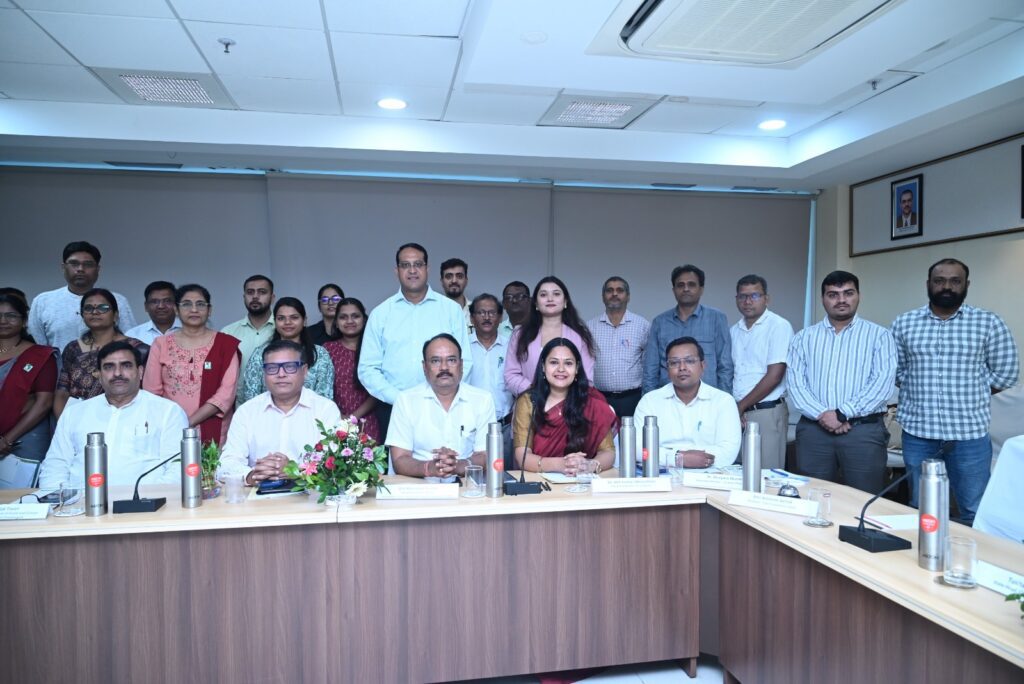
RAIPUR, Aug 20 — Chhattisgarh is moving aggressively to transform its agricultural waste and cattle dung into 5 lakh tonnes of compressed biogas every year. State officials and industry executives convened in Naya Raipur today to hammer out a bioenergy roadmap that turns organic waste into a rural economic engine. The government has already armed this push with the ‘Chhattisgarh Compressed Biogas (CG-CBG) Policy 2026’ and a fresh industrial development framework, offering sweeping incentives to attract massive private green investment. They aren’t just setting up a few pilot plants. They’re trying to build a scalable ecosystem for industrial decarbonisation.
And they’ve brought the heavy hitters to the table to prove they mean business.
The summit, organised under the guidance of Forest and Climate Change Minister Kedar Kashyap, drew major corporate representatives from Reliance Industries Limited, Bharat Petroleum, and Jindal Power. Shri Alok Tiwari, Chief Conservator of Forests, co-chaired the technical discussions alongside Amitabh Bajpai of the State Biodiversity Board and Ramapati Kumar, CEO of the Centre for Environment and Energy Development. They didn’t just talk environmental theory; they outlined a practical, cluster-based approach for biomass collection designed to slash logistical costs. This framework ensures farmers see significantly better economic returns for supplying the raw materials. But can the state effectively decentralise such a complex supply chain across thousands of villages?
Officials believe handing control to local networks is the only way it won’t collapse under its own weight. Chhattisgarh Biofuel Development Authority CEO Sumit Sarkar argued that policymakers must treat biomass as a strategic economic resource rather than mere agricultural residue. So, the state plans to transfer leadership of the massive supply chain directly to Farmer Producer Organisations, cooperatives, and Self-Help Groups. CEED’s CEO confirmed that multiple state departments — spanning agriculture, energy, and finance — are already coordinating to build essential storage infrastructure to guarantee a year-round feedstock supply. If the state manages to pull it off, Chhattisgarh won’t just hit its green energy targets; it will completely rewrite the economics of rural farming.