Fast-fashion giants and domestic retailers scramble to reroute merchandise as New Delhi’s immediate blockade on Bangladeshi land shipments spikes freight costs and stalls inventory.
NEW DELHI, May 17 — India just threw a massive wrench into the global fast-fashion supply chain.
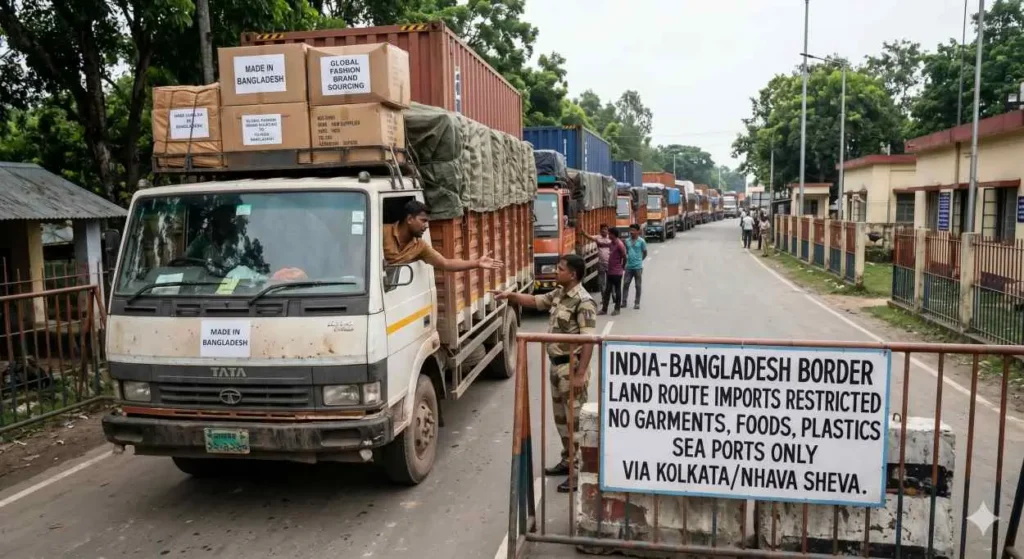
The Directorate General of Foreign Trade (DGFT) issued an immediate ban today stopping all readymade garments, processed foods, and plastics from crossing Bangladesh-India land borders. Cargo must now sail exclusively through the seaports of Kolkata and Nhava Sheva. It’s a logistical nightmare for international clothing retailers who rely on rapid overland trucking to stock Indian storefronts. Brands like H&M, Zara, Marks & Spencer, and Decathlon suddenly face stranded shipments.
And they aren’t the only ones scrambling to rewrite supply contracts.
Domestic heavyweights including Reliance, Aditya Birla’s Lifestyle, and Trent’s Zudio import heavily from Dhaka’s textile hubs to maintain their low-price margins. Nearly 93 percent of Bangladesh’s $700 million garment exports to India traditionally cross via these land ports. Shifting that massive volume to congested ocean freight adds two to three weeks of delay for fresh collections and seasonal merchandise. The Clothing Manufacturers Association of India (CMAI) projects sourcing costs will immediately spike between 3 and 5 percent just to cover the higher maritime shipping charges.
So who actually pays for this diplomatic standoff?
Shoppers will feel it first in the affordable fashion segment. Items priced under ₹1,000 operate on razor-thin margins that can’t easily absorb sudden logistical shocks. Devarajan Iyer, chief executive officer of Lifestyle International, confirmed to the financial press that while his company shifted some sourcing domestically, specific categories imported from Bangladesh remain stalled. Large conglomerates might weather the storm using advance orders, but smaller independent retailers and grey-market operators face immediate empty shelves. They simply don’t have the cash reserves to book expensive, last-minute sea freight.
The stakes are enormous for Bangladesh’s $38 billion garment export industry. They manufacture the bulk of the world’s accessible fashion. New Delhi’s notification blocks entry across traditional check posts bordering Assam, Meghalaya, Tripura, Mizoram, and West Bengal. But New Delhi didn’t close the border completely. Commodities like fish, edible oil, and crushed stone hold exemptions, along with shipments just transiting through India to Nepal or Bhutan.
It all traces back to a rapid breakdown in diplomatic trust. According to officials in the Ministry of Commerce and Industry, India’s move directly retaliates against Dhaka’s recent trade barriers. Last month, Bangladesh’s interim government restricted Indian cotton yarn imports via land routes and halted Indian rice exports through key West Bengal check posts. Muhammad Yunus, the head of Dhaka’s interim government, also recently described India’s northeastern states as landlocked during a visit to China, pitching Bangladesh as Beijing’s strategic gateway to the ocean.
Indian diplomats didn’t take the slight lightly.
By forcing mandatory seaport inspections, New Delhi asserts absolute control over what enters its massive consumer market. The Confederation of Indian Textile Industry (CITI) predicts this restriction will empower domestic manufacturers to step up and fill the void. Local yarn suppliers, abruptly cut off from selling to Dhaka, are already redirecting their stock to Indian factories eager to replace Bangladeshi suppliers. They’ve found a highly lucrative silver lining.
But logistics firms on the ground remain paralysed. Hundreds of trucks sit stalled at customs stations across the 1,600-kilometre border. Buyers demand rapid ocean cargo space that simply doesn’t exist on such short notice.
The land route is effectively shut for the brands that dress the world.