Experts had urged safeguards before the open release. Today, cheetahs are straying into villages and killing cattle.
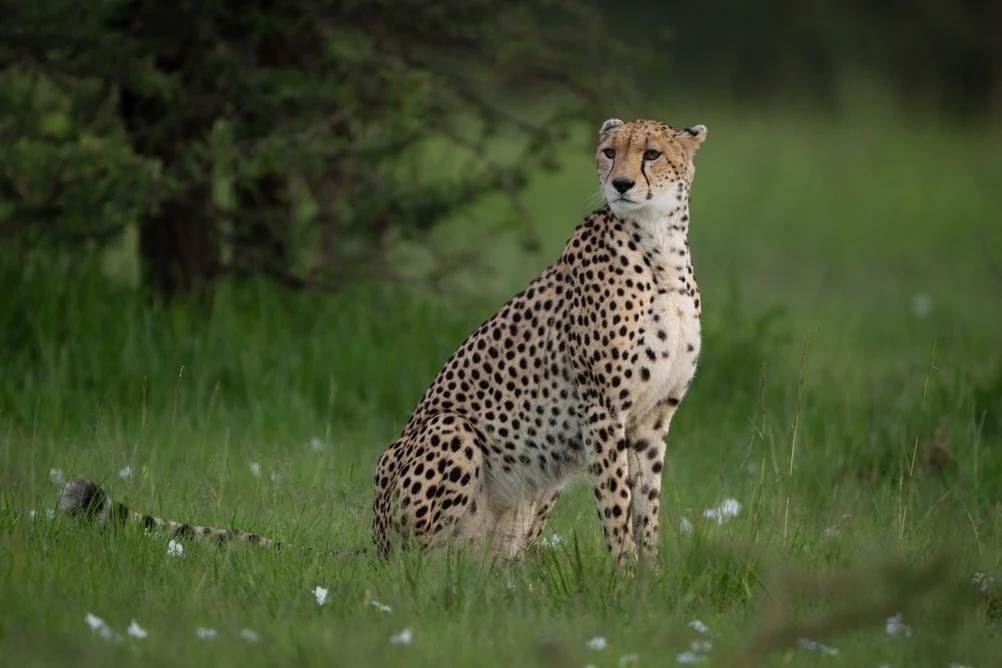
SHEOPUR (MP), Nov 9: Four years after cheetahs returned to Indian soil, Kuno National Park is struggling with a problem its planners were warned about: too many predators, too little prey and too few of the grasslands meant to sustain them.
The grasslands promised under the Cheetah Reintroduction Project have not been developed to the extent envisaged. Herbivore numbers remain low, leaving the cheetahs without enough prey inside the park. As the population has grown, some animals have moved beyond Kuno’s boundaries into neighbouring villages and states, where they have been killing domestic cattle.
A park at twice its assessed capacity
Kuno was assessed as suitable for about 25 cheetahs. Including cubs, it now holds 52. That is more than double the estimate, and it has sharpened competition for territory and food.
Why 1,500 chital have not been enough
The Forest Department has released nearly 1,500 chital (spotted deer) in Kuno in several phases to build up the prey base. The numbers have not translated into reliable hunting for the cheetahs, largely because of leopards.
According to the available information, leopards are present in almost every part of the park where chital, wild boar and other deer are found. The cheetah is the lighter and weaker competitor and instinctively avoids leopards, so it is effectively shut out of the richest hunting grounds. Pushed to the margins, cheetahs range further in search of food, and livestock near human settlements becomes an easy target.
Warnings that went unheeded
Wildlife experts had advised that certain safeguards be put in place before cheetahs were released into the open forest. Two were central: developing adequate grasslands to support a prey base, and relocating villages from within the protected area.
Those measures, experts say, were not given sufficient attention. The consequences are now visible in the rising number of cheetahs leaving Kuno and of cattle being killed.
Questions over monitoring
The Forest Department says every cheetah is watched by a team of five forest personnel. Yet the unnatural deaths of several cheetahs have raised questions about how effective that monitoring is. If the animals are tracked so closely, observers ask, how do they reach village outskirts, and how do such deaths occur?
This report will be updated with the Forest Department’s response.
Cost to the community
For families living around Kuno, livestock is a mainstay of household income, and each animal lost to a predator is a direct financial setback. The presence of large carnivores near homes and grazing lands also breeds fear. Conservationists note that the project’s long-term success depends on the goodwill of these communities, which in turn rests on prompt compensation and regular dialogue with the administration.
Background
Under Project Cheetah, eight cheetahs from Namibia were brought to Kuno in September 2022, followed by a batch from South Africa in February 2023. The cheetah had been declared extinct in India in 1952, and the project was projected as a landmark in wildlife conservation. The authorities have since spoken of preparing other sites, including Gandhi Sagar Wildlife Sanctuary, to house the growing population.
What experts say needs to be done
- Faster, scientifically planned development of grasslands
- A stronger prey base, with a study of how cheetahs and leopards share space
- Suitable additional habitat for cheetahs beyond Kuno’s capacity
- Time-bound relocation of villages from inside the park
- An independent review of the monitoring system, with accountability for unnatural deaths
- Quick compensation for livestock losses and sustained engagement with villagers
The larger picture
Project Cheetah remains one of India’s most closely watched conservation experiments. Kuno’s experience suggests that bringing the animals in is only the first step. Unless grasslands, prey, adequate space and community support are secured, questions about the project’s long-term viability will persist.
Discover more from Roots Alert
Subscribe to get the latest posts sent to your email.