
The Forest and Climate Change Department partnered with researchers, students, and local communities to log 954 eBird checklists across all 33 districts, building a critical scientific baseline for statewide avian conservation.

Raipur, 17 August 2026.- The Chhattisgarh Hareli Bird Festival 2026, a three-day event, was successfully concluded with a large number of people participating all over the state from towns and villages. The statewide campaign was organised under the direction of the Forest and Climate Change Department from 14th to 16th August. Initiative brought together the Forest Department, Chhattisgarh State Biodiversity Board, Biodiversity Management Committees (BMCs), Gram Panchayats, urban local bodies, academic institutions, ornithologists, non-governmental organizations, YUVAAN volunteers, nature enthusiasts and local communities.
The festival was conceived not just as a bird census, but as a general citizen science initiative which aims to link local culture and public engagement with the scientific records of the bird diversity of Chhattisgarh. The campaign aimed to raise awareness about identifying and monitoring resident birds, the condition of the varied natural habitats, the creation of scientifically valid avian datasets and to create a scientific baseline for future conservation planning. Coordinating the program with Hareli, a traditional folk festival that celebrates nature, greenery, agriculture and the new harvest, emphasized the ecological association between farming landscapes and birds, and inspired the public to take responsibility for nature.
A statewide Bird Walk, Bird Count and bird-watching activities were carried out in all 33 districts of the state. Field observation was done in the following villages: Jashpur, Dantewada, Durg, Mungeli, Bilaspur, Dhamtari, Balod, Narayanpur, Sukma, Bemetara, Gariaband, Bijapur, Raipur, Kondagaon, Mohla-Manpur-Ambargarh Chowki, Koriya, Gauriella-Pendra-Marwahi, Mahasamund, Kanker, Bastar, Jagdalpur, Raigarh, Kawardha, Korba, Balodabazar. The Forest Department, expert groups and volunteer organisations conducted surveys on wetlands, ponds, reserve forests, wildlife areas, riparian corridors, farmlands and the outskirts of towns and cities.
In the district Raipur events were organized at Gram Panchayat Mandhar and Tor. The Bird Walk and habitat awareness at Mandhar was attended by the participants, which included identifying bird species, understanding the role of aquatic systems and natural resources in the area. The Mandhar event combined conservation with rural livelihoods and included the participation of women’s self-help groups, particularly by featuring a local food cart run by the Kalash Self-Help Group.
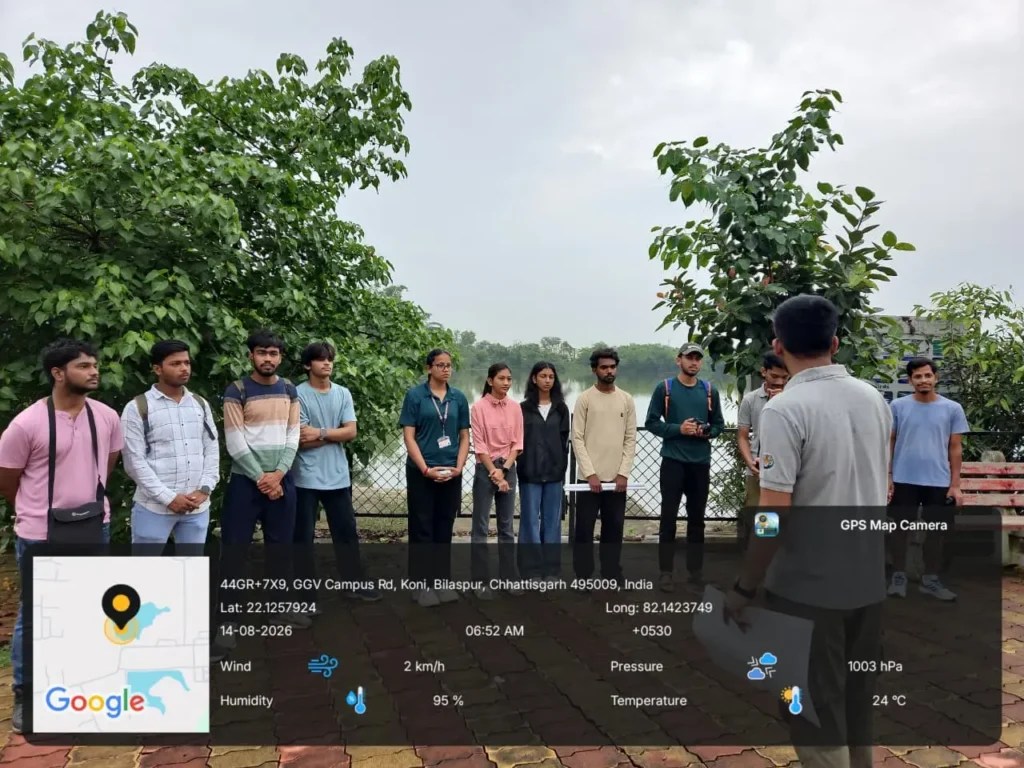
The educational institutions were actively involved in various regions. A Bird Walk was organized at Chichha Wetland by students of Mahatma Gandhi University of Horticulture and Forestry for documenting the species and understanding the ecology of wetlands. Bird watching activities at school level were conducted in Retawand, Katulbeda, Shivtarai, Kondagaon, Gariaband and Sarangarh-Bilaigarh. The College and University students participated in the Bird walks in Kurud College, Dhamtari and Lawan College, Bilaspur, United in Gurugwasda central college, Bilaspur; and the School children participated in guided Bird watching within the Achanakmar Tiger Reserve.
A large proportion of the survey network consisted of protected areas and wetlands. Observations were carried out at the following sites: Kopra Jalashay Ramsar Site, Chichha Wetland, Katghora Pond No. 1 and Palari-Balsamund. The wildlife habitats surveyed were Barnawapara Wildlife Sanctuary, Gomarda Wildlife Sanctuary, Achanakmar Tiger Reserve and Tamor Pingla Wildlife Sanctuary. To make nature observation accessible to every citizen, a special Bird Walk was organized at Nandanvan jungle safari, in Nava Raipur. This local documentation continued through Silpahari, Narayanpur, Sukma, Jashpur, Kanker, Gariaband, Dhamtari, Mahasamund, Bastar, Jagdalpur, Dantewada, Raigarh, Koriya, Gaurela-Pendra-Marwahi, Mungeli, Bemetara, Kawardha, Balodabazar and Mohla-Manpur-Ambagarh Chowki. This statewide integration knitted together several habitats into a unified, statewide citizen science campaign, and integrated data into the eBird platform.
The involvement of the community was a key part of the three days. Bird observation sessions were conducted with honey collectors in Narayanpur, as well as with the self help group members and YUVAAN volunteers. Joint Forest Management Committees (JFMC) joined in Silpahari and the self-help groups in Kanker and local people in mobilisation efforts in Gaurela-Pendra-Marwahi. Sukma’s Forest Department has joined hands with the Forest Management Committee of the area for identification of birds and the students along with the local villagers celebrated with the participation of the forest management committee in Tor Raipur.
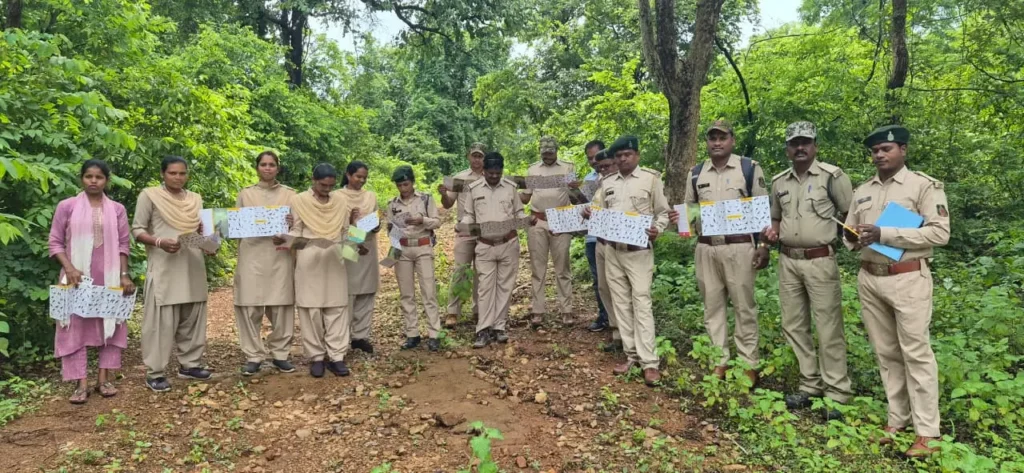
The survey recorded wide variety of bird species in various ecosystems. Many noteworthy birds seen were the Painted Stork, Red-naped Ibis, Black Bittern, Pheasant-tailed Jacana, Cotton Pygmy-Goose, Indian Paradise-Flycatcher, Jungle Owlet, Red Junglefowl, Pied Kingfisher, Blue-tailed Bee-eater, and Greater Racket-tailed Drongo.
A total of 954 checklists recorded 211 species of birds for the festival, according to the consolidated eBird data. A total of 116 observers reported 163 species on 256 checklists on 14th August. 95 checklists were submitted with 182 species on Aug 15, and 113 checklists with 185 species on Aug 16. In the state 45 Bird Walks were conducted, with over 1,000 observers and participants.
This collaborative effort enabled the convergence of state bodies, research institutions, youth volunteers and local communities on a citizen science platform. The information gathered from eBird will help develop baseline data by district, condition-check habitat health, and provide for long-term planning and conservation. In the future, the department hopes to incorporate lessons and experience learnt during the festival in the continuous monitoring of critical wetlands and bird habitats, enhance Pakshi Mitra network, hold regular Bird Walks, analyse eBird data and broaden the school and community based conservation initiatives in Chhattisgarh.

Leave a Reply