
Son of Thanjai abandons modern gaming mechanics, forcing players to master ancient Tamil martial arts and cultural stealth to survive the Chola Empire.
CHENNAI, June 9 —
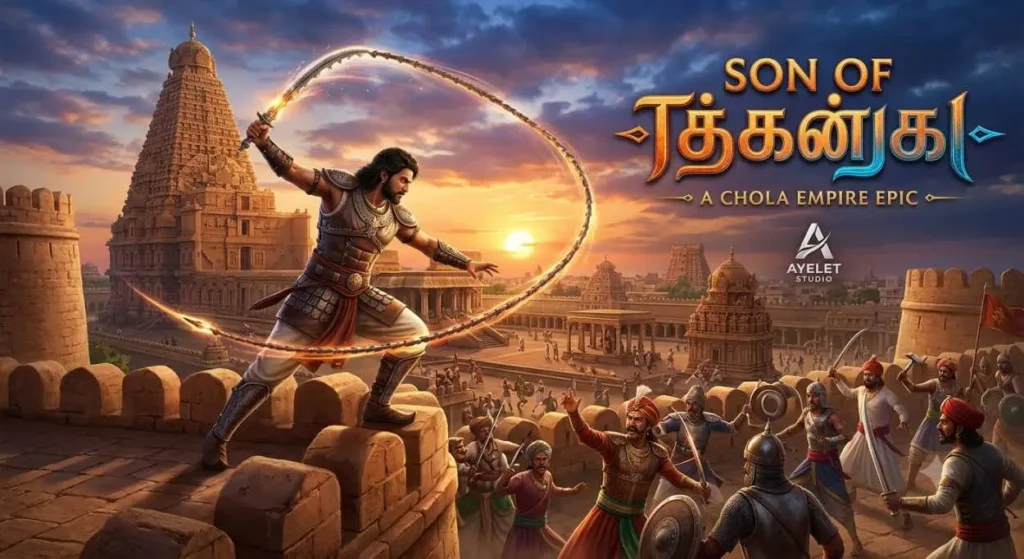
A Chennai-based independent developer is challenging the global gaming industry’s obsession with Western history by building a massive open-world epic set in the 11th-century Chola Empire. Ayelet Studio’s upcoming title, Son of Thanjai, drops players directly into ancient South India. They’ve explicitly stripped away the hand-holding mechanics that define modern blockbusters, ensuring you won’t find glowing enemy outlines or magical tracking instincts here. Developers are digging into thousand-year-old Tamil texts instead.
Foreign studios have spent decades recycling the same European medieval fantasies and Japanese samurai epics. But why should international publishers worry about an alternate-history tale from Tamil Nadu? The answer lies in the uncompromising authenticity driving the project. Abraham K, the studio head and creative director, told Xbox Wire they’ve built this experience to let players step into a world the medium has completely ignored. You aren’t playing a generic chosen one. The game casts you as Vinnendhiran, an exiled nineteen-year-old prince who knows everything about palace privilege and absolutely nothing about the people he intends to rule.
The narrative hinges on a brutal reality check for the young protagonist. Vinnendhiran’s father is dying, enemies gather beyond the borders, and traitors whisper inside his own court. Xbox Wire previews emphasise the central thematic question: can a man become a king simply because he was born one, or must he earn it? They’ve forced the player out of the palace and into the dirt. You don’t just inherit a crown in this game. You fight for it across temple towns, fertile river plains, and occupied settlements thick with ambition.
Ayelet Studio refuses to rely on standard health bars or mindless button-mashing to dictate a fight’s outcome. They’ve anchored the combat system to one of the world’s oldest martial arts, Kalaripayattu. Times of India reports the foundational weapon is the Surul Vaal, a devastating South Indian whip-sword that behaves unlike anything in current Western action titles. Players sweep through crowds in a single arc, flowing from wide strikes into close-range executions without breaking momentum. And when the whip isn’t enough, combatants switch to the heavy Aruvaal for brutal, close-quarters encounters. Or they throw a Valari to eliminate threats from a distance.
The combat mechanics completely reject the industry standard of absorbing dozens of hits. PlayStation Store concept pages reveal that the Surul Vaal functions as an extension of the protagonist’s identity, coiled and restrained during exploration but explosive during combat. Developers built the weapon physics to reward patience, planning, and precision over raw aggression. You don’t just walk into an enemy encampment swinging wildly. You calculate the distance, isolate the heaviest armoured guards, and utilise the whip’s unique trajectory to disarm opponents before they even draw their swords. They’ve crafted a system where every single strike feels profoundly personal.
The developers haven’t stopped at physical weapons. They’ve built a complex psychological fear system where enemies actively watch each other and react in real-time. If you assassinate a high-ranking commander, the surrounding squad’s morale shatters immediately. Epic Games Store documentation confirms players can mix high and low attacks to break a veteran soldier’s footing. This triggers a domino effect of panic across the enemy line. Executions and relentless pressure turn disciplined military units into terrified stragglers, forcing a tactical approach that massively budgeted foreign franchises simply don’t attempt anymore.
You can’t afford a single misstep, because panic spreads through an entire outpost instantly.
The environment itself operates as a living historical archive. It runs on the ancient Tamil concept of ‘Tinai,’ which ties local geography directly to culture, economy, and identity. Times of India details how developers meticulously mapped agricultural plains, coastal trading hubs, dense forests, and massive temple towns. These regions function independently of the player. You aren’t just exploring a static backdrop; you’re navigating an active society where farmers worry about their next harvest and displaced rebels whisper in hidden corners. If you don’t blend in by recognising these cultural markers, the world quickly turns against you.
Modern blockbusters hand you immediate answers. Son of Thanjai forces you to earn them. Epic Games Store previews highlight a rigorous social stealth system where information requires absolute cultural literacy. Players shadow targets through crowded markets and bluff past guards using stolen names. They’ve built a world where priests, merchants, and fishermen react directly to your presentation. You ride elephants and bulls across the dangerous frontier. But your sharpest weapon isn’t a blade at all; it’s your ability to vanish into the local population.
Every single aspect of daily life serves a narrative purpose. Abraham K promised Epic Games Store reviewers that the final release will feature intensely specific cultural locations. For example, toddy shops sit deliberately outside city limits to reflect the strict social taboos of the era. They aren’t softening the 11th-century Chola reality for anyone. Food and daily labour routines operate as clear windows into the societal hierarchy. You simply won’t survive the brutal political conspiracies surrounding the throne if you ignore the ordinary citizens living with the consequences of your royal decisions.
The title launches on PlayStation 5, Xbox Series X|S, and PC, entering a fiercely competitive global market dominated by established foreign publishers. But this Chennai team is proving that indigenous storytelling hits harder than recycled tropes. They aren’t asking for a seat at the table. They’re forcing the global industry to adapt.