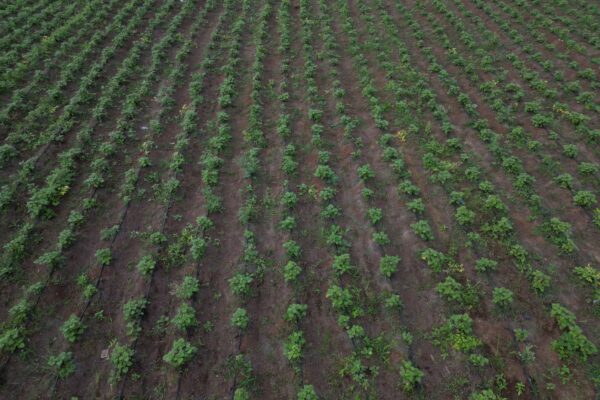
Thirteen years after conception and a decade after a massacre wiped out its leadership, the Naxal housing project in Chhattisgarh’s Sukma district is finally pouring foundations and raising walls.
Sukma, April 8 — The concrete mixers are running in Chhattisgarh’s southern tip for the first time in over a decade. Not for a military camp or a forward operating base, but for kitchens and bedrooms. After thirteen years of bureaucratic paralysis, security setbacks, and one of the deadliest attacks in the history of the Indian Maoist conflict, the Union government’s ambitious housing project for Naxal-affected families in Sukma district has moved from paper to pavement.
We are not talking about a few huts. We are talking about 550 permanent houses spread across 56 remote villages in the Chintalnar, Jagargunda, and Konta regions—territory that until very recently was considered the absolute core of the Maoist “red corridor.”
The Hindustan Times reported exclusively on the ground that the project, originally sanctioned way back in 2013 under the Prime Minister’s Rural Development Fellowship Scheme, has finally achieved 100% completion of its plinth casting. For the families of the 123 Special Guerrilla Squad (SGS) members who were relocated here from neighbouring states like Telangana, this is the first tangible sign that the state intends to stay.
The project’s history is a ghost story. It was conceived as a counter-insurgency measure wrapped in welfare—a way to cement loyalty and provide a visible bulwark of state presence. But in May 2013, just as the initiative was finding its feet, Maoists ambushed a Congress party convoy in the Jhiram Ghati of neighbouring Bastar district. The attack killed 27 people, including the state Congress chief Nand Kumar Patel and senior leader Mahendra Karma, the architect of the state’s anti-Naxal Salwa Judum militia strategy. The project, tied to the Congress-led UPA government’s political will at the time, went into a coma. Files gathered dust in district collectorates. Villagers went back to waiting.
And waiting. For a decade.
Union Home Minister Amit Shah, whose ministry is now driving a hardline “zero tolerance” policy toward Left-Wing Extremism, has placed this housing initiative on a priority watch list. His strategy—dubbed the “Tripura Model” internally by security analysts—pairs aggressive security force offensives with high-visibility development. The logic is blunt: clear the area, then build something people can see. Houses are harder to argue with than policy papers.
A district administration official in Sukma, speaking on the condition of anonymity as they are not authorized to address media, told Hindustan Times, “We’ve had to move materials through roads that didn’t exist on Google Maps until last month. We’ve dealt with threats to contractors. But the concrete is now set in the ground.”
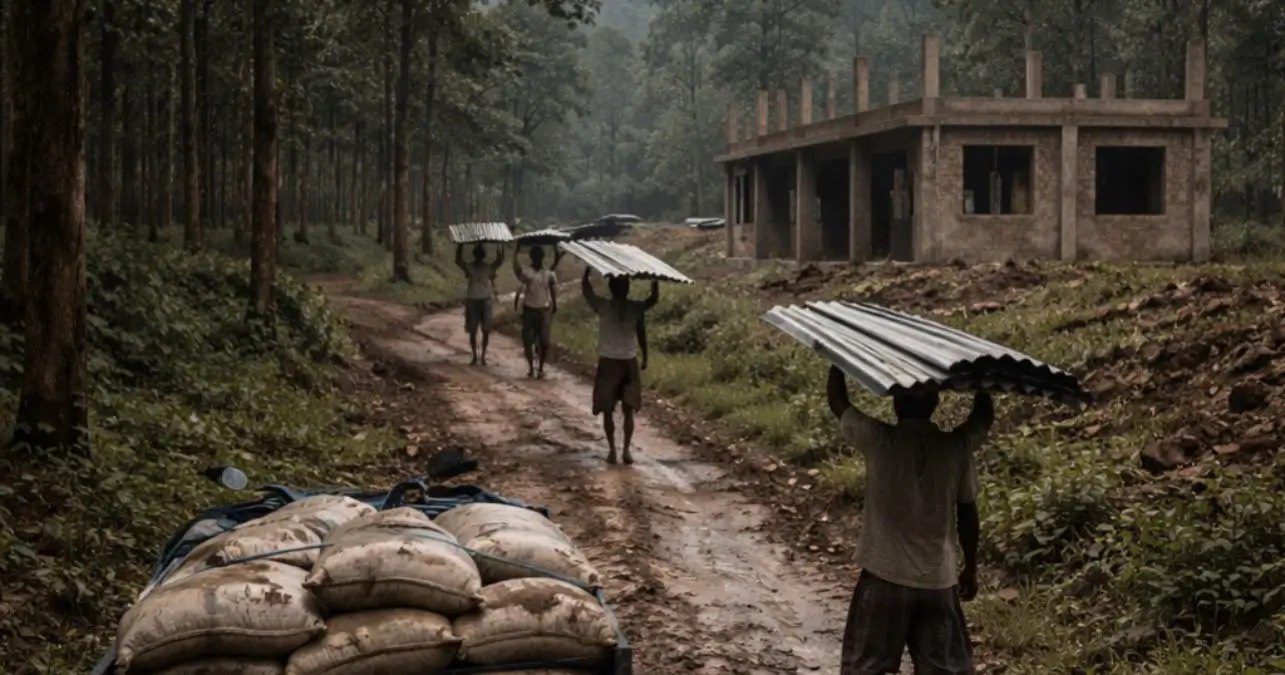
The numbers are specific and sourced from district project reports accessed by the outlet. Of the 550 sanctioned units, all foundations are laid. The work is being executed under the close watch of the Border Roads Organisation (BRO) and the district rural development authority. It’s a logistical nightmare made real. Rebar, cement bags, and corrugated roofing sheets must travel the last 15 to 20 kilometers on motorcycle trailers or manual head-loads because the jungle tracks are too narrow for trucks and too unstable during the approaching monsoon.
Why does 550 houses matter in a country of 1.4 billion? Scale is relative. In Sukma, which holds the unenviable record of being one of India’s most violent districts, a single paved home with a lockable door is a declaration. It’s a declaration that the local police station isn’t going anywhere. It’s a declaration that the Maoists—who have long argued the Indian state is an absentee landlord that only shows up to demand votes or commit atrocities—are wrong about the concrete reality of this particular patch of jungle.
A village elder from the Chintalnar area, whose name is being withheld for security reasons due to the active presence of Maoist cadres in the peripheral forests, said the shift in mood is palpable but cautious. “We have seen stones laid before and then the trucks stopped coming. This time, the soldiers are staying in the camp longer. The cement keeps arriving. Maybe this time the walls will reach the roof.”
The project’s scope is expanding beyond just shelter. The plan includes the construction of connecting approach roads and, crucially, mobile towers. The latter is the most feared weapon in the Maoist arsenal of isolation. A working cell tower means a video call to a relative in Raipur. It means a UPI payment at a weekly haat (market). It dismantles the information blockade that insurgent groups rely on for survival.
There is an undercurrent of irony that cannot be ignored. The homes are being built for families brought in from other states—essentially, a new population cluster in the heart of a conflict zone. This demographic engineering, while never stated officially, is a well-worn tactic in counter-insurgency operations worldwide. It creates a constituency that has a vested interest in the security forces winning.
But for the masons laying bricks and the women watching the walls rise, geopolitics is a background hum. The foreground is the roof overhead. With summer temperatures in Sukma soaring past 42 degrees Celsius (107 degrees Fahrenheit) and the monsoon set to cut off the region entirely in less than two months, the race is on to get the walls up and the roofs sealed.
The completion target for the first phase of habitable homes is now set for late 2026. That’s still two full years away. Two more monsoons. Two more winters where the Maoists, cornered by sustained security pressure but not yet defeated, might try to torch a bulldozer or scare off a laborer.
But something is different in Sukma now. There’s a line of sight. For the first time since the bloodshed of 2013 and the long, silent abandonment that followed, there are walls standing where the government said walls would stand. It’s not a victory. It’s not a headline that will shift stock markets or trend globally. But in this corner of the world, where the battle for legitimacy is fought with cement mixers as much as carbines, it’s a crack in the status quo that was unthinkable just five years ago. And cracks, in a place like Sukma, are how the light gets in.