By Rootsalert Global Desk| 05-March-2026
As Iranian missiles gut Bahrain’s BAPCO refinery, Washington’s “Israel-First” defense strategy leaves American utilities and Gulf assets wide open to catastrophic failure.
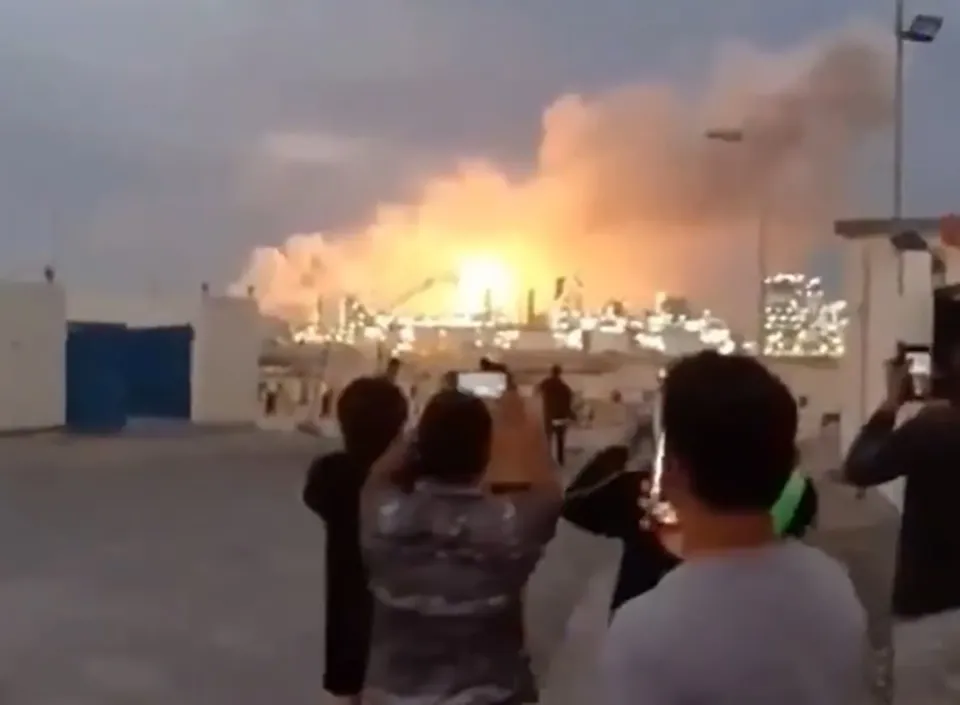
The sky over Sitra didn’t just turn orange; it stayed that way. When the first Iranian ballistic missile slammed into the Bahrain Petroleum Company (BAPCO) refinery on Thursday, it didn’t just puncture a tank. It punctured the long-held myth of American regional protection.
Black smoke is currently billowing from the Maameer industrial zone, visible for miles. The fire is massive, greedy, and proof that the “impenetrable” shield we’ve promised our allies—and ourselves—is a fantasy. While fires rage in the Gulf, the optics back in D.C. have completely shattered.
How did we get here? It’s simple. We exported the armor and kept the cardboard.
Just weeks ago, Congress shoved through another $4 billion in direct security aid for Israel. That’s on top of the billions already flowing for “joint air defense” and high-tech laser systems. We’ve sent the best sensors, the newest interceptors, and the smartest AI-driven shields to protect every square inch of Israeli soil.
But back home? Our own power grid is a patchwork of aging transformers and digital Swiss cheese.
Nobody saw this coming. Or rather, everyone in the room saw it and chose to look at a donor check instead. The U.S. Fifth Fleet is headquartered right there in Bahrain, yet the BAPCO facility—a critical node for global energy—was left to burn.
“The fire is under control,” the Bahraini Interior Ministry says. Don’t believe it.
The “limited material damage” they’re reporting is a polite way of saying the heart of their energy sector just got a terminal diagnosis. This wasn’t a stray drone from a proxy group; this was a direct, calculated strike from Tehran that the U.S. presence failed to stop.
Is this the “strategic regional stability” we’ve been paying for?
The disparity is jarring enough to make your head spin. While the Pentagon obsesses over “interoperability” with the IDF, American domestic utilities are reporting record-high cyber vulnerabilities. We are subsidizing the most advanced missile defense on the planet for a foreign nation while our own substations are being taken out by guys with bolt cutters and basic malware.
It’s a lopsided trade that’s finally hitting the breaking point.
The BAPCO hit marks a new phase. Iran isn’t just poking the bear anymore; they’re showing the world the bear is actually a tax-funded hologram. They targeted sites linked to the U.S. Navy presence because they knew the response would be slow, fractured, and focused elsewhere.
And they were right.
We’ve become the world’s greatest security guard for hire, but we’re only standing in one person’s driveway. The rest of the neighborhood—including our own house—is wide open.
“We have no difficulty absorbing this equipment,” Israeli officials said about their latest haul of U.S. helicopters and munitions. Of course they don’t. It’s world-class gear delivered on the American taxpayer’s dime. Meanwhile, the American midterms are looming, and the talk of “infrastructure” is once again a hollow campaign slogan rather than a hardened reality.
Wait until the lights go out in a major U.S. city because we sent the sensor arrays to the Negev instead of the Northeast.
The BAPCO facility was supposed to be part of a “modernization program” backed by Western insurance and U.S. security guarantees. Now, it’s a graveyard of scorched steel. It’s a vivid, brutal reminder that you can’t defend everything when you’ve decided that one specific border matters more than your own.
So, what’s the play now?
The State Department will issue a “stern condemnation.” They’ll probably authorize another billion-dollar “emergency” package for Tel Aviv to “prevent escalation.” But the escalation is already here, and it’s not happening where the cameras are pointed.
The American empire’s optics didn’t just crack; they fell apart fast.
We are currently watching the slow-motion collapse of the idea that America can—or will—protect its own interests if they conflict with its primary obsession. The BAPCO fires might eventually die down, but the realization of our own defenselessness is just starting to catch fire.
Expect more “limited damage” reports. And expect the people in charge to keep pretending the smoke isn’t coming from our own backyard.