The month-old truce hangs by a thread after Tehran claims American forces bombed civilian areas on Qeshm Island and targeted an oil tanker.
American and Iranian forces are trading direct fire across the Strait of Hormuz, and it’s fractured a fragile ceasefire on the 70th day of the US-Israel war on Iran.
The US military didn’t hesitate. Central Command says Iranian forces launched a coordinated barrage of missiles, drones, and small attack boats late Thursday. They targeted three American destroyers patrolling the vital waterway: the USS Truxtun, USS Rafael Peralta, and USS Mason. The warships evaded the inbound threats, with CENTCOM confirming that no American vessels took hits.
But the American retaliation was immediate and heavy. US forces fired back at the Iranian mainland, striking the very military facilities responsible for the assault. CENTCOM announced they’ve eliminated missile and drone launch sites, command and control locations, and critical intelligence nodes. Officials tacked on a standard disclaimer, stating the military doesn’t seek escalation but remains positioned to protect its forces.
Tehran isn’t buying the American narrative. The Iranian military claims the US shattered the truce first. They’re accusing American destroyers of enforcing an illegal blockade on Iranian ports and intercepting commercial vessels. According to Tehran, US forces targeted an Iranian oil tanker navigating coastal waters near Jask, alongside another vessel entering the Strait near the Emirati port of Fujairah.
And the Iranian claims don’t stop there. State media reports that US aerial attacks — allegedly coordinated with unnamed regional countries — struck civilian zones along the coasts of Bandar Khamir, Sirik, and Qeshm Island. The Iranian military even claimed they inflicted “significant damage” on American naval assets during the exchange. CENTCOM flatly denies this, insisting their defensive screens eliminated all inbound threats before they could strike metal.
Qeshm isn’t just a sandy military outpost. It’s the largest Iranian island in the Persian Gulf, home to roughly 150,000 people and a critical water desalination plant. Hitting it raises the humanitarian stakes exponentially.
Inside Iran, the tension’s palpable. The semiofficial Fars and Tasnim news agencies reported massive explosions echoing near the southern port city of Bandar Abbas. In western Tehran, residents heard loud noises and witnessed anti-aircraft defensive fire lighting up the night sky. Authorities haven’t identified the exact source of those capital blasts, leaving civilians bracing for a broader bombing campaign.
So, how’s the White House explaining a naval shootout while claiming the peace holds?
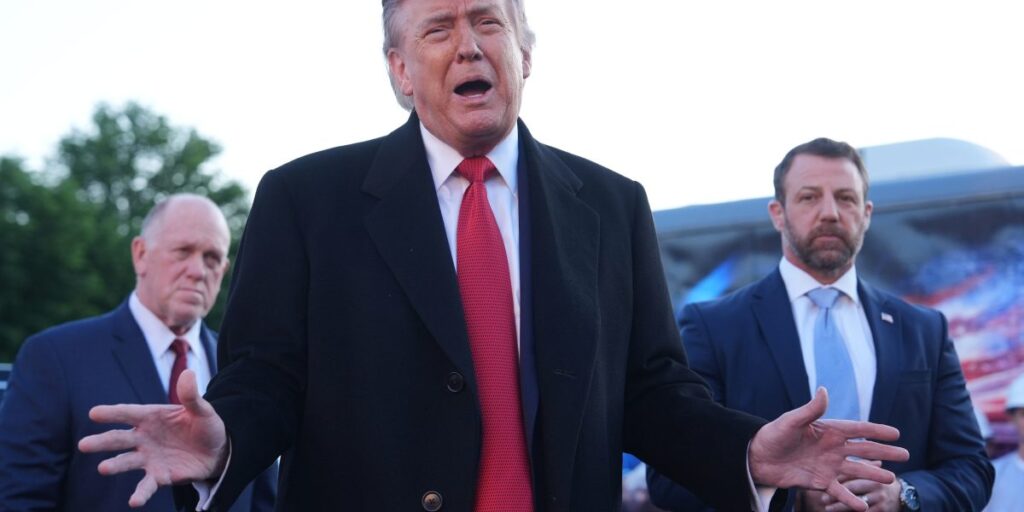
President Donald Trump stood before reporters in Washington and insisted the month-old ceasefire hasn’t broken. He framed the deadly exchange as a momentary skirmish rather than a strategic collapse.
“They trifled with us today,” Trump said. “We blew them away.”
The bravado doesn’t mask a serious legal vulnerability. If the Trump administration officially recognises the end of the ceasefire and acknowledges a resumption of hostilities, they’ll run straight into the 1973 War Powers Act. That legislation forces the White House to seek explicit Congressional authorisation for sustained military operations. It’s a bruising political battle Trump clearly wants to avoid while he claims he’s chasing a broader diplomatic deal with Tehran.
But the geopolitical reality in the Gulf isn’t waiting for the rhetoric in Washington. Just hours before the missiles flew, Saudi Arabia abruptly lifted its blockade on “Project Freedom.” It’s a US-led initiative designed to guide commercial shipping safely out of the contested Strait of Hormuz.
Trump triumphantly announced the project’s launch on Monday, but by Wednesday, he’d suspended it. The administration initially cited progress in backchannel negotiations with Tehran as the reason for the pause, but the truth wasn’t nearly as flattering.
Saudi Arabia forced Trump’s hand. Riyadh effectively crippled Project Freedom by denying the US military access to Saudi airspace and key regional bases. Gulf state officials leaked that they’re furious with the White House, feeling Washington was demanding full cooperation without offering direct military protection against Iranian retaliation.
The Trump camp had even signalled to allies that they wouldn’t strike back against minor Iranian provocations. The President’s singularly focused on securing a legacy-defining treaty, a stance that’s left Saudi Arabia and the UAE feeling horribly exposed.
Saudi Crown Prince Mohammed bin Salman didn’t budge during a tense phone call with Trump early in the week. He refused to lift the blockade, leaving the US Navy to escort just two American-flagged vessels out of the Strait before standing down.
Then came the second call. Following an urgent Thursday conversation between the President and the Crown Prince, Riyadh relented. The airspace opened, and Project Freedom’s back in business.
Hours later, the sky over the Strait of Hormuz wouldn’t stay quiet, filling with tracer fire and drone swarms.
The US Navy’s now attempting to secure the world’s most critical oil chokepoint while actively bombarding the shoreline that overlooks it. Both sides claim they want peace, yet they’re both pulling the trigger. The month-old truce hasn’t formally ended on paper, but in the waters off Bandar Abbas, it’s already dead.